
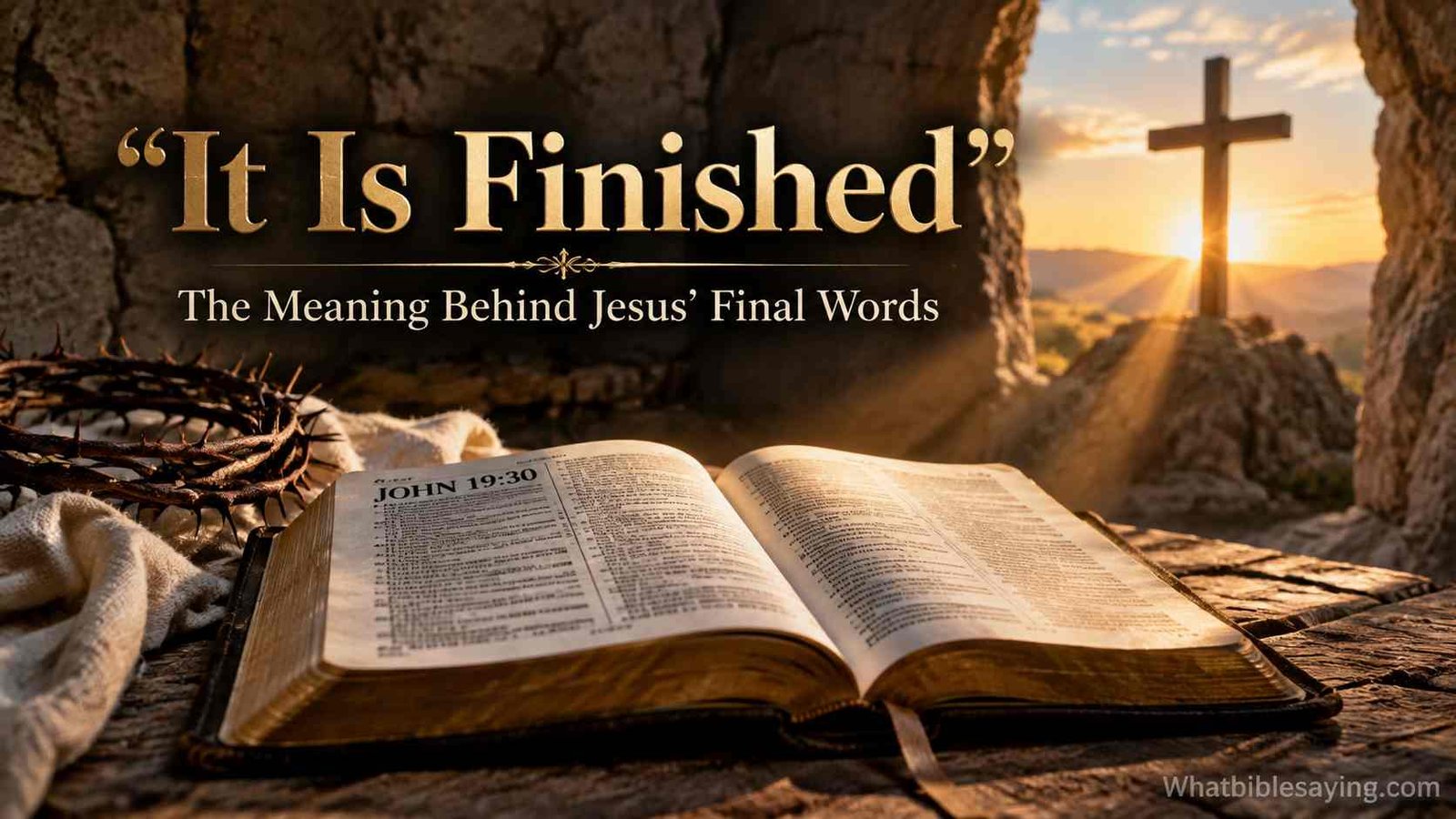
 When Jesus spoke the words “It is finished” from the cross, He was not simply announcing the end of His suffering. He was declaring that a divine mission had been completed.
In John 19:30, the Gospel of John records that after receiving the sour wine, Jesus said, “It is finished,” then bowed His head and gave up His spirit. These three words have carried deep meaning for Christians throughout history because they point to the completion of God’s plan of salvation through Jesus Christ.
The phrase does not mean Jesus failed or that His life ended in defeat. Instead, it reveals fulfillment, victory, and the completion of the work He came to accomplish.
The original Greek word translated as “It is finished” is tetelestai (τετέλεσται), which comes from the verb teleō, meaning to complete, accomplish, fulfill, or bring something to its intended goal. The word expresses the idea that something has reached its proper ending or purpose.
Understanding this phrase helps us see the heart of the gospel message: Jesus completed what humanity could never complete on its own.
What Does It Is Finished Mean In The Bible According To John 19:30
The meaning of “It is finished” in the Bible begins with the moment Jesus spoke these words during His crucifixion.
The cross was not an unexpected tragedy. Throughout Scripture, Jesus’ death was connected to God’s plan to bring forgiveness and reconciliation between Himself and humanity.
Before His death, Jesus repeatedly explained that He came for a specific purpose.
In John 4:34, Jesus said that His food was to do the will of the Father and finish His work. His entire earthly ministry was directed toward completing that mission.
When He said “It is finished,” Jesus was declaring:
- His earthly mission was completed
- Old Testament promises were fulfilled
- The work of redemption was accomplished
- The way to forgiveness was opened
The statement was not a cry of exhaustion. It was a declaration of completion.
The Greek Meaning Behind Tetelestai
The word tetelestai provides important insight into Jesus’ final statement.
The Greek verb teleō carries the idea of bringing something to completion or accomplishing a goal. In the New Testament, this word can refer to completing tasks, fulfilling obligations, or reaching an intended purpose.
This helps explain why Jesus’ words were so powerful.
He was saying that everything necessary for God’s saving plan had been accomplished.
Some historical discussions connect the term with ancient commercial language where similar wording could indicate that an obligation had been completed. While this background is often mentioned, the primary meaning in John’s Gospel comes from the context: Jesus had completed the work the Father sent Him to do.
The cross was not merely the end of Jesus’ earthly journey. It was the moment when His mission reached its purpose.
Why Jesus Said It Is Finished Instead Of I Am Finished
There is an important difference between saying:
“I am finished”
and
“It is finished.”
The first statement suggests defeat or personal ending. The second points to a completed work.
Jesus was not saying His life had been taken from Him unexpectedly. Earlier in John’s Gospel, Jesus said:
“No one takes it from me, but I lay it down of my own accord.”
John 10:18
His death was an act of obedience and love.
The phrase “It is finished” points away from Jesus’ weakness and toward His faithfulness.
He finished the work of teaching, serving, suffering, and giving Himself for humanity.
The Biblical Meaning Of It Is Finished And The Work Of Christ
The phrase is deeply connected with the Christian understanding of salvation.
According to the New Testament, humanity’s greatest problem is separation from God because of sin. The Bible teaches that forgiveness requires God’s grace and that Jesus’ sacrifice provides the way for reconciliation.
The words “It is finished” announce that Jesus completed the work necessary for redemption.
This does not mean people no longer need faith, repentance, or a relationship with God. Instead, it means salvation begins with what Christ has already accomplished rather than human efforts alone.
As Ephesians 2:8–9 teaches, salvation is a gift from God received through faith, not something earned by human achievements.
The Fulfillment Of Old Testament Promises
One reason Jesus’ final words matter so much is that they connect the New Testament with the Old Testament.
Throughout the Hebrew Scriptures, there are promises, symbols, and expectations pointing toward God’s rescue plan.
The sacrificial system in the Old Testament showed the seriousness of sin and the need for atonement. The prophets spoke about God’s future work of restoration.
Isaiah 53 describes a suffering servant who would bear the sins of others. Christians have traditionally understood this passage as pointing toward Jesus’ sacrificial death.
When Jesus said “It is finished,” He was declaring that these promises had reached their fulfillment.
The Finished Work Of Salvation
The phrase also teaches believers about grace.
Grace means God gives what people cannot earn by themselves. The cross shows that God’s love moved toward humanity even in its brokenness.
A deeper understanding of what is grace in the Bible helps explain why “It is finished” is such a hopeful statement. Grace is not based on human perfection but on God’s mercy and faithfulness.
The completed work of Christ gives believers confidence that forgiveness is possible.
Beautiful Words In The Bible That Reveal God’s Truth
The Bible contains many powerful words that carry deep spiritual meaning. Studying these words can help readers understand Scripture more clearly.
Some beautiful words in the Bible include:
| Word | Language | Meaning |
|---|---|---|
| Grace | Greek: Charis | God’s undeserved favor and kindness |
| Peace | Hebrew: Shalom | Wholeness, completeness, and well-being |
| Love | Greek: Agape | Self-giving, faithful love |
| Faith | Greek: Pistis | Trust and confidence in God |
| Hope | Greek: Elpis | Confident expectation of God’s promises |
These words remind readers that Scripture is not only a collection of stories but a message about God’s character and relationship with humanity.
Words In The Bible That Help Us Understand Faith
Studying important words in the Bible can reveal ideas that are sometimes hidden in translation.
For example, the New Testament word agape describes a type of love that chooses to give and serve. It is the kind of love demonstrated through Jesus’ sacrifice.
The word pistis, often translated as faith, includes the idea of trust and loyalty toward God.
The phrase “It is finished” itself shows how one word can carry a much deeper meaning when we understand its original language and context.
Bible word studies do not replace reading Scripture. They help readers appreciate the richness of the message God has given.
Hebrew Words In The Bible And Their Spiritual Meaning
Although “It is finished” comes from the Greek language of the New Testament, many important biblical concepts come from Hebrew words in the Bible.
The Old Testament was primarily written in Hebrew, and many Hebrew words reveal important truths about God.
Shalom
The Hebrew word shalom is often translated as peace, but it means more than the absence of conflict. It describes completeness, restoration, and well-being.
Hesed
The Hebrew word hesed describes God’s loyal, covenant love. It reflects His faithfulness toward His people.
Ruach
The Hebrew word ruach can mean spirit, breath, or wind. It is often connected with God’s life-giving presence.
Understanding these words helps readers see the consistent message of Scripture: God is faithful, loving, and working toward restoration.
How The Meaning Of It Is Finished Changes The Way We Live
Jesus’ words from the cross are not only historical. They affect how believers live today.
If Christ completed His saving work, believers can approach God with confidence instead of constant fear.
The phrase teaches several important lessons.
We Can Trust God’s Promises
God finishes what He begins.
Philippians 1:6 reminds believers that God continues His work in their lives until it is complete.
We Can Find Peace In Forgiveness
Many people carry guilt from past mistakes. The message of the cross reminds us that forgiveness comes through God’s mercy.
Understanding what does the Bible say about forgiveness helps believers move from shame toward restoration.
We Can Live With Hope
The cross was not the final chapter. The resurrection followed, showing that God’s power is greater than suffering and death.
This connects with what does the Bible say about hope, because biblical hope is based on God’s promises rather than temporary circumstances.
The Connection Between It Is Finished And The Gospel
The word gospel means good news.
The good news of Christianity is that Jesus came, lived faithfully, died for humanity, and rose again.
The statement “It is finished” is central to that message because it announces that Jesus completed the work He came to do.
The gospel is not mainly about what humans accomplish for God. It begins with what God has accomplished through Christ.
What This Teaches Us About God’s Faithfulness
The words “It is finished” remain powerful because they reveal the heart of God.
They show a God who keeps promises, completes His purposes, and offers forgiveness through Jesus Christ.
For someone struggling with guilt, these words offer hope.
For someone facing fear, they offer peace.
For someone searching for meaning, they reveal that God’s plan is not random or unfinished.
Jesus’ final words on the cross remind believers that God’s love has already acted, God’s promises can be trusted, and His work of redemption stands complete.
The message of the cross is not simply that something ended. It is that something greater was accomplished.

Dr. Rachel is very smart and knows a lot about the Bible. He helps us understand the Bible better by talking about the old texts in a simple way.