

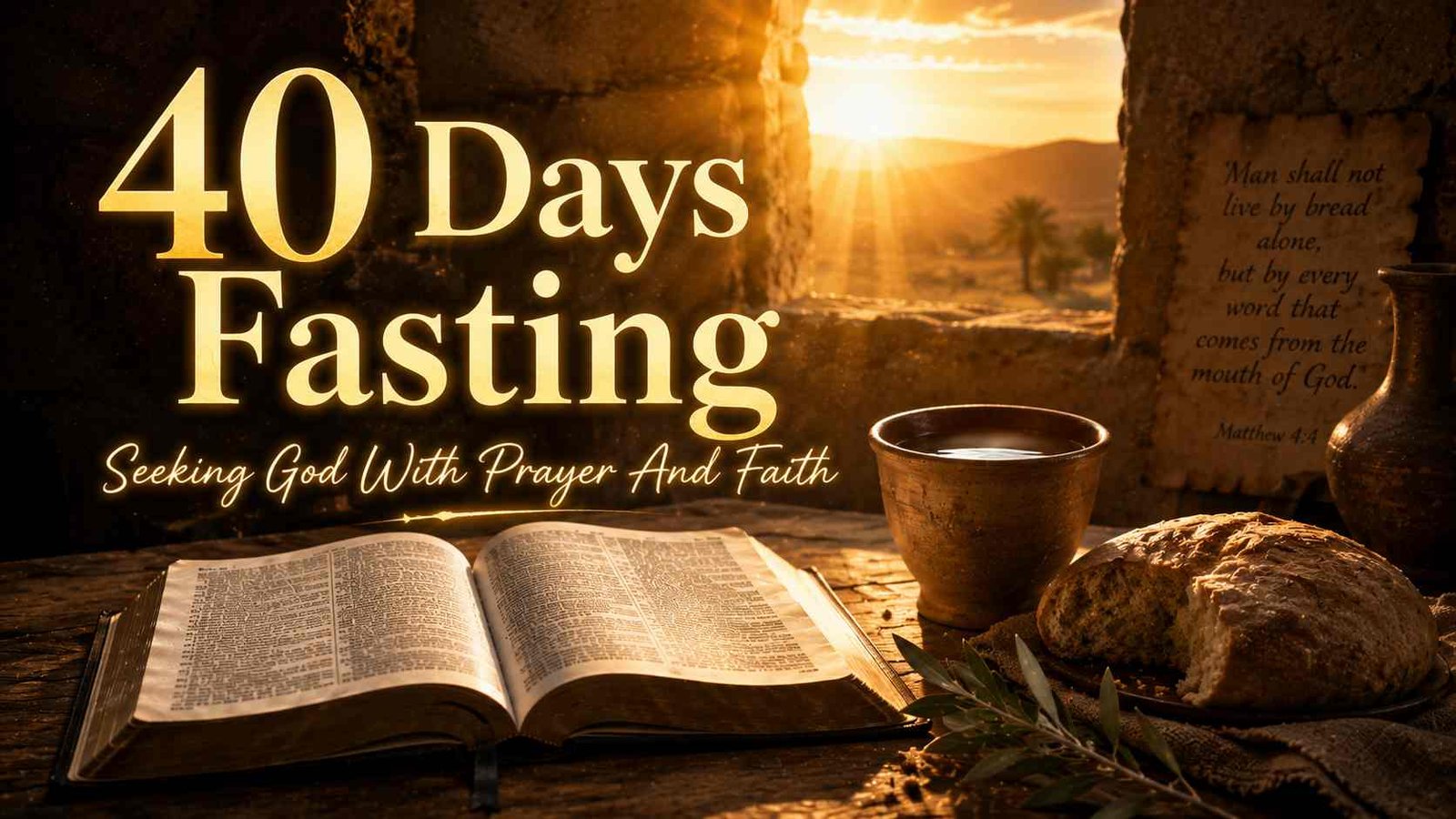
 There are moments in life when a person feels spiritually tired, emotionally heavy, or deeply hungry for God’s direction. During those seasons, many Christians begin searching the Bible to understand fasting, especially the idea of a 40 days fast. They read about Jesus in the wilderness, Moses on Mount Sinai, or Elijah walking through the desert, and they wonder what those powerful moments really meant.
Some people ask if it is truly possible to fast for 40 days in the Bible. Others want to know what happens spiritually during fasting. Many simply want to understand whether fasting still matters today.
The Bible speaks about fasting with seriousness, but also with wisdom and grace. Scripture never presents fasting as a way to earn God’s love. Instead, fasting is shown as a time of prayer, humility, repentance, and deeper dependence on Him. It is not about becoming spiritually impressive. It is about becoming spiritually open.
Throughout the Bible, fasting often appeared during moments of preparation, sorrow, repentance, worship, or spiritual battle. Jesus Himself fasted before beginning His public ministry. Moses fasted while receiving God’s commandments. Elijah fasted during a difficult season when he needed strength and guidance.
When people today search for how to fast according to the Bible or ask what is fasting Bible teaching, they are usually looking for something deeper than a diet or religious routine. They are searching for closeness with God.
That is where biblical fasting begins.
Why The Number 40 Matters In The Bible
The number 40 appears many times throughout Scripture. In the Bible, it is often connected with testing, preparation, waiting, cleansing, or spiritual transformation.
One of the earliest examples comes during Noah’s time. Rain fell upon the earth for 40 days and 40 nights during the flood in Genesis 7:12. This was not simply about destruction. It was also about renewal and a fresh beginning.
Later, the people of Israel wandered in the wilderness for 40 years before entering the Promised Land. During that time, God taught them dependence, obedience, and faith. They learned that life was not sustained by bread alone, but by God Himself.
Moses fasted for 40 days and nights while receiving the Law from God on Mount Sinai:
“He was there with the Lord forty days and forty nights without eating bread or drinking water.” — Exodus 34:28
Elijah also journeyed for 40 days after being strengthened by food God provided during a difficult season of fear and exhaustion.
Then we come to Jesus.
Before preaching publicly, healing the sick, and calling disciples, Jesus entered the wilderness and fasted for 40 days. That moment became one of the most important examples of fasting in all Scripture.
The number 40 in the Bible often reminds us that God uses seasons of waiting and testing to prepare people for something greater.
Sometimes growth happens quietly in the wilderness.
Is It Possible To Fast For 40 Days In The Bible?
Yes, the Bible records several examples connected to 40-day fasting. The best-known examples are Moses, Elijah, and Jesus.
Moses And His 40-Day Fast
Moses fasted while in God’s presence on Mount Sinai. According to Exodus 34:28, he went without bread or water for 40 days and nights. This was clearly a supernatural event sustained by God’s power.
Humanly speaking, surviving 40 days without water is impossible under normal conditions. That is why many Bible scholars understand Moses’ fast as miraculous.
Elijah’s Journey
In 1 Kings 19:8, Elijah traveled for 40 days and nights after being strengthened by food sent by God. His experience was tied to exhaustion, fear, and spiritual renewal.
Elijah’s story reminds us that God often strengthens weary people before leading them into deeper understanding.
Jesus In The Wilderness
Matthew 4:1–2 says:
“After fasting forty days and forty nights, he was hungry.”
Jesus fasted in the wilderness before facing temptation from Satan. Unlike Moses’ supernatural fast without water, many Christians believe Jesus drank water during this period but abstained from food.
This event showed both Christ’s humanity and His spiritual strength.
When people ask if it is possible to fast for 40 days today, wisdom is important. The Bible records unique moments connected to God’s direct calling and divine purpose. Scripture does not command every believer to attempt an extreme fast.
Fasting should never become dangerous pride or unhealthy pressure.
God cares about the heart more than the number.
Did Jesus Eat Anything While Fasting For 40 Days?
The Bible strongly suggests that Jesus abstained from food during His fast.
Matthew 4:2 says He fasted for 40 days and nights and afterward “was hungry.” The passage does not mention Him eating during that time.
The focus of the story is not physical endurance alone. The greater focus is spiritual dependence.
During the temptation in the wilderness, Satan told Jesus to turn stones into bread. Jesus answered:
“Man shall not live on bread alone, but on every word that comes from the mouth of God.” — Matthew 4:4
That statement reveals something beautiful about biblical fasting.
Fasting is not mainly about refusing food. It is about learning to hunger for God more deeply than anything else.
Jesus was physically weak, yet spiritually strong. He resisted temptation through Scripture, prayer, and obedience to the Father.
This moment also teaches believers something important about spiritual warfare. When people search for what the Bible says about faith or wonder how Christians overcome temptation, Jesus’ wilderness experience becomes a powerful example.
Strength does not always look loud.
Sometimes it looks like quiet obedience.
What Happened Spiritually After Jesus Fasted?
After the wilderness fast, Jesus began His public ministry.
The fasting period came before miracles, teaching, healing, and calling disciples. In many ways, the wilderness became preparation for what was ahead.
But before ministry came temptation.
Satan tempted Jesus with hunger, pride, and power. Yet Jesus answered every temptation with Scripture. He remained faithful even while physically weak.
This teaches us something important about fasting.
Fasting does not remove spiritual battles. Sometimes it reveals them more clearly.
Yet fasting can also sharpen spiritual focus. Many believers describe times of prayer and fasting as seasons where distractions become quieter and God’s presence feels clearer.
That does not mean every fasting experience feels emotional or dramatic. Sometimes spiritual growth happens slowly and quietly. Sometimes fasting simply teaches patience, humility, and trust.
Jesus left the wilderness ready for His mission.
The wilderness did not break Him. It prepared Him.
What Happens When You Fast For 40 Days Spiritually?
People often ask what happens spiritually during fasting. The Bible points less toward mystical experiences and more toward transformation of the heart.
Biblical fasting can help believers:
- Focus more deeply on prayer
- Develop self-control
- Repent sincerely
- Depend on God
- Listen more carefully to Scripture
- Break unhealthy spiritual distractions
- Grow in humility
Fasting slows life down. It reminds us how dependent we truly are.
Many Christians discover during fasting that they spend much of life trying to satisfy emotional or spiritual hunger with temporary things. Food itself is not wrong. But fasting teaches the soul to seek God first.
In Isaiah 58, God explained that true fasting is not only about avoiding food. It is also about justice, kindness, mercy, and caring for others.
A person can skip meals while still holding anger, pride, bitterness, or selfishness.
That is not the kind of fasting God desires.
True fasting changes the heart.
This connects beautifully with what the Bible says about helping others and what the Bible says about peace. A spiritually healthy fast should produce compassion, gentleness, and love.
Not spiritual arrogance.
Different Types Of Biblical Fasting
The Bible shows several forms of fasting rather than one single method.
Full Fast
A full fast usually means abstaining from food for a period of time while drinking water.
Jesus’ wilderness fast is commonly understood this way.
Partial Fast
A partial fast limits certain foods rather than all food.
Many believers follow this style during prayer seasons because it is safer and more sustainable.
Daniel Fast
In Daniel 1 and Daniel 10, Daniel avoided rich foods and focused on simple eating.
This type of fast often includes:
- Vegetables
- Fruits
- Water
- Simple grains
Many Christians today choose a Daniel fast during periods of prayer and spiritual focus.
Corporate Fasting
Sometimes entire groups fasted together in Scripture during national crises or important moments.
Examples appear in the book of Esther and the book of Joel.
These moments remind us that fasting can unite believers in prayer and dependence upon God.
What Should I Eat During 40 Days Fasting?
This question deserves wisdom and balance.
The Bible gives spiritual principles more than detailed meal plans. Different believers practice fasting differently depending on health, age, strength, and spiritual purpose.
If someone chooses a longer fast today, medical guidance is wise and important.
Many Christians during extended fasting periods use:
- Water
- Light soups
- Fruits
- Vegetables
- Juice
- Simple foods
Others practice partial fasting instead of complete food abstinence.
The goal is not harming the body. Scripture teaches that the body matters. Our bodies are gifts from God.
Extreme fasting without wisdom can become unhealthy physically and spiritually.
The focus of fasting should remain prayer, repentance, Scripture, and seeking God.
Not proving endurance.
If someone is new to fasting, it is often better to begin small:
- One meal
- One day
- Partial fasting
- Reduced distractions alongside prayer
Growth usually happens step by step.
Fasting In The Bible Was Connected To Prayer
In Scripture, fasting and prayer almost always appeared together.
Without prayer, fasting simply becomes hunger.
Jesus taught His followers about fasting in Matthew 6. He warned against making fasting a public performance for attention.
He said:
“When you fast, do not look somber as the hypocrites do.” — Matthew 6:16
Jesus emphasized sincerity rather than appearance.
Biblical fasting is deeply personal. It is about drawing near to God honestly.
That is why many believers combine fasting with:
- Bible reading
- Worship
- Quiet reflection
- Repentance
- Prayer for guidance
- Intercession for others
Some Christians also spend fasting periods studying topics like how to understand the Bible or how to read the Bible for beginners because fasting often creates space for deeper reflection.
The quieter the distractions become, the more clearly people sometimes hear truth they were ignoring before.
Biblical Warnings About Fasting
The Bible also warns against empty religious fasting.
In Isaiah 58, people fasted outwardly while continuing selfishness, arguments, and injustice. God rebuked them because their hearts were unchanged.
This chapter gives one of the clearest teachings on true fasting in all Scripture.
God explained that real fasting includes:
- Caring for the poor
- Loosening injustice
- Showing mercy
- Walking humbly
- Loving others
Fasting without love becomes hollow religion.
This is important because spiritual disciplines can sometimes become prideful if the heart is not surrendered to God.
A person can fast for many days and still refuse forgiveness, kindness, or humility.
That misses the purpose entirely.
True fasting softens the heart.
Fasting Is Not About Showing Off
Jesus warned strongly against public displays of spirituality.
Some religious leaders in His day wanted others to notice their fasting. They appeared gloomy and dramatic to receive praise.
Jesus rejected that attitude completely.
He taught believers to fast quietly and sincerely before God.
This matters today because social media and public attention can sometimes turn spiritual practices into performances.
Biblical fasting is not about impressing people.
It is about honestly seeking God.
Sometimes the most meaningful spiritual moments happen where nobody else can see them.
God Desires A Changed Heart
Again and again, Scripture shows that God values the condition of the heart.
King David understood this after his sin when he wrote:
“A broken and contrite heart you, God, will not despise.” — Psalm 51:17
Fasting should lead people toward repentance, mercy, and spiritual renewal.
Not pride.
Not fear.
Not legalism.
Not competition.
This is why many Christians discover during fasting that God begins revealing attitudes they need to surrender:
- Anger
- Complaining
- Anxiety
- Bitterness
- Selfishness
Sometimes fasting reveals how much spiritual clutter fills daily life.
And sometimes that realization becomes the beginning of healing.
How Christians Today Can Practice Biblical Fasting
Modern believers do not need to copy every biblical fast exactly to honor God sincerely.
The Bible gives principles more than rigid formulas.
Here are some healthy ways Christians often practice fasting today:
Start Small
Many begin with one meal or one day.
There is wisdom in gradual growth.
Combine Fasting With Prayer
Prayer is the heart of biblical fasting.
Without prayer, fasting loses much of its spiritual purpose.
Read Scripture During Fasting
Passages about faith, peace, repentance, and trust become especially meaningful during fasting seasons.
Avoid Comparing Yourself To Others
Every believer’s spiritual journey is different.
Some fast regularly. Others fast occasionally. Some cannot fast from food because of health conditions and instead fast from distractions like entertainment or social media.
God sees the heart.
Keep Compassion Central
Isaiah 58 reminds believers that true fasting should produce love, kindness, generosity, and justice.
If fasting makes a person harsh or proud, something has gone wrong spiritually.
What This Teaches Us About Faith
The Bible’s teaching about 40 days fasting is ultimately not about surviving hunger.
It is about learning dependence on God.
Jesus entered the wilderness hungry, tired, and tempted. Yet He trusted the Father completely. Moses sought God’s presence with deep surrender. Elijah found strength when he felt exhausted and afraid.
These stories remind us that spiritual growth often happens during difficult seasons.
Sometimes God meets people most deeply in quiet wilderness moments.
Fasting will not make someone perfect overnight. It will not remove every struggle instantly. But sincere fasting can help open the heart to God’s wisdom, correction, peace, and presence.
And maybe that is why fasting still matters today.
In a loud world full of distraction, fasting teaches the soul to slow down long enough to remember who truly sustains us.
Not bread alone.
But God Himself.

Reverend James has spent years studying and teaching the Bible. With warmth and wisdom, he shares deep truths in a way that’s clear, simple, and easy to understand.