
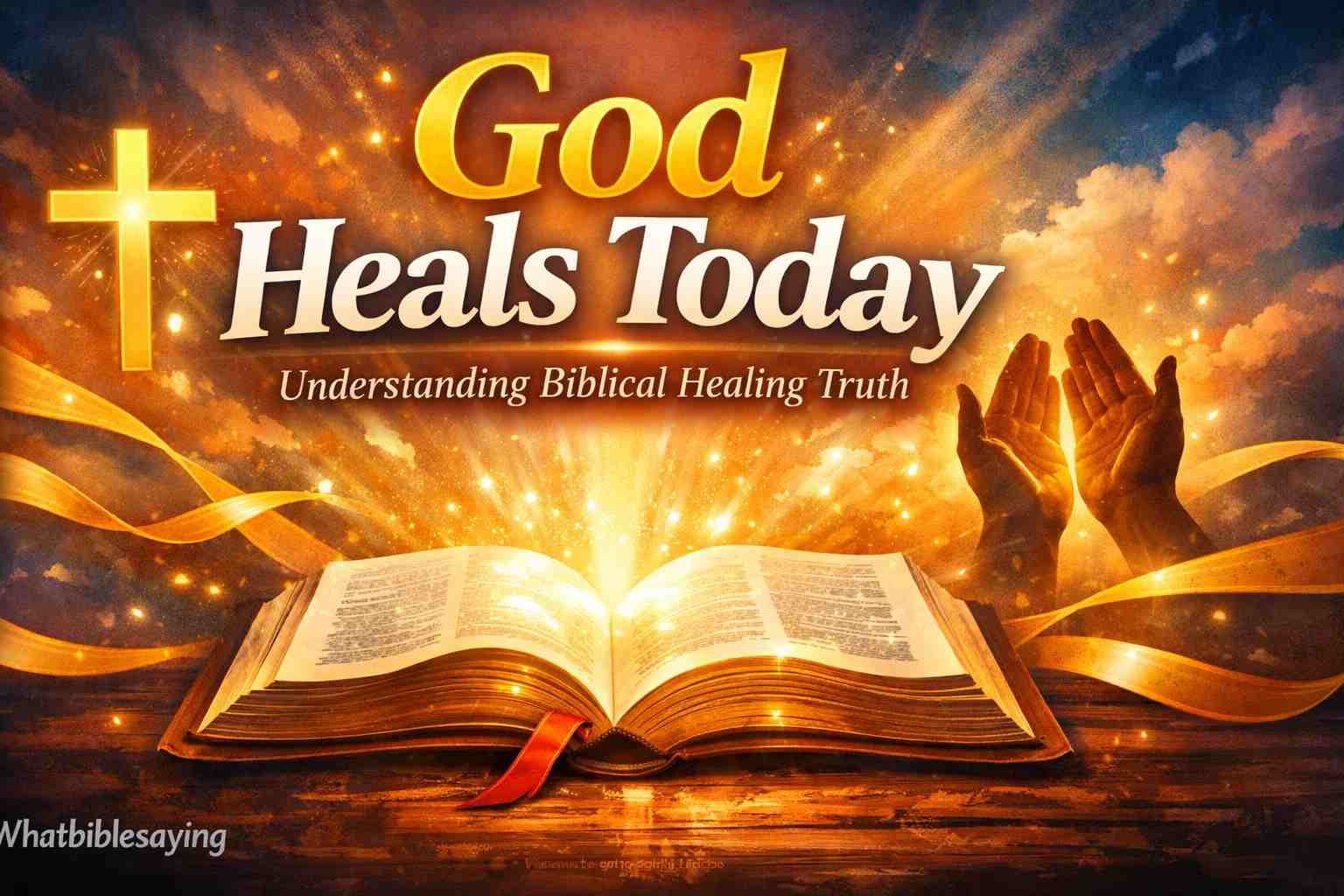
 There is something deeply human about wanting to be healed. When pain touches our body, our heart, or our mind, we begin to look for help. Some turn to doctors. Some turn to prayer. Others begin to ask a bigger question: What does the Bible say about healers?
The Bible does speak about healing. It speaks with clarity, but also with wisdom. It does not point us toward human power as the source of healing. Instead, it gently leads us back to God—the One who restores, renews, and makes whole.
Let me walk with you through what Scripture truly teaches, so your heart can rest in truth rather than confusion.
Understanding Healing in the Bible
Healing in the Bible is not limited to the body. It reaches deeper than that. It touches the soul, the heart, and even broken relationships.
In Exodus 15:26, God says:
“I am the Lord who heals you.”
This simple statement changes everything. It reminds us that healing is not a human invention. It begins with God Himself.
The Bible shows us that healing can happen in different ways:
- A body restored from sickness
- A heart healed from grief
- A soul forgiven and renewed
- Relationships brought back together
When we ask what is healing in the Bible, the answer is this: it is God bringing wholeness where something has been broken.
Who Were Healers in the Bible?
When people think about healers, they often imagine individuals with special powers. But the Bible tells a different story.
Yes, there were people through whom healing happened:
- Prophets like Elijah and Elisha
- Apostles like Peter and Paul
- And above all, Jesus
But here’s what matters most: none of them healed by their own power.
In Acts 3:12, Peter says:
“Why do you stare at us as if by our own power or godliness we had made this man walk?”
He makes it clear. The healing came from God, not from him.
So the Bible does not present healers as independent sources of power. It presents them as vessels—people through whom God chooses to work.
Jesus as the Greatest Healer
If we want to understand healing, we must look at Jesus.
He healed the blind, the sick, the broken, and even those rejected by society. But His healing was never just about removing pain. It was about restoring life.
In Matthew 9:35, we see:
“Jesus went through all the towns and villages… healing every disease and sickness.”
But He also said things like:
“Your faith has made you well.”
Jesus didn’t just heal bodies. He healed hearts and pointed people back to God.
That is the difference. True healing always leads us closer to Him.
What Are the 4 Types of Healing in Scripture?
When we read the Bible carefully, we begin to see that healing comes in more than one form. It is not limited to physical recovery.
Physical Healing
This is what most people think of first. Jesus healed leprosy, blindness, paralysis, and more. God cares about the body.
Emotional Healing
The Bible also speaks to wounds we cannot see. Grief, fear, and anxiety are real.
Psalm 147:3 says:
“He heals the brokenhearted and binds up their wounds.”
Spiritual Healing
This is the deepest healing of all. Sin separates us from God, but forgiveness restores us.
Through Christ, our souls are made whole.
Relational Healing
Broken relationships can be painful. The Bible teaches forgiveness, reconciliation, and peace between people.
When we look at these together, we see something powerful: God’s healing is complete. He doesn’t fix just one part of us. He restores the whole person.
Is Spiritual Healing Allowed in Christianity?
This is a question many people quietly carry.
The answer is simple, but important: yes, spiritual healing is part of the Christian faith—but it must come from God.
The Bible encourages:
- Prayer for healing
- Trust in God’s power
- Dependence on the Holy Spirit
James 5:14–15 says:
“Is anyone among you sick? Let them call the elders of the church to pray over them…”
This shows that spiritual healing is not forbidden. It is welcomed—when it is rooted in faith in God.
But the Bible also warns us to be careful. Not every practice that claims to heal comes from Him. Discernment matters.
The Role of Faith in Healing
Faith is often connected with healing in Scripture, but not in a mechanical way.
It is not a formula. It is a relationship.
Sometimes people were healed because they believed. Sometimes Jesus healed even when faith seemed weak.
Faith is not about controlling God. It is about trusting Him.
When we explore what does the Bible say about faith, we see that faith opens the heart to God’s work—but God remains sovereign.
What Does the Bible Say About Traditional Healers?
This is where many people feel unsure.
The Bible does not directly use the modern term “traditional healers,” but it does speak clearly about sources of power.
God allows:
- Care through medicine
- Help through people
- Prayer and spiritual support
But He warns against practices that turn away from Him.
In Deuteronomy 18:10–12, there is a strong warning against practices tied to sorcery or spiritual forces outside of God.
So the key question is not simply who is healing, but where the power comes from.
If healing leads us closer to God, aligns with His truth, and honors Him—it is good.
If it replaces God or depends on other spiritual powers—it is something Scripture cautions against.
Healing as a Spiritual Gift
The New Testament speaks about spiritual gifts given by the Holy Spirit.
In 1 Corinthians 12:9, healing is mentioned as one of these gifts.
This means that in the early church, some believers were used by God to bring healing.
But again, the pattern stays the same:
- The power belongs to God
- The person is only a servant
This keeps us grounded. It prevents us from putting our trust in people instead of the Lord.
The Danger of Misunderstanding Healers Today
Today, there is a lot of confusion.
Some claim to have special powers. Others promise guaranteed healing. Some even ask for money in exchange for miracles.
This is where we must pause.
The Bible never presents healing as something to sell. It never encourages pride or self-glory.
Instead, it calls for humility and truth.
Jesus healed freely. He never turned healing into a business.
So when we think about modern “healers,” we must ask:
- Does this point me to God?
- Does this align with Scripture?
- Does this bring peace or confusion?
Discernment protects our faith.
What This Teaches Us About God’s Heart for Healing
When you step back and look at the full picture, something beautiful appears.
God cares deeply about healing.
He sees pain.
He understands suffering.
He responds with compassion.
But His goal is not just temporary relief. It is eternal restoration.
Sometimes healing happens instantly.
Sometimes it comes slowly.
Sometimes it looks different than we expect.
Yet God is always working.
If you’ve ever wondered what does the Bible say about helping others, you’ll notice that healing is often connected with love, kindness, and care. God invites us to be part of that—through prayer, support, and compassion.
When Healing Comes from God Alone
At the end of it all, this truth remains steady:
God is the true healer.
People may help. Medicine may assist. Prayer may open doors. But the source is always Him.
And sometimes, the deepest healing is not the one we can see.
It is the quiet peace that replaces fear.
The forgiveness that lifts guilt.
The hope that rises even in suffering.
If you hold onto one thing, let it be this:
You are not alone in your pain.
God sees you.
God cares for you.
And in His perfect way, He heals.
If you want to grow deeper in this journey, take time to reflect on what does the Bible say about spiritual gifts and what does the Bible say about helping others. These truths will guide your heart toward understanding how God works through both His power and His people.
And as you walk forward, remember—healing is not just something God does.
It is part of who He is.

Reverend James has spent years studying and teaching the Bible. With warmth and wisdom, he shares deep truths in a way that’s clear, simple, and easy to understand.