
 There are moments in Scripture when God pulls back the curtain and lets us see the world that is still to come. The New Jerusalem is one of those places. It rises from the pages of the Bible like a promise made of light steady, sure, and full of hope. Many believers wonder what this city really means. Is it a physical place? A symbol? A future home? The Bible answers these questions with a quiet confidence that brings peace to the heart.
Let’s walk through these teachings slowly and clearly, letting the Bible speak in its own gentle way.
How the Bible Describes the New Jerusalem in Revelation 21–22
When people talk about the New Jerusalem, they are usually thinking of the final chapters of Revelation. These chapters describe a moment after God has finished His work of renewing creation.
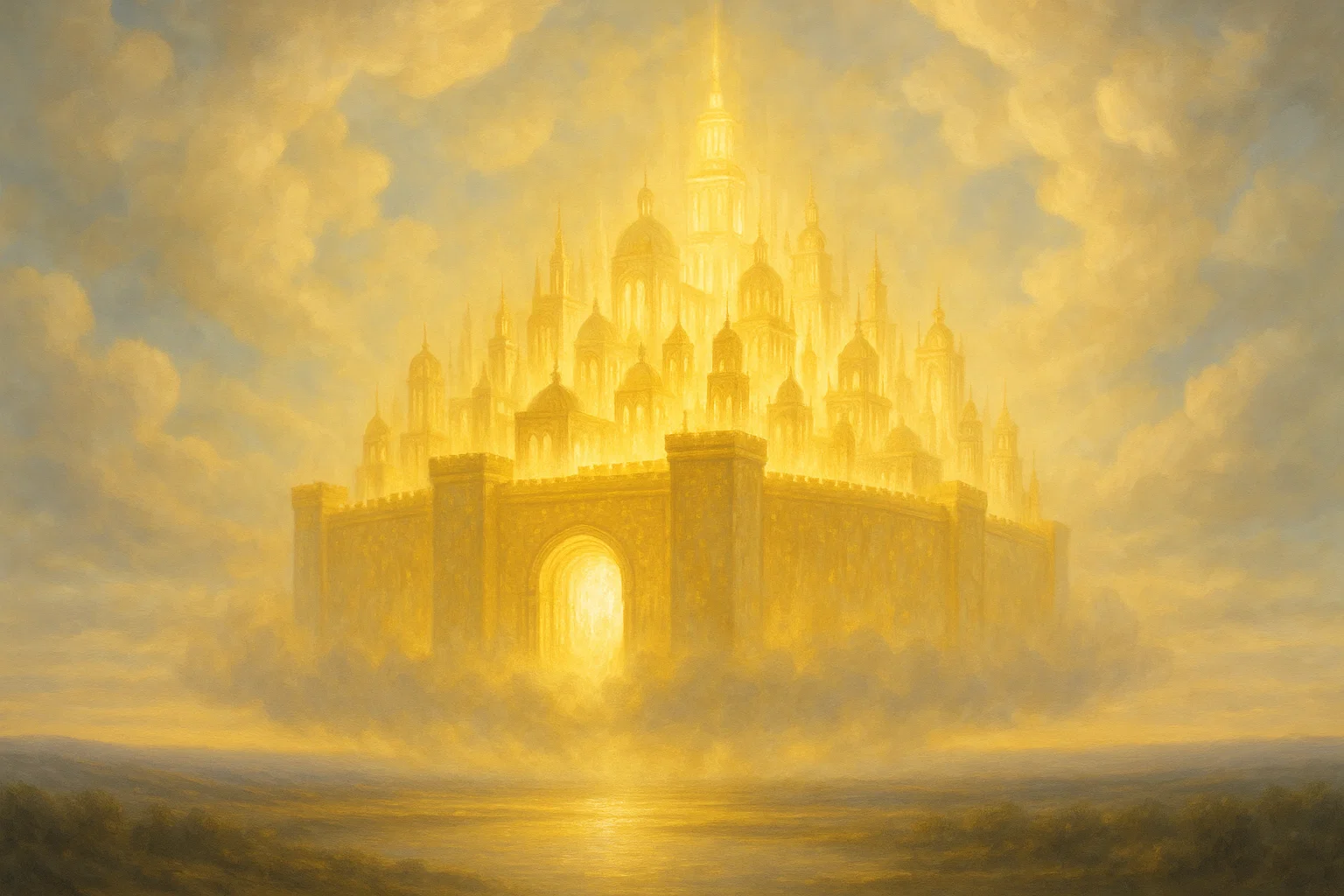
John writes, “I saw the holy city, the new Jerusalem, coming down out of heaven from God” (Revelation 21:2).
This simple sentence gives us several truths:
- The New Jerusalem comes from God, not from human hands.
- It is new, part of the renewed creation.
- It is called a holy city, set apart for God’s people.
- It descends, meaning it is God’s gift to His restored world.
The city is described with beauty that stretches our imagination. Its foundations shine with precious stones. Its gates are never shut because there is nothing to fear. A river of life flows through its center, and the tree of life stands by its banks, giving healing to the nations.
These images remind us of the Garden of Eden, of God walking with His creation. The New Jerusalem returns us to that closeness only this time, nothing can break it.
And the heart of the city is this promise:
“God will dwell with them.”
The New Jerusalem is not mainly about gold, walls, or gates. It is about God living with His people forever. It is the closing chapter of the Bible’s long story of redemption.
When we ask, “What is Jerusalem according to the Bible?” the answer reaches its highest point here. Jerusalem was once a place of worship. It becomes, in Revelation, the place of God’s eternal presence.
What the Old Testament Says About the Holy City
The New Testament does not introduce the idea of a future holy city by surprise. The prophets spoke about it many centuries before Revelation was written. Their words give us a foundation for understanding what God had planned all along.
Isaiah’s Vision of Zion
Isaiah speaks again and again about Zion, a word that appears throughout Scripture. Zion can mean Jerusalem, the temple, or God’s chosen dwelling place. But Isaiah’s descriptions often point to something beyond the earthly city.
He speaks of a day when:
- All nations will come to the mountain of the Lord
- God will wipe away tears
- Peace will cover the land
- God’s presence will fill His people with joy
These themes echo in Revelation 21. That is why many scholars see Isaiah’s Zion as a picture of the New Jerusalem.
This gives us a natural link to one of your internal topics: what the Bible says about Zion. Zion becomes a symbol of hope and restoration an early shadow of the New Jerusalem.
Ezekiel’s Vision of the Temple
Ezekiel 40–48 gives a long vision of a future temple and a restored land. Some see this as a literal future building. Others see it as symbolic of God’s perfect presence.
Revelation uses similar images, but with something new: there is no temple in the New Jerusalem because “the Lord God Almighty and the Lamb are its temple.”
This connects to another internal linking topic: what the Bible says about the temple being rebuilt. The New Jerusalem doesn’t point us toward building an earthly temple again. It points us toward God Himself dwelling with His people.
Zechariah’s Promise of a Future City
Zechariah speaks of a Jerusalem without walls, protected by God Himself. He promises a day when the Lord will reign in peace.
All of these Old Testament pictures flow into the final shape of the New Jerusalem. They are early brushstrokes of the painting that Revelation completes.
Will the New Jerusalem Be Built Before the Second Coming?
This is a common question, and Scripture gives a clear answer.
The New Jerusalem is not a city people build.
It is not a place that rises from the earth through human effort or politics. Revelation says plainly that it comes from heaven, prepared by God.
It appears after:
- The return of Christ
- The final judgment
- The creation of the new heaven and new earth
This is important. When we ask about earthly signs wars, buildings, movements we must remember that the New Jerusalem does not depend on any human event.
The city comes after Jesus has made all things new.
This also helps us place another LSI question: “Will the New Jerusalem be built before the second coming?” The biblical answer is no. The city comes after Christ’s return, as part of God’s completed plan.
Does the Bible Tell Believers to Protect Israel or Jerusalem?
This is another question tied to the topic. It appears in many Christian conversations, especially during times of conflict. You also included an LSI keyword related to Israel and another internal topic on Israel war.
The Bible certainly speaks about Jerusalem with great respect. It has a long history as the place where God chose to make His name dwell. The Psalms tell God’s people to pray for Jerusalem and to remember its importance.
But the New Testament broadens the picture.
The New Jerusalem is not about a political nation, a military effort, or national borders. It is about God gathering His people from every tribe and language.
Revelation 21 shows us:
- A city with open gates
- Nations walking in the light of God
- A place defined by God’s presence, not by earthly territory
So when people ask whether the Bible commands believers to protect Israel or Jerusalem, the answer is wiser and deeper than yes or no.
The Bible teaches:
- Pray for peace
- Care about justice
- Seek the good of all people
- Recognize Jerusalem’s role in God’s plan
- Understand that the New Jerusalem is a heavenly city, not the product of human defense
This gives Christians a balanced, non-political way to honor Scripture.
The Covenant Message Behind Joshua 24:14–15
Your LSI keywords included a question: “What is the real meaning behind Joshua 24:14/15?”
Joshua’s words have nothing directly to do with the New Jerusalem. But they speak strongly to the heart of the Bible’s message.
Joshua stands before Israel and says:
“Choose for yourselves this day whom you will serve.”
This is a covenant call. A call to loyalty, faithfulness, and trust. A call to stand with God even when others do not.
Revelation 21 ends with the same spirit.
Only those who choose God who trust Him, follow Him, and cling to His grace enter the New Jerusalem. The city is God’s answer to every moment of faithfulness on earth.
Joshua’s call prepares us for Revelation’s promise.
Those who choose God now will dwell with Him forever.
What the New Jerusalem Teaches Us About God’s Final Plan
We sometimes think of the New Jerusalem only as a city of beauty. But Scripture shows us it is much more than that. It is the closing chapter of God’s story with His people.
Here are a few simple truths the city teaches us.
1. God Finishes What He Starts
From Genesis to Revelation, the Bible is one long story of God bringing His people back to Himself. The New Jerusalem is the final sign that His plan succeeds.
2. God Brings Heaven and Earth Together
The city comes down. God does not throw away His creation. He restores it. This links to the internal topic “what the Bible says about the new earth.” The New Jerusalem is part of that new earth.
3. God Removes Every Shadow of Suffering
Revelation describes a place with:
- No tears
- No pain
- No death
- No darkness
This is not symbolic. It is the real future for God’s people.
4. God Dwells With His People Forever
This is the center of the whole promise. The Bible reaches its final fulfillment when God lives among His people with nothing between them.
5. God Brings Peace to the Nations
The city is open. Its gates never close. Its light draws the nations. This answers another internal theme: where the Bible talks about the end of the earth and the restoration God promises afterward.
The New Jerusalem is God’s “yes” to every prayer His people have ever prayed for peace.
How the Promise of New Jerusalem Strengthens Our Faith Today
Sometimes these future promises feel far away. But the Bible does not speak of the New Jerusalem to fill us with curiosity. It speaks of it to strengthen us today.
Here are gentle ways this promise helps us live right now.
It Reminds Us That Evil Does Not Win
Revelation was written to Christians facing fear. God showed them a city where He reigns in perfect peace. When we feel the weight of the world, this promise lifts our eyes.
It Helps Us Walk Through Suffering With Hope
The New Jerusalem teaches us that every hardship has an end. Pain is real, but it will not last forever. God keeps a place for His people where sorrow cannot follow.
It Encourages Us to Live Faithfully
Just as Joshua said, “Choose today whom you will serve,” the New Jerusalem helps us choose God again and again. We live with purpose because we know how the story ends.
It Helps Us Love Others With Grace
A city with open gates and healing leaves teaches us to live with compassion. We remember that God cares for every nation and every person, and we learn to do the same.
A Hope That Draws Our Hearts Toward God’s Future
The New Jerusalem is not a distant dream. It is the promise God holds out like a steady light. It is the home He prepares for His people. It is the place where every tear is wiped clean and every sorrow healed.
When Scripture speaks of this city, it is not trying to make us look only toward the future. It is helping us live faithfully in the present. It is helping us trust that the God who began the story will finish it with beauty and peace.
This is the hope believers carry. A hope that rests not on human strength but on God’s unshakable promise.
And until that day comes, we walk with confidence, knowing that God’s final city is waiting and nothing can stop the future He has prepared.
Dr. Rachel is very smart and knows a lot about the Bible. He helps us understand the Bible better by talking about the old texts in a simple way.