
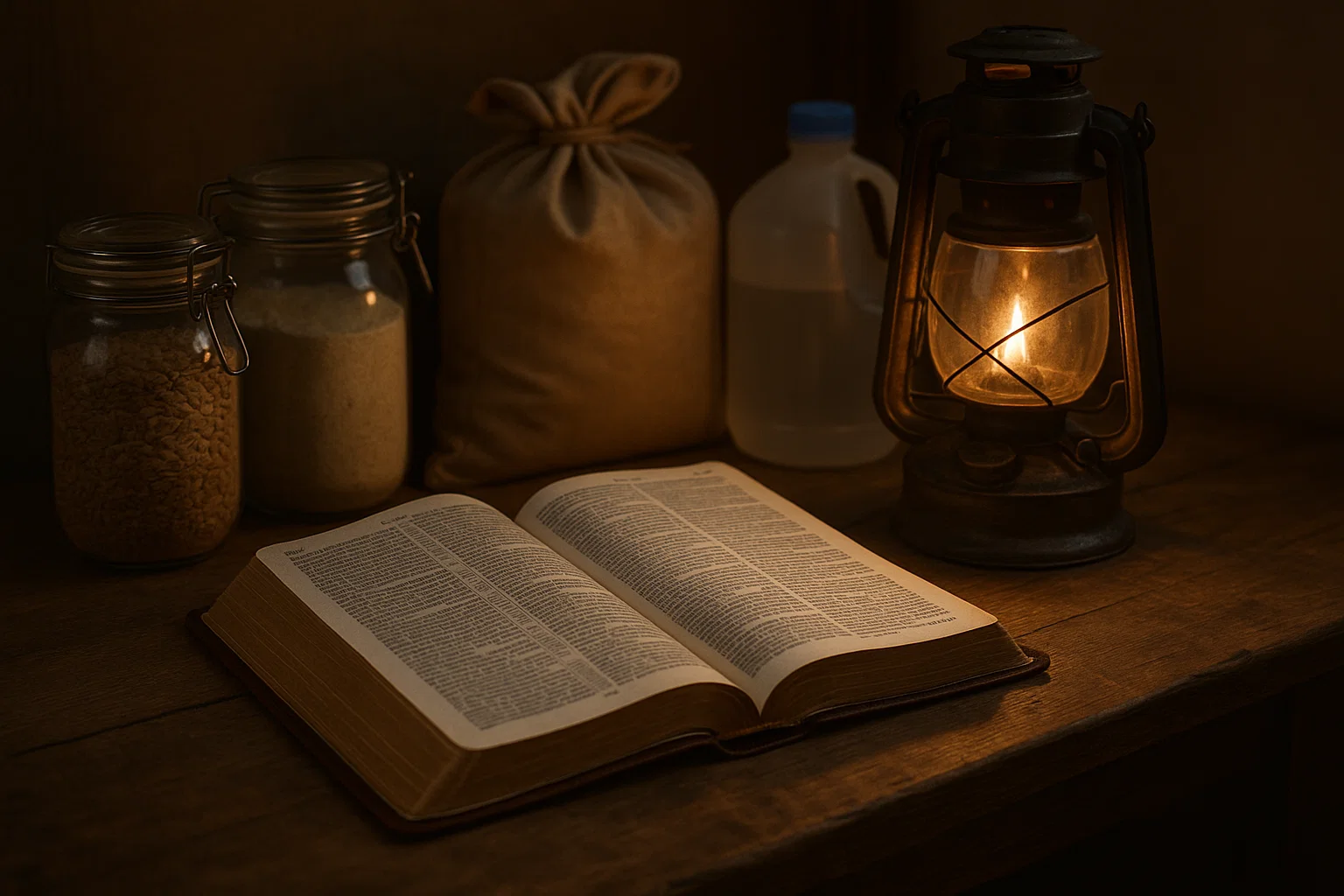
 When people talk about “prepping” today, they usually mean storing food, keeping supplies ready, or planning for emergencies. The Bible never uses the modern word, but it does speak about being wise, prepared, and alert. It also speaks strongly against living in fear. What we find in Scripture is a steady balance: God encourages His people to act with wisdom while keeping their trust fixed on Him.
Many Christians ask about prepping because the world often feels fragile. Natural disasters, economic uncertainty, and questions about the “last days” all push people to wonder what kind of preparation honors God. The Bible does not dismiss preparation, but it repeatedly guides the heart behind it. That is where the true teaching lies.
Let’s walk through what Scripture says about preparedness physically, emotionally, and spiritually and how passages like Matthew 17:21, the “last days,” and the wisdom teachings of Proverbs help shape a Christian view of responsible readiness.
Why Christians Ask About Prepping Today
Whenever life feels uncertain, people naturally look for stability. In the ancient world, God’s people experienced the same concerns we feel now. Harvests failed. Wars began without warning. Food shortages were real. Families often survived because they planned ahead.
Today’s version looks different. People speak of “prepping,” emergency kits, stored food, or learning basic survival skills. But underneath those actions sits a deeper question:
Is this responsible faith or fear-driven living?
Christians want to honor God with both trust and wisdom. They want to make sure preparation does not become anxiety, and that faith does not become passivity. The Bible gives space for both wisdom and dependence on God a tension that Scripture handles with surprising clarity.
What Scripture Teaches About Wise Preparation
If we turn to the wisdom books of the Bible, we find clear teaching about planning ahead. These are not fear-based commands but gentle, practical guidance about living well.
Proverbs points to responsible foresight
One of the clearest lessons comes from Proverbs 6:6–8:
“Go to the ant… she provides her food in summer and gathers her food at harvest.”
This is not panic. It is wisdom. Ants work during times of plenty so they can endure times of need. The Bible presents this as healthy, steady preparation not hoarding, not anxiety.
Another example appears in Proverbs 24:27:
“Prepare your work outside; get everything ready in the field, and after that build your house.”
In simple terms:
Do the necessary work first. Think ahead. Plan wisely.
These verses show that preparing for the future is part of biblical wisdom. God does not expect His people to ignore reality or refuse to plan. Throughout Scripture, preparation appears as a mark of good stewardship.
Trust and preparation walk together
A helpful summary offered by many pastors is:
God does the planning; we do the preparing.
That means preparation is not meant to replace faith. It grows out of faith. When believers plan with a calm heart, trusting God with the outcomes, they walk in the wisdom Scripture encourages.
Is Prepping Against the Bible?
A common question Christians ask is whether prepping shows a lack of trust in God. Scripture gives a clear answer when we look at the full picture:
✔️ Prepping is not sinful.
✔️ The heart behind it determines whether it honors God.
The Bible never condemns gathering supplies, storing food, or preparing for hard times. What it addresses is motives:
• If prepping comes from fear
• If it pushes generosity aside
• If it replaces trust in God
• If it becomes a way to control the future
then it moves away from biblical wisdom.
But when preparation flows from love and responsibility, the Bible supports it. For example, many Christian teachers note that:
“A Christian may be a prepper if the Lord is directing that action and if one’s motive is to use what God has given to help others in time of need.”
That understanding aligns perfectly with Scripture. Preparation in love is very different from preparation in panic.
✔️ Prepping becomes unbiblical when:
• It is driven by fear
• It causes you to isolate instead of serve
• It makes generosity difficult
• It becomes more important than spiritual readiness
✔️ Prepping honors God when:
• It is guided by wisdom
• It helps you serve others
• It supports your family’s well-being
• It rests in faith rather than fear
The Bible always returns the believer’s attention to the heart.
Preparing the Heart: Scripture’s Call to Spiritual Readiness
While the Bible supports wise, practical preparation, its strongest emphasis is on spiritual preparedness. Throughout the New Testament, Jesus and the apostles speak about being ready not for a storm or a famine, but for a holy life that stands steady in any circumstance.
In Luke 21:36, Jesus says:
“Be watchful… that you may be able to stand.”
This kind of readiness involves:
• A clear mind
• A steady heart
• A life aligned with God’s purposes
• A spiritual alertness that notices what matters most
This is why the biblical pattern always places spiritual preparation above material preparation. A full pantry cannot steady the heart. A calm, trusting walk with God can.
Christians are invited to live with awareness, not alarm. Prepared, but peaceful. Alert, but not anxious.
Why Matthew 17:21 Is Missing in Many Modern Bibles
This is one of the most asked questions whenever people talk about last days, spiritual warfare, or Bible accuracy. The King James Version includes the verse:
“Howbeit this kind goeth not out but by prayer and fasting.”
But many modern translations place it in a footnote or omit it entirely. That leads some readers to wonder if something was removed.
The reason is simple and important:
✔️ The oldest Greek manuscripts such as
• Codex Sinaiticus
• Codex Vaticanus
do not contain Matthew 17:21.
These manuscripts are closer in time to the original writings than the later copies used for the King James Version. Scholars believe the verse was added into Matthew from Mark 9:29 by a later copyist.
So modern translators are not “removing” anything. They are faithfully reflecting the earliest available text.
In simple terms:
• The King James used later manuscripts that included the verse.
• Modern translations use older manuscripts that did not include it.
• That is why many Bibles include Matthew 17:21 as a footnote rather than a main verse.
For readers, this is not a loss it is a window into how God has preserved Scripture through thousands of handwritten copies.
What the Bible Says About Preparing for the Last Days
Few topics raise as many questions as the “last days.” Some people prep physically because they fear global crisis. Scripture speaks honestly about difficulty but does not call believers to fear.
✔️ 2 Timothy 3:1–5
Tells us that the last days will include moral decline and challenging times.
The emphasis is on character, not survival skills.
✔️ Matthew 24:6, 36
Jesus speaks of wars, rumors of wars, and global shaking.
But then He says:
“See that you are not alarmed.”
Again, the focus is spiritual steadiness.
✔️ The Parable of the Ten Virgins (Matthew 25:1–13)
Five were wise because they were ready.
Five were caught unprepared.
The “oil” represents spiritual watchfulness and relationship with God not physical supplies.
✔️ Scripture never tells believers:
“Stockpile food so the last days do not overwhelm you.”
✔️ Scripture repeatedly tells believers:
“Stand firm. Stay awake. Keep your heart ready.”
So yes, the Bible speaks about preparing for the last days but it shapes that preparation in spiritual, moral, and relational terms.
What Wise Preparation Looks Like for Christians Today
If we bring all these biblical threads together, a healthy picture emerges. Christian preparation in the modern world can include:
Reasonable, not extreme, planning
• Enough food for a few weeks
• A basic emergency kit
• Medication and family necessities
• Tools or items that support everyday life
These things are normal, wise, and helpful.
Planning that helps you help others
The early church was known for shared generosity. Wise prepping can make generosity easier, not harder.
Avoiding hoarding
Hoarding is fear with a mask on. It closes the hand instead of opening it. Scripture pushes us toward generosity, not stockpiling that harms others.
Keeping spiritual life in first place
A prepper’s closet cannot replace prayer. Supplies cannot replace Scripture. Planning cannot replace trust.
Christian readiness is strongest when practical preparation rests on spiritual peace.
What This Teaches Us About Living With Peace Instead of Fear
When you look at the whole sweep of Scripture from Proverbs to Jesus’ teachings to the early church you find a steady, gentle pattern:
Wise preparation is good. Fearful living is not.
The Bible encourages planning, responsibility, and alertness. But it also reminds us that the deepest preparedness is spiritual. God calls His people to walk in trust, serve others, and be ready in heart no matter what comes.
Prepping in a Christian way means:
• Wisdom, not panic
• Stewardship, not self-protection
• Faith, not fear
• Readiness of heart, not just readiness of hands
When we hold these truths together, we find a life that is both steady and peaceful prepared for challenges but anchored in God’s protection.
Dr. Rachel is very smart and knows a lot about the Bible. He helps us understand the Bible better by talking about the old texts in a simple way.