
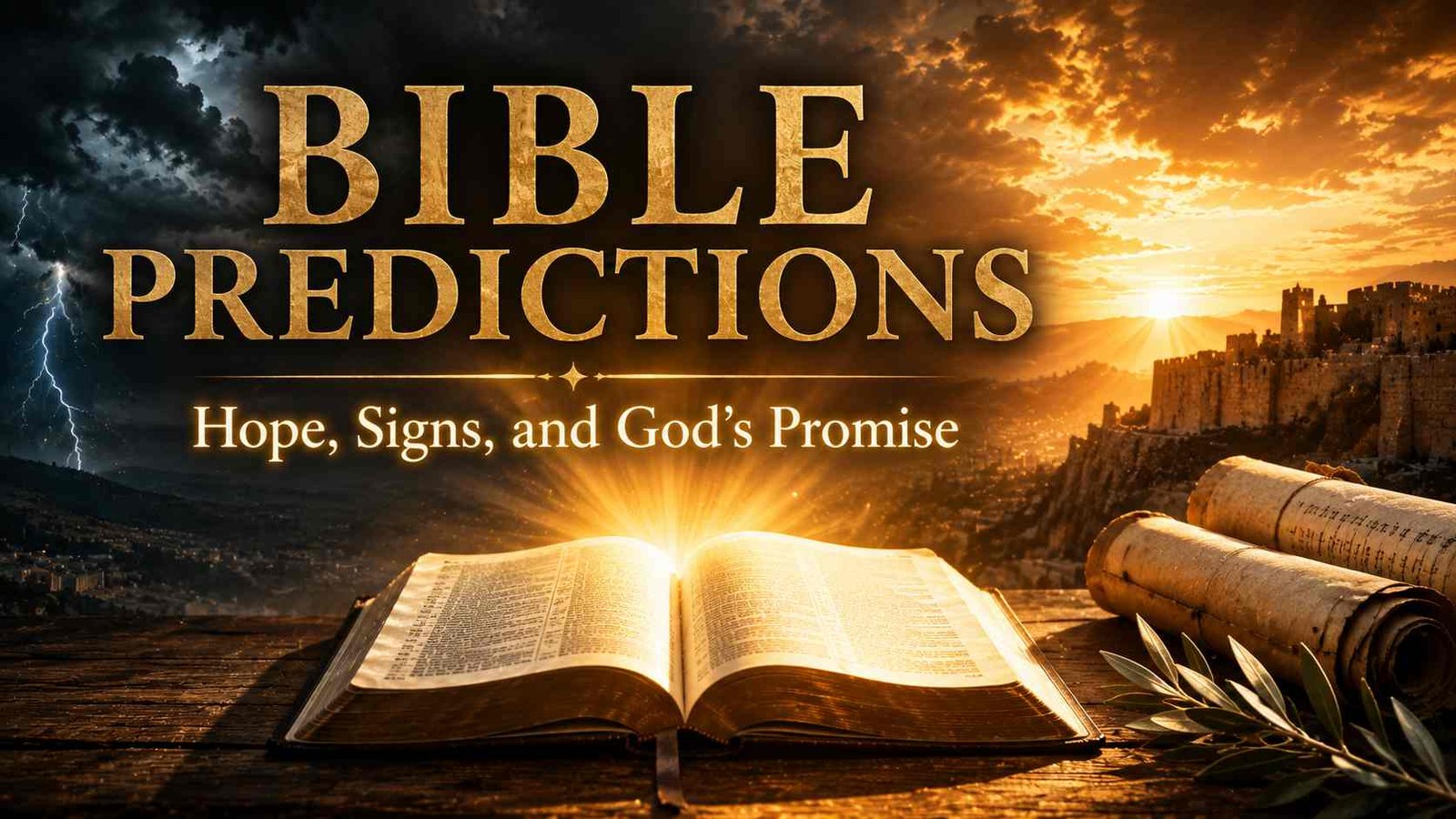
 People have always wondered about the future. Some look at world events. Others study history, science, or human behavior. Many open the Bible because they want answers that feel deeper and more lasting.
The Bible speaks often about the future. It talks about kingdoms rising and falling, the coming of Jesus Christ, difficult times on earth, the spread of God’s truth, and the promise of eternal life. Some prophecies were fulfilled long ago. Others are still discussed and studied today.
At the center of biblical prophecy is not fear. It is hope.
God did not give prophecy simply to scare people. Scripture shows again and again that prophecy was meant to guide hearts back to Him. Jesus warned people about deception, suffering, and spiritual darkness, but He also promised peace, salvation, and eternal joy for those who trust God.
Many people ask questions like:
- What are things the Bible predicted?
- What are the seven signs in Revelation?
- Will we still be male and female in heaven?
- Which sin can God never forgive?
These are important questions. They touch fear, curiosity, and faith all at once. The Bible gives thoughtful answers, though not every mystery is explained fully. Still, Scripture gives enough truth to help believers live with wisdom and confidence.
Why Biblical Prophecy Matters
The Bible contains hundreds of prophecies. Some scholars estimate that nearly one-third of Scripture involves prophecy in some form. That includes warnings, promises, visions, symbolic dreams, and direct messages from God.
One reason prophecy matters is because it shows God’s control over history.
In the Old Testament, prophets spoke about nations before major events happened. Isaiah spoke of coming judgment and restoration. Daniel described future kingdoms. Micah predicted that the Messiah would be born in Bethlehem centuries before Jesus arrived there.
When Jesus came into the world, Christians saw many Old Testament prophecies fulfilled in His life, death, and resurrection.
For believers, fulfilled prophecy strengthens trust in Scripture.
Another reason prophecy matters is because it prepares the human heart. Jesus often told His followers to stay awake spiritually. He warned against living carelessly or becoming consumed by fear and greed.
Matthew 24 describes wars, false teachers, natural disasters, and growing wickedness. Yet Jesus also said:
“See that you are not troubled.” — Matthew 24:6
That balance matters. The Bible does not encourage panic. It encourages readiness, faithfulness, and hope.
Many readers who study topics like what the Bible says about the end times or where the Bible talks about the rapture are really searching for reassurance. They want to know whether God still has a plan for the world.
According to Scripture, He does.
What Are Things the Bible Predicted?
The Bible contains many predictions, but several major themes appear again and again throughout Scripture.
The Coming of Jesus Christ
One of the clearest biblical prophecies involves the Messiah.
The Old Testament foretold details about Jesus long before His birth:
| Prophecy | Old Testament Reference | Fulfillment |
|---|---|---|
| Born in Bethlehem | Micah 5:2 | Matthew 2:1 |
| Born of a virgin | Isaiah 7:14 | Matthew 1:22–23 |
| Betrayed for silver | Zechariah 11:12–13 | Matthew 26:14–15 |
| Suffered for sins | Isaiah 53 | Crucifixion accounts |
Christians see these prophecies as evidence that God’s promises unfold across history with purpose.
Wars and Unrest
Jesus predicted troubled times in the world.
He spoke about:
- Wars and rumors of wars
- Famines
- Earthquakes
- Spiritual deception
- Growing fear among nations
These themes appear especially in Matthew 24 and Luke 21.
Every generation has seen conflict and suffering, which is why people often connect modern events to biblical prophecy. Still, many Bible teachers remind believers not to rush into fear-based predictions or date-setting.
The Bible encourages wisdom more than speculation.
The Spread of the Gospel
One hopeful prediction in Scripture is the worldwide spread of God’s message.
Jesus said:
“This gospel of the kingdom will be preached in all the world.” — Matthew 24:14
Today the Bible has been translated into thousands of languages. Christianity exists on every continent. Many believers see this global reach as part of biblical prophecy continuing through history.
Spiritual Decline
The Bible predicts that many people will drift away from truth and kindness.
Second Timothy 3 describes people becoming:
- Lovers of self
- Proud
- Ungrateful
- Without self-control
These verses often feel surprisingly modern to readers today.
At the same time, Scripture calls believers to live differently. Christians are urged to remain loving, humble, and faithful even during difficult times.
Final Judgment and Restoration
The Bible teaches that history is moving toward a final judgment where evil will not last forever.
Revelation describes:
- God defeating evil
- Justice being established
- A new heaven and new earth
- Eternal peace for God’s people
This future hope is one reason many Christians continue studying what percent of the Bible is prophecy and what the Bible says about prophecy. Prophecy is not only about disaster. It is also about restoration.
What Are the 7 Signs in Revelation?
The Book of Revelation is one of the most discussed books in the Bible. Its visions contain symbolic imagery, numbers, heavenly scenes, and warnings.
Different Christian traditions interpret Revelation differently. Some read parts literally, while others understand much of it symbolically. Still, several major themes are widely recognized.
The Seven Churches
Revelation begins with messages to seven churches in Asia Minor.
These churches represented real communities, but many Christians also see them as spiritual lessons for believers today. Jesus praised faithfulness but warned against compromise, pride, and spiritual coldness.
The Seven Seals
The seals in Revelation describe hardship and judgment spreading across the earth.
The imagery includes:
- Riders on horses
- Conflict
- Famine
- Death
- Cosmic disturbances
These scenes remind readers that human history contains suffering, but they also point to God’s ultimate authority.
The Seven Trumpets
The trumpets symbolize warning.
Just as trumpets in ancient times announced danger or gathered people together, these visions call humanity to repentance and awareness.
The Seven Bowls
The bowls describe final judgments against evil.
The language is dramatic and symbolic. The focus is not entertainment or fear, but the seriousness of rejecting God completely.
Spiritual Deception
Jesus warned repeatedly about deception.
False prophets, misleading teachings, and spiritual confusion appear throughout biblical prophecy. This is one reason Christians are encouraged to know Scripture personally rather than blindly follow trends or personalities.
Global Trouble
Revelation speaks of worldwide suffering, persecution, and fear.
Readers throughout history have connected these passages to wars, disasters, or political movements. Still, careful Bible teachers often caution against claiming certainty about every modern event.
The Return of Christ
At the center of Revelation is the victory of Jesus Christ.
The final chapters describe hope:
- Evil defeated
- Tears wiped away
- Death removed
- God dwelling with His people
That promise shapes the entire message of Revelation.
What Does The Bible Say About the End Times?
Many people imagine the end times only as destruction. The Bible certainly speaks about difficult days, but it also speaks about endurance and faith.
Jesus emphasized spiritual readiness more than fear.
He taught believers to:
- Stay faithful
- Care for others
- Avoid deception
- Continue praying
- Keep trusting God
One important truth often missed is this: the Bible does not call Christians to panic.
Again and again, Scripture points believers toward peace in God’s presence.
Philippians 4:6 says:
“Do not be anxious about anything.”
That does not mean ignoring reality. It means remembering that God remains sovereign even during uncertainty.
Questions about how will the earth be destroyed in the Bible or where does the Bible say Satan lives often come from a deep human need to understand the future. Yet Jesus repeatedly redirected attention toward faithfulness in the present.
The Bible teaches that our relationship with God matters more than predicting timelines.
Will We Still Be Male and Female in Heaven?
This question comes from genuine curiosity. People wonder whether human identity continues after resurrection.
Jesus addressed part of this topic in Matthew 22:30:
“At the resurrection people will neither marry nor be given in marriage.”
This verse explains that earthly marriage will not function the same way in heaven. However, Scripture does not teach that people lose their personal identity.
The Bible presents heaven as a place of fullness, joy, and restored relationship with God.
Male and female were created by God in Genesis, and human identity matters deeply to Him. At the same time, heavenly life is described as different from earthly life in ways we cannot fully understand yet.
The Apostle Paul explained in 1 Corinthians 15 that resurrection bodies will be transformed. They will no longer suffer sickness, weakness, or death.
Christians throughout history have understood heaven not as the loss of identity, but as the perfection of life in God’s presence.
Some mysteries remain, and the Bible does not answer every detail directly. Still, Scripture consistently teaches that eternal life will be good, complete, and filled with God’s peace.
Which Sin Can God Never Forgive?
This question troubles many people.
Jesus spoke about “blasphemy against the Holy Spirit” in passages like Matthew 12:31–32. Because of this, some people fear they may have committed an unforgivable sin.
Understanding the context matters.
Jesus spoke these words after religious leaders witnessed God’s work through Him but deliberately called it evil. Their hearts had become hardened against truth itself.
Many pastors and Bible scholars explain that the unforgivable sin involves persistent rejection of God’s Spirit and truth.
A person who sincerely worries about offending God is usually showing a heart that still cares about Him. That is very different from someone who completely hardens themselves against God.
The Bible repeatedly teaches that God is merciful.
Consider these verses:
- “If we confess our sins, he is faithful and just to forgive us.” — 1 John 1:9
- “Everyone who calls on the name of the Lord will be saved.” — Romans 10:13
Scripture is filled with stories of forgiveness:
- Peter denied Jesus
- David committed terrible sins
- Paul persecuted Christians
Yet God restored them.
The message of the gospel is not hopelessness. It is redemption.
What the Bible Predicts About Human Hearts
One striking part of biblical prophecy is how often it focuses on the condition of the human heart.
The Bible predicts:
- Pride
- Selfishness
- Spiritual confusion
- Moral compromise
- Love growing cold
These are not only future events. They are present realities.
Second Timothy 3 describes people becoming obsessed with themselves and disconnected from truth. Many readers see echoes of modern culture in these descriptions.
At the same time, Scripture predicts spiritual awakening too.
Throughout history, periods of darkness have often been followed by renewal, repentance, and revival.
This balance matters. The Bible does not present humanity as hopeless. God continues calling people toward grace and truth.
That is why many believers continue studying subjects like:
- what the Bible says about prophecy
- what does the Bible say about hope
- how many prophecies are in the Bible
- where does the Bible talk about the rapture
People are searching not only for information, but for meaning.
Prophecy Is Also About Hope
It is easy to focus only on dramatic images from Revelation or difficult predictions about the future.
But prophecy in Scripture repeatedly points toward hope.
The Bible predicts:
- Evil will not last forever
- God sees injustice
- Christ will return
- Death will end
- God’s kingdom will be restored
Revelation 21 paints one of the most beautiful pictures in Scripture:
“He will wipe every tear from their eyes.”
That promise has comforted believers for generations.
People living through war, illness, persecution, grief, and uncertainty have held onto these words because they point beyond temporary suffering.
Biblical prophecy is not simply about destruction. It is about restoration.
The Bible says God is preparing a future where pain and death no longer rule. That hope changes how believers live today.
Instead of despair, Christians are called to:
- Love others
- Remain faithful
- Serve humbly
- Trust God
- Keep hope alive
What This Teaches Us About Faith
The Bible predicts many things, but one message stands above the rest: God remains faithful.
Scripture speaks honestly about suffering, conflict, deception, and judgment. Yet it also speaks about mercy, salvation, and eternal hope.
That balance matters.
When people study prophecy, it is easy to become overwhelmed by fear or endless speculation. Jesus continually pointed people back to trust, prayer, and faithful living.
The future belongs to God.
For believers, prophecy is not meant to produce panic. It is meant to strengthen faith and remind us that history is moving toward God’s purpose.
Even when the world feels uncertain, Scripture teaches that God has not abandoned His creation.
And perhaps that is the greatest prediction of all: darkness will not win forever.

Dr. Michael is a well-known author who shares why trusting the Bible matters. He speaks in a way that’s easy to follow, helping people see its truth clearly.