
Pastor Joshua Mhlakela became widely discussed after online claims linked him to a rapture prediction. This article examines where those claims came from, what is publicly known about him, and how the Bible addresses end-times predictions. By comparing viral statements with Scripture, it helps readers separate rumor from truth and understand why the Bible cautions against setting dates for Christ’s return.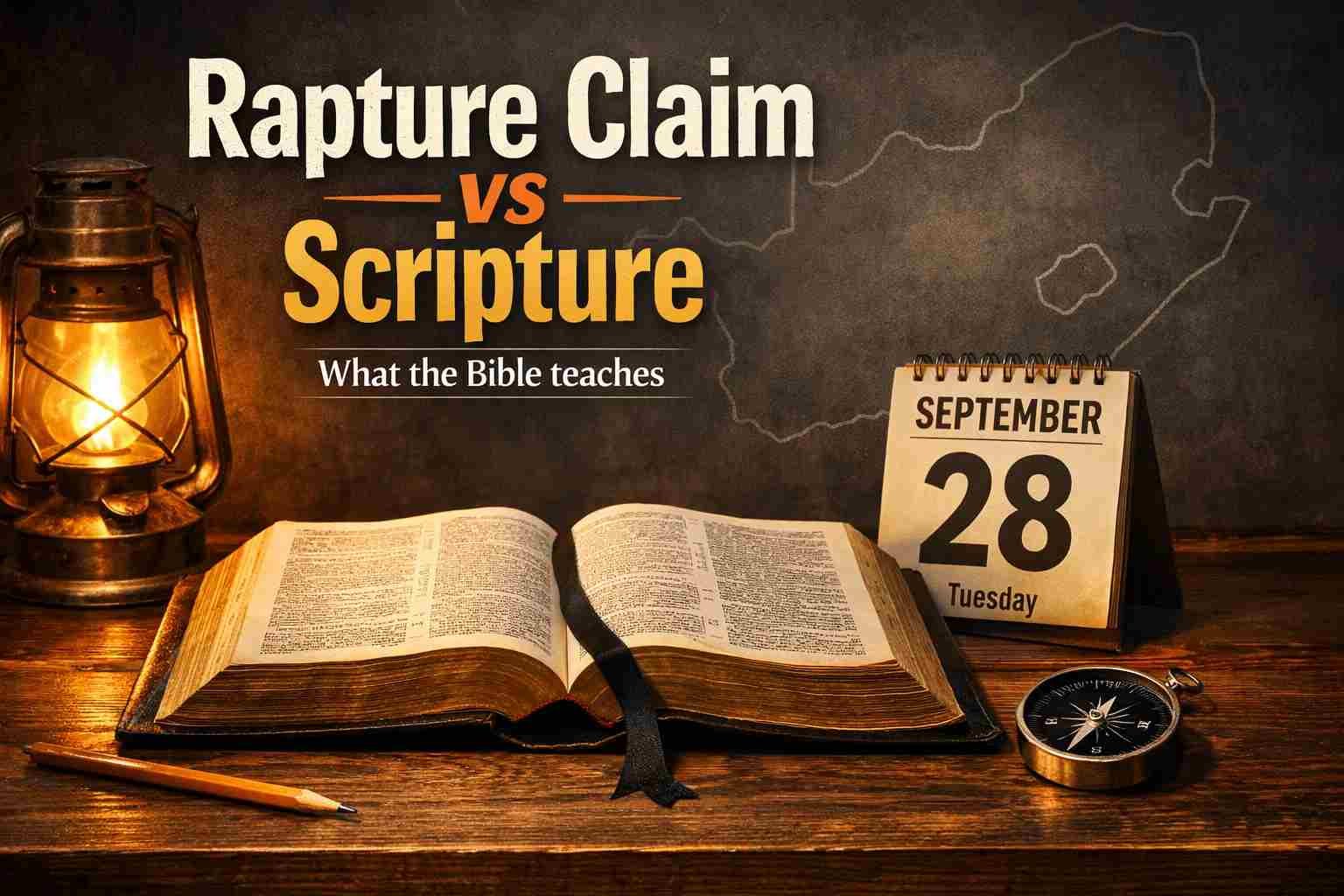 Fear is persuasive. Especially in uncertain times.
When the world feels unstable, people crave certainty. A clear timeline feels comforting, even if it’s false. It gives the illusion of control.
But Scripture never builds faith on secret knowledge. It builds faith on trust.
Jesus consistently shifted attention away from timelines and toward readiness. He spoke of faithfulness, love, perseverance, and obedience, not countdowns.
A Christianity built on panic collapses quickly. A Christianity rooted in Christ endures.
Where Does the Bible Talk About the Rapture?
This question needs honesty.
The Bible speaks clearly about Christ’s return. It speaks about resurrection. It speaks about believers being gathered to the Lord.
What it does not do is provide dates or calendars.
The passages often cited describe hope, not schedules. Encouragement, not alarms.
The consistent message is this: live as if Christ could return at any time, but do not claim to know when that time will be.
That balance is intentional.
Is the Word “Rapture” in the KJV?
No.
The word “rapture” does not appear in the King James Version or any English Bible translation.
The term comes from a Latin word meaning “caught up,” which appears in discussions of certain passages. Over time, the word became a theological shorthand.
But here’s the key point: a term can exist without justifying speculation.
The Bible’s focus is not on the label, but on the outcome. Christ returns. God redeems. Evil ends. Hope wins.
That’s the center. Not dates.
What the Bible Says About Predicting Dates
Jesus’ words in Matthew are unambiguous.
No one knows the day or the hour.
That statement alone dismantles every confident prediction, regardless of how persuasive the speaker appears.
Scripture doesn’t treat date-setting as harmless enthusiasm. It treats it as a misunderstanding of God’s authority.
God reserves timing for Himself.
Human certainty in this area is not faith. It is presumption.
A Quick, Fair Note on Christianity Today Magazine
Some readers ask broader questions when rapture discussions arise, including who shapes modern Christian conversations.
Christianity Today was founded by Billy Graham in the mid-20th century as a thoughtful evangelical publication. It was created to encourage serious engagement with Scripture, theology, and culture.
It does not promote rapture date-setting. In fact, mainstream Christian scholarship consistently rejects it.
The magazine’s existence reminds us of something important: Christianity has long valued careful thought, not impulsive prophecy.
What Is Joshua Selman’s Background?
Because names are often confused online, it’s important to clarify that Joshua Selman is a different individual entirely.
He is a Nigerian pastor with a well-documented ministry, public teachings, and a clear theological framework. Whatever one thinks of his views, he should not be conflated with Pastor Joshua Mhlakela.
Accuracy matters. Confusion breeds mistrust.
How to Test a Modern Prophetic Claim Without Becoming Cynical
Scripture does not call believers to gullibility. Nor does it call them to cynicism.
It calls them to wisdom.
Here’s a simple, biblical way to evaluate claims like this:
Does the message align with Scripture, or does it go beyond it?
Does it encourage steady faith, or stir panic?
Does it center Christ, or elevate a personality?
Is there humility, or certainty about things God has kept hidden?
When a message fails these tests, it should be set aside.
Not angrily. Calmly.
What This Teaches Us About Faith
The Bible never tells believers to live in fear of tomorrow.
It tells them to live faithfully today.
When rapture claims dominate conversation, something important is often lost: the call to love God and neighbor right now.
Christ didn’t tell His followers to scan the horizon endlessly. He told them to feed the hungry, forgive freely, and remain faithful.
That calling does not expire.
Whether Christ returns tonight or centuries from now, the instruction remains the same.
Stay awake spiritually.
Stay humble.
Stay rooted in Scripture.
And when a voice claims secret knowledge about God’s timing, remember this: God has never hidden salvation behind fear. He has always revealed it through Christ.
For further study, see What does the Bible say about prophecy and What does the Bible say about false preachers, where Scripture speaks with clarity and balance.
That’s where confidence belongs.
Dr. Rachel is very smart and knows a lot about the Bible. He helps us understand the Bible better by talking about the old texts in a simple way.