
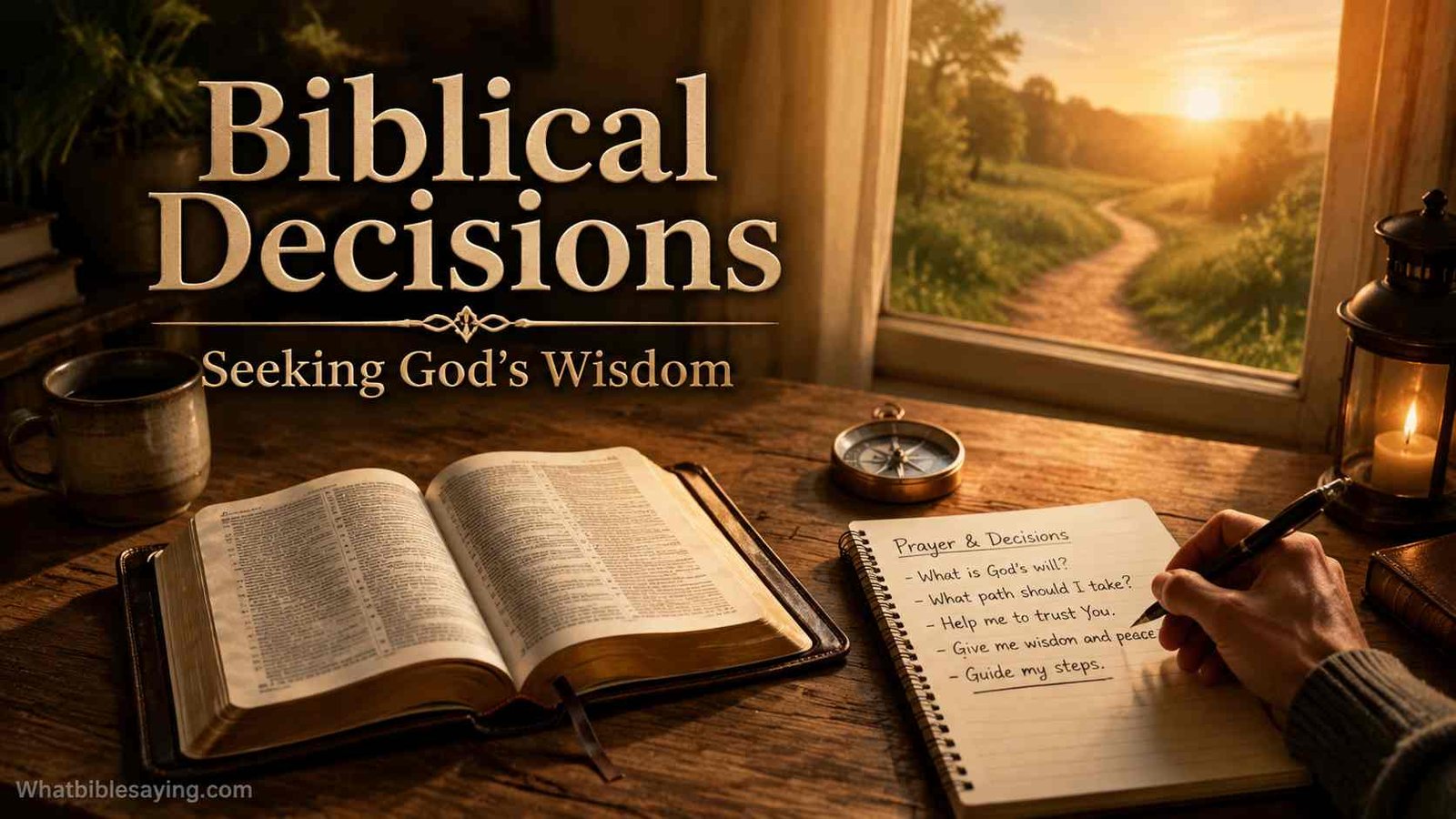
 Life is filled with decisions. Some choices seem small, such as how we spend our time or what words we speak. Others can shape our future, such as choosing a spouse, changing careers, handling money, or deciding how we respond during difficult seasons.
Many people wonder, what does the Bible say about decisions? The Bible teaches that God cares about our choices and desires to guide us with His wisdom. Scripture does not promise that every decision will be easy, but it shows us how to seek God, understand His principles, and walk faithfully.
The Bible presents decision-making as more than simply following our feelings. Our emotions can change, but God’s wisdom remains steady. Through prayer, Scripture, wise counsel, and a heart willing to obey, believers can make choices that honor God.
Proverbs 3:5–6 gives this encouragement:
“Trust in the Lord with all your heart and lean not on your own understanding; in all your ways submit to him, and he will make your paths straight.”
This verse reminds us that God is not distant from our daily choices. He invites us to trust Him and seek His direction.
What Does The Bible Say About Decisions With God’s Guidance?
The Bible teaches that wise decisions begin with recognizing our need for God’s guidance.
Human understanding is limited. We may see only the present moment, while God sees the beginning, middle, and end. Because of this, Scripture encourages believers to seek God before making important choices.
James 1:5 says:
“If any of you lacks wisdom, you should ask God, who gives generously to all without finding fault, and it will be given to you.”
God does not criticize people for needing wisdom. Instead, He invites them to ask.
This principle applies to many areas of life:
- Choosing relationships
- Handling financial decisions
- Responding to conflict
- Making career choices
- Growing spiritually
- Overcoming temptation
Seeking God does not mean ignoring practical thinking. Biblical decision-making combines prayer, wisdom, careful thought, and obedience to God’s Word.
A person who follows Christ does not have to make choices alone. God provides guidance through Scripture and the work of the Holy Spirit.
Biblical Principles For Making Wise Decisions
The Bible gives many principles that help believers make choices with wisdom and faith.
Seek Wisdom Before Choosing
Wisdom is one of the most important themes in Scripture. The Bible does not encourage people to act quickly without understanding the consequences.
Proverbs 4:7 says:
“The beginning of wisdom is this: Get wisdom. Though it cost all you have, get understanding.”
Biblical wisdom means seeing life from God’s perspective. It involves knowing what is right, understanding consequences, and choosing what reflects God’s character.
For example, a person may have an opportunity that looks successful but requires dishonesty. Human thinking may focus only on the reward, but biblical wisdom considers whether the choice honors God.
Wisdom asks questions like:
- Does this choice reflect God’s truth?
- Will this help me grow spiritually?
- Could this harm others?
- Am I choosing based on faith or fear?
The Bible teaches that good decisions are not only about what benefits us but also about what is pleasing to God.
Pray And Ask God For Direction
Prayer is central to biblical decision-making.
Throughout Scripture, people sought God before major choices. Jesus Himself spent time in prayer before important moments.
Before choosing the twelve apostles, Jesus prayed through the night (Luke 6:12–13). This shows the importance of seeking God’s guidance before making significant decisions.
Prayer helps believers:
- Slow down before acting
- Examine their motives
- Ask for wisdom
- Find peace
- Trust God’s timing
Sometimes God answers through clear direction. Other times, He provides wisdom and peace while we walk through the decision.
Not every decision will come with a dramatic sign. Often, God guides believers through His Word, wise counsel, and a heart shaped by faith.
Listen To Godly Counsel
The Bible also teaches the importance of receiving advice from wise people.
Proverbs 15:22 says:
“Plans fail for lack of counsel, but with many advisers they succeed.”
God can use other people to provide encouragement, correction, and wisdom.
A wise believer does not make every decision based only on personal feelings. They seek advice from people who understand Scripture and demonstrate godly character.
Good counsel should help us move closer to God, not away from Him.
However, the Bible also reminds us that not every opinion should control our choices. Human advice must always be tested against God’s truth.
What Does The Bible Say About Decisions In Difficult Situations?
Some decisions are challenging because they involve temptation, pain, or uncertainty.
The Bible acknowledges that people face difficult choices. Throughout Scripture, faithful people had moments where they had to choose between following God and following their own desires.
Joseph faced a difficult decision when Potiphar’s wife tempted him. Instead of choosing temporary pleasure, Joseph chose faithfulness to God (Genesis 39).
Daniel faced pressure to compromise his faith in Babylon, but he decided to remain committed to God (Daniel 1).
These stories show that biblical decisions are often about choosing faithfulness even when the easier path looks attractive.
What Does The Bible Say About Sexual Immorality And Decisions?
The Bible teaches that decisions about sexuality are important because God created human beings with dignity and purpose.
Scripture repeatedly calls people to honor God with their bodies and practice purity.
1 Corinthians 6:18–20 teaches believers to flee sexual immorality and remember that their bodies belong to God.
The Bible’s teaching about sexual morality is connected to God’s design for love, commitment, faithfulness, and respect.
When facing decisions about relationships and sexuality, believers are encouraged to consider:
- God’s purpose for relationships
- Respect for themselves and others
- Faithfulness and commitment
- The spiritual impact of their choices
The Bible does not present these teachings simply as restrictions. It presents them as guidance from a loving God who desires human flourishing.
What Does The Bible Say About Addiction And Choices?
The Bible does not use the modern word “addiction” in the same way people use it today, but it speaks clearly about self-control, bondage, and freedom.
Scripture warns against anything that controls a person’s life instead of God.
1 Corinthians 6:12 says:
“I will not be mastered by anything.”
Addiction can affect the body, mind, relationships, and spiritual life. Whether someone struggles with substances, harmful behaviors, or destructive habits, the Bible points toward freedom through God’s help.
Biblical principles for overcoming harmful patterns include:
- Seeking God’s strength
- Asking for support
- Practicing self-control
- Turning away from destructive choices
- Receiving forgiveness and restoration
God’s desire is not to shame people who struggle. Scripture shows a God who restores those who turn to Him.
How The Bible Helps Us Recover From Wrong Decisions
Everyone makes mistakes. The Bible contains many examples of people who made poor decisions but experienced God’s mercy.
Peter denied knowing Jesus three times. Yet Jesus restored Peter and gave him a renewed purpose.
David committed serious sins but later repented and sought God’s forgiveness.
These stories show that a wrong decision does not have to become the end of someone’s story.
The Bible teaches that God offers forgiveness, transformation, and a new beginning.
What Is The Biblical Definition Of Forgiveness?
Forgiveness is a major part of biblical decision-making because our choices affect relationships.
The Bible describes forgiveness as releasing bitterness, showing mercy, and seeking restoration.
Ephesians 4:32 says:
“Be kind and compassionate to one another, forgiving each other, just as in Christ God forgave you.”
Forgiveness does not mean pretending that wrong actions never happened. It means choosing not to be controlled by anger, hatred, or revenge.
When someone makes a mistake, biblical forgiveness offers a path toward healing.
God’s forgiveness also teaches believers how to treat others. Because Christians receive mercy from God, they are called to extend mercy to others.
Does God Control Every Decision We Make?
The Bible teaches that God is sovereign, but it also teaches that humans are responsible for their choices.
Throughout Scripture, people are called to choose obedience.
Joshua told Israel:
“Choose for yourselves this day whom you will serve.” (Joshua 24:15)
This shows that decisions matter.
God provides wisdom and guidance, but people are responsible for responding. Biblical faith does not remove personal responsibility. Instead, it helps people make choices with God’s truth as their foundation.
A believer can trust that God is working even when life does not unfold exactly as expected.
Romans 8:28 reminds Christians that God works all things together for the good of those who love Him.
Practical Steps For Making Biblical Decisions Today
Making biblical decisions does not require having every answer immediately. It requires a heart that seeks God.
Here are practical steps that can help:
1. Pray Before Making Important Choices
Bring your concerns to God. Ask for wisdom and clarity.
2. Search Scripture
The Bible provides principles that guide decisions about character, relationships, priorities, and faith.
3. Examine Your Motives
Ask yourself:
Am I choosing this because of faith or fear?
Am I seeking God’s honor or only personal benefit?
4. Seek Wise Counsel
Talk with mature believers who can offer godly perspective.
5. Trust God After Choosing
Once you have prayed, sought wisdom, and acted faithfully, trust God with the outcome.
Faith means believing that God remains present even when the future is unknown.
What This Teaches Us About Walking With God
The Bible teaches that decisions are not only about choosing the right path. They are about growing closer to God through every choice we make.
God does not leave His people without direction. He gives wisdom through Scripture, prayer, faith, and the guidance of His Spirit.
When we face difficult decisions, we can remember that God cares about our lives. He sees our struggles, understands our questions, and invites us to trust Him.
A wise decision begins with a humble heart that says, “Lord, guide me.”

Reverend James has spent years studying and teaching the Bible. With warmth and wisdom, he shares deep truths in a way that’s clear, simple, and easy to understand.