
Create a realistic, warm-toned Christian study image. An open Bible lies on a wooden table with gentle morning light coming through a window. Soft shadows, calm atmosphere, no people. Subtle symbols of peace like olive branches or light fabric nearby. Natural textures, reverent mood. 16:9 ratio. No text overlay.
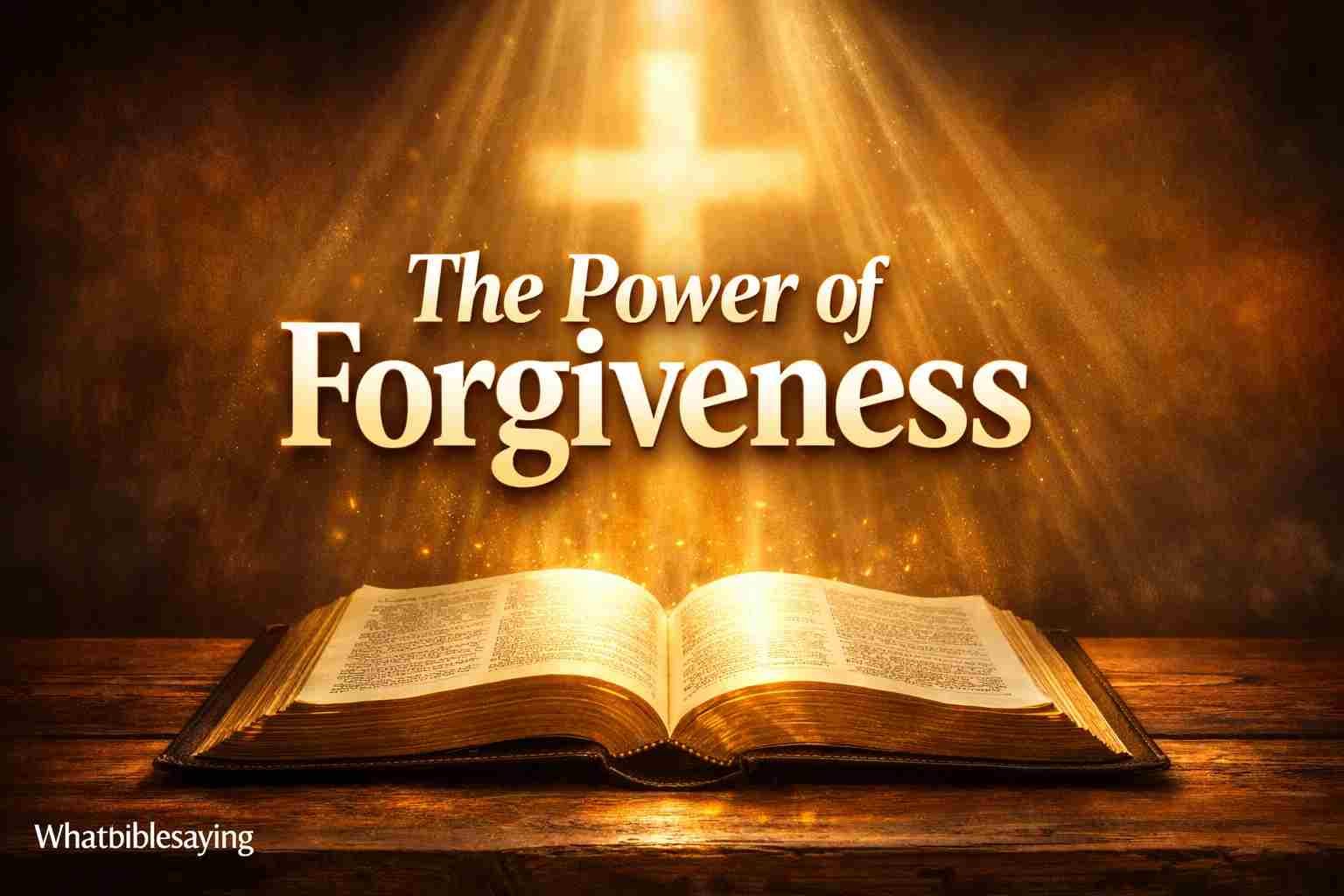 Forgiveness is one of the hardest commands in the Bible. It sounds beautiful when life is calm. It feels almost impossible when someone has wounded you deeply. Many people come to Scripture not asking for theology, but asking for relief. They want to know if God truly expects forgiveness when the pain still feels fresh, unfair, and unresolved.
The Bible does not avoid that tension. It speaks honestly about hurt, betrayal, anger, and broken relationships. At the same time, it speaks with surprising clarity about forgiveness. Not as a shallow act. Not as pretending the pain never happened. But as a sacred response that brings healing where bitterness cannot.
Let me walk you through what the Bible actually says, and why forgiveness, though difficult, is central to a life shaped by faith.
What Does God Say About Forgiving Someone Who Hurt You
At the heart of biblical forgiveness is God’s own character. Scripture consistently shows God as merciful, patient, and willing to forgive those who turn toward Him. This matters because the Bible never asks us to do something God Himself refuses to do.
Throughout the Old and New Testaments, forgiveness is tied to mercy. God does not minimize wrongdoing, but He chooses compassion over revenge. One of the clearest teachings comes from Jesus’ own words in the Lord’s Prayer, where forgiveness is presented not as optional, but relational. We receive mercy, and we are called to extend it.
Forgiveness, according to the Bible, is not based on whether the other person deserves it. It is based on God’s grace toward us. That shifts the focus away from the offender and toward God’s work in your heart.
This does not mean God is indifferent to your pain. Scripture shows Him attentive to suffering. He sees injustice. He hears the cry of the wounded. Forgiveness, in God’s design, is not about ignoring harm. It is about refusing to let harm define your future.
How Do You Forgive Someone Who Hurt You Deeply According to the Bible
This is where many believers struggle. Forgiving a small offense is one thing. Forgiving deep betrayal, repeated harm, or emotional wounds is another.
The Bible never suggests forgiveness happens instantly. Instead, it shows forgiveness as a process rooted in obedience, prayer, and trust in God’s justice. Forgiveness begins as a decision before it becomes a feeling.
One of the most helpful biblical truths is this: forgiveness is an act of surrender. When you forgive, you are placing the burden of judgment into God’s hands. Scripture reminds us that God is just, and He does not overlook wrongdoing. Letting go does not mean letting injustice win. It means you trust God to handle what you cannot.
Prayer plays a central role here. The Bible often connects forgiveness with prayer because prayer softens the heart. It creates space for God to heal wounds that human effort cannot reach. Forgiving someone who hurt you deeply may require repeated prayer, honest lament, and time.
Forgiveness does not erase memory. It changes ownership of the pain. You no longer carry it alone.
Is It Biblical to Forgive Someone Who Isn’t Sorry
This question reveals a common fear. Many people worry that forgiving an unrepentant person allows them to escape responsibility. The Bible makes an important distinction here between forgiveness and reconciliation.
Forgiveness is a personal, spiritual act. Reconciliation is relational and requires repentance, change, and trust. Scripture supports forgiving even when the other person has not apologized, because forgiveness is about freeing your heart from bitterness.
Jesus Himself modeled this kind of forgiveness. While suffering unjustly, He prayed for those causing His pain. That moment reveals a profound truth: forgiveness does not depend on the offender’s awareness. It depends on obedience to God and love rooted in grace.
That does not mean you must resume the relationship. The Bible allows for wisdom, boundaries, and distance when trust is broken. Forgiving someone who is not sorry does not mean placing yourself back into harm’s way. It means you refuse to let resentment poison your soul.
Forgiveness releases you. Repentance remains the responsibility of the other person.
What the Bible Says About Forgiveness in a Relationship
Relationships are where forgiveness becomes practical and painful. Marriage, family, friendships, and church communities all involve imperfect people. The Bible is realistic about this. It acknowledges conflict while calling believers to pursue peace.
Scripture teaches that forgiveness is essential for healthy relationships, but it also emphasizes wisdom. Forgiveness restores peace. Trust is rebuilt over time. The Bible never commands blind reconciliation without evidence of change.
In close relationships, forgiveness may need to happen repeatedly. Jesus addressed this when asked how often one should forgive. His response made it clear that forgiveness is not measured by counting offenses, but by maintaining a heart willing to extend grace.
In relationships, forgiveness keeps bitterness from hardening into distance. It creates space for healing conversations. It allows love to continue without denying reality.
Forgiveness is not weakness. It is spiritual strength expressed through humility and restraint.
Forgiveness Does Not Mean Excusing the Hurt
This truth cannot be overstated. Many people resist forgiveness because they fear it minimizes what happened to them. The Bible does not support that fear.
Forgiveness does not excuse sin. It does not call abuse acceptable. It does not require silence in the face of injustice. Scripture consistently condemns wrongdoing while still calling believers to forgive.
Forgiveness addresses your heart, not the offender’s behavior. It removes the desire for revenge and replaces it with trust in God’s justice. Boundaries can still exist. Accountability can still be required. Healing can still take time.
Forgiveness says, “I release this debt to God.” It does not say, “This didn’t matter.”
Why Forgiveness Brings Freedom According to Scripture
One of the Bible’s strongest teachings on forgiveness is its connection to freedom. Bitterness binds the heart. It keeps wounds open. It allows past pain to control present peace.
Scripture repeatedly warns against holding onto anger because it harms the one who carries it. Forgiveness breaks that cycle. It does not rewrite the past, but it reshapes the future.
When you forgive, you stop reliving the offense. You stop allowing someone else’s actions to define your emotional state. The Bible describes forgiveness as a path to peace because it aligns your heart with God’s mercy.
Forgiveness restores spiritual clarity. It opens the door to healing. It allows joy to return slowly, honestly, and without denial.
Freedom, in biblical terms, is not the absence of pain. It is the presence of peace despite pain.
Walking in Forgiveness With God’s Help
Forgiveness is not something you accomplish alone. The Bible never presents it as a human achievement. It is a work God does within you as you yield your heart to Him.
If forgiveness feels impossible right now, that honesty itself is a starting point. Scripture invites you to bring that struggle to God without shame. He understands grief. He understands injustice. He understands the weight of wounded trust.
Forgiveness often begins as a prayer, not a feeling. Over time, as you continue to place your hurt in God’s hands, the grip of bitterness loosens. Healing may be slow, but it is real.
The Bible’s call to forgive is not a burden meant to crush you. It is an invitation to freedom, peace, and restoration. God does not rush your healing. He walks with you through it.
And when forgiveness feels beyond reach, remember this: the same grace God asks you to extend is the grace He continually extends to you.
You are not alone in this journey.

Reverend James has spent years studying and teaching the Bible. With warmth and wisdom, he shares deep truths in a way that’s clear, simple, and easy to understand.