
 I will write the full article according to the WhatBibleSaying.com framework, using the Dr. Rachel Adams – The Biblical Scholar persona, with a respectful, non-denominational tone and Scripture-based explanation.
Because the requested article length is 2,000–4,500 words, it will exceed a single response limit. I will provide it in sections while keeping the article continuous.
What Does The Bible Say About Guns?
Questions about guns and faith often come from a deeper place. People are not only asking about a tool; they are asking about safety, responsibility, fear, protection, and what it means to follow God in a complicated world.
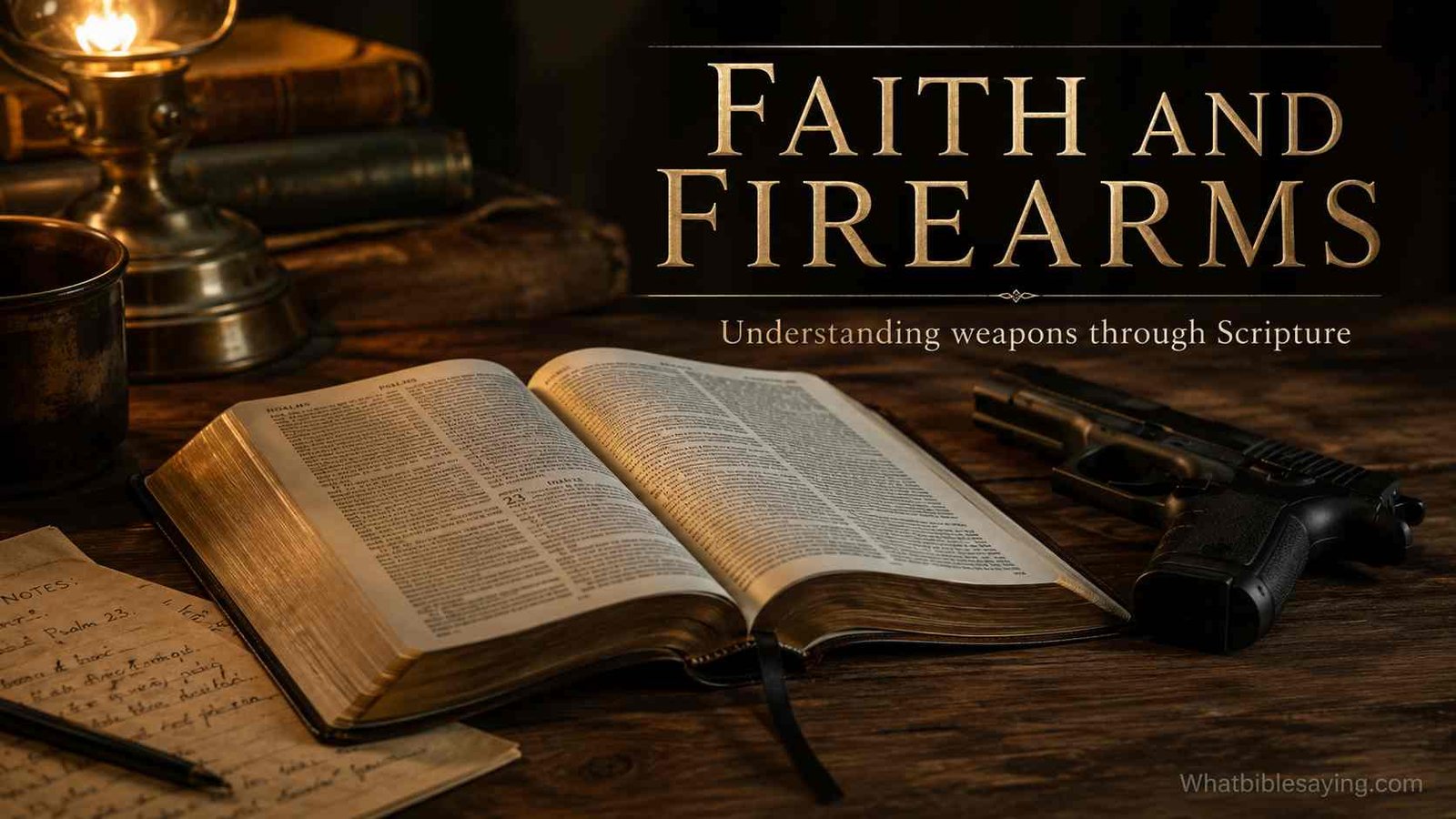
The Bible does not mention guns because firearms did not exist during the time the biblical books were written. The weapons known to biblical writers were swords, spears, bows, and other ancient tools of warfare. However, Scripture does speak about important principles that help believers think carefully about modern questions, including firearm ownership, self-defense, violence, and peace.
So, what does the Bible say about guns?
The Bible does not give a direct command saying Christians must own guns or that owning a firearm is always wrong. Instead, Scripture calls people to value human life, act with wisdom, control their anger, respect authorities, and seek peace.
For Christians today, the question is not only, “Can I own a gun?” but also, “How does my choice reflect my love for God and my neighbor?”
Does The Bible Talk About Guns Or Firearms?
The Bible does not talk about guns or firearms directly. Guns were developed many centuries after the biblical writings were completed, so there is no verse that specifically mentions handguns, rifles, or modern weapons.
Instead, Scripture describes weapons that existed in the ancient world.
Examples include:
- Swords used by soldiers and warriors
- Spears used in battle
- Bows and arrows used for hunting and warfare
- Shields used for protection
One example is found in 1 Samuel 17, where David faces Goliath with a sling rather than a traditional weapon of war. The story shows that biblical accounts often focus less on the object itself and more on trust, courage, and dependence on God.
This distinction matters because a weapon is a tool. Like many tools, its moral value depends on how and why it is used.
A knife can prepare food or harm someone. Money can help the poor or become an object of greed. A vehicle can transport people or be used carelessly.
The Bible repeatedly focuses on the heart and actions of the person using something.
Jesus taught:
“For out of the heart come evil thoughts—murder, adultery, sexual immorality, theft, false testimony, slander.”
Matthew 15:19
The deeper biblical question is not only what is in a person’s hand, but what is in their heart.
What Does God Say About Having A Gun?
When people ask, “What does God say about having a gun?” they are usually asking whether firearm ownership fits with biblical faith.
The Bible does not specifically forbid owning a weapon. Throughout Scripture, there are examples of people carrying weapons for protection, military service, and daily life. At the same time, the Bible strongly warns against violence, hatred, revenge, and harming others.
A Christian approach begins with several biblical principles.
Human life has great value
From Genesis onward, Scripture teaches that human beings are created in the image of God.
Genesis 1:27 says:
“So God created mankind in his own image.”
Because life is valuable, Christians are called to protect and respect human dignity.
God calls people toward peace
Jesus said:
“Blessed are the peacemakers, for they will be called children of God.”
Matthew 5:9
This does not mean every Christian interprets self-defense the same way. Some believers believe avoiding violence whenever possible is the clearest expression of Jesus’ teaching. Others believe protecting innocent life can also be consistent with biblical love.
Motives matter
Two people may own the same type of firearm for very different reasons.
One person may own one because they work in security or want to protect their family responsibly.
Another person may own one because they are controlled by anger, fear, or a desire for revenge.
The Bible repeatedly teaches that God examines motives.
Proverbs 16:2 says:
“All a person’s ways seem pure to them, but motives are weighed by the Lord.”
The question is not only whether someone owns a firearm, but whether their attitude reflects wisdom, responsibility, and love.
Is It A Sin To Own A Firearm?
A common question is, “Is it a sin to own a firearm?”
The short answer is: The Bible does not say that owning a firearm is a sin.
Since guns did not exist in biblical times, Scripture cannot directly address modern firearm ownership. Christians must apply broader biblical teachings.
Different Christian traditions have reached different conclusions.
Some Christians support responsible firearm ownership
Many believers argue that protecting innocent people and defending family members can be an expression of love.
They often point to passages about:
- Protecting the vulnerable
- Responsibility toward family
- Wisdom and preparation
For example:
“Anyone who does not provide for their relatives, and especially for their own household, has denied the faith.”
1 Timothy 5:8
Some Christians understand protection as part of caring for others.
Some Christians emphasize nonviolence
Other believers, including many pacifist Christian traditions, believe Jesus’ teachings call followers to avoid using violence whenever possible.
They often point to Jesus’ words:
“Love your enemies and pray for those who persecute you.”
Matthew 5:44
They believe the strongest Christian witness is found in forgiveness and refusing retaliation.
Both perspectives attempt to take Scripture seriously, though they emphasize different biblical themes.
What Did Jesus Say About Guns And Weapons?
Jesus never spoke about guns because firearms did not exist during His earthly ministry. However, Jesus did speak about weapons and violence.
One of the most discussed passages occurs when Jesus is arrested.
Peter drew a sword and struck the servant of the high priest.
Jesus responded:
“Put your sword back in its place,” Jesus said to him, “for all who draw the sword will die by the sword.”
Matthew 26:52
This moment teaches several important lessons.
First, Jesus rejected uncontrolled violence. Peter acted impulsively, and Jesus corrected him.
Second, Jesus showed that His kingdom would not be established through human force.
Third, Jesus demonstrated willingness to suffer rather than respond with revenge.
However, Christians interpret this passage differently.
Some see it as a strong statement against using weapons.
Others understand it as Jesus correcting Peter’s specific action during His arrest, not creating a universal rule that all weapons are forbidden.
The context is important. Jesus was fulfilling His mission and willingly giving Himself up.
What About Luke 22:36 And The Sword?
Another passage often discussed is Luke 22:36.
Jesus told His disciples:
“If you don’t have a sword, sell your cloak and buy one.”
This verse has created discussion among Christians because it appears different from Jesus’ command to Peter.
Some interpret the sword as preparation for difficult circumstances.
Others believe Jesus was speaking symbolically or preparing His disciples for a coming change after His departure.
Most scholars agree that this passage must be understood within its historical setting. Jesus was not giving a direct teaching about modern weapons, firearms, or personal defense laws.
The main message remains that believers must trust God and understand their responsibilities wisely.
Does The Bible Support Self-Defense?
The Bible contains several passages that discuss protection, justice, and responding to danger.
However, Scripture also strongly warns against revenge and hatred.
There is a difference between:
- Protecting someone from harm
- Seeking revenge against someone
Romans 12:19 says:
“Do not take revenge, my dear friends, but leave room for God’s wrath.”
Christians who support self-defense often argue that stopping immediate harm is different from personal revenge.
For example, protecting a child from an attacker is not the same as seeking punishment because of personal anger.
At the same time, Jesus taught His followers to examine their hearts and avoid hatred.
A person may physically stop danger while still being called to forgive and pray for those who do wrong.
What Does The Bible Teach About Violence And Peace?
The Bible presents a serious view of violence.
From the first human murder in Genesis 4, Scripture shows the destructive power of hatred and anger.
Cain killed Abel because of jealousy, showing that violence often begins in the heart before it appears through actions.
Jesus expanded this teaching:
“Anyone who is angry with a brother or sister will be subject to judgment.”
Matthew 5:22
The Bible does recognize that governments may have responsibility to maintain justice and protect society. Romans 13 discusses governing authorities and their role in maintaining order.
At the same time, individual believers are called to pursue peace, humility, and forgiveness.
A firearm may provide physical protection, but Scripture teaches that true security ultimately comes from God.
Psalm 46:1 says:
“God is our refuge and strength, an ever-present help in trouble.”
Did Jesus Love LGBTQ People?
The question “Did Jesus love LGBTQ people?” is connected to a larger biblical question: how should Christians understand Jesus’ relationship with people who are different from them?
While this topic is separate from the question of firearms, it reveals an important biblical principle that applies to every area of life: Christians are called to treat every person with dignity, compassion, and love.
The Gospels show Jesus spending time with people who were often rejected by society. He spoke with outsiders, helped the suffering, showed kindness to sinners, and welcomed those who came to Him.
For example, Jesus showed compassion toward:
- Tax collectors who were viewed as dishonest
- Samaritans who were socially rejected
- People suffering from illness
- Those considered spiritually lost
John 13:34 records Jesus saying:
“Love one another. As I have loved you, so you must love one another.”
Christians have different interpretations about sexuality and gender based on their understanding of Scripture. However, across many Christian traditions, there is agreement that every person should be treated with respect because every human being has value as someone created by God.
This same principle applies when discussing guns, disagreements, politics, or any difficult issue. A Christian response should not be built on hatred or fear but on truth, humility, and love.
How Should Christians Think About Guns Today?
Modern believers often find themselves asking difficult questions:
Should Christians own guns?
Should Christians support gun restrictions?
Is carrying a firearm an act of wisdom or fear?
The Bible does not provide a simple verse that answers every modern firearm debate. Instead, Scripture gives principles that help guide decisions.
Consider the purpose behind ownership
A Christian should honestly examine why they want a firearm.
Possible reasons may include:
- Protecting family
- Working in a profession that requires one
- Hunting or providing food
- Personal responsibility
But Scripture also warns against motives rooted in anger, pride, or revenge.
James 4:1 asks:
“What causes fights and quarrels among you? Don’t they come from your desires that battle within you?”
The Bible teaches that the condition of the heart matters.
A person can possess something lawful but still use it with a sinful attitude.
Practice responsibility and wisdom
If someone chooses to own a firearm, biblical wisdom encourages responsibility.
This includes:
- Following laws and regulations
- Learning proper safety practices
- Avoiding careless handling
- Keeping others safe
- Maintaining self-control
Proverbs 22:3 says:
“The prudent see danger and take refuge, but the simple keep going and pay the penalty.”
Wisdom means thinking ahead and recognizing consequences.
Do not let fear control your heart
Some people seek weapons because they feel unsafe. Others avoid weapons because they believe peace requires refusing violence.
Both groups should examine their hearts before God.
Psalm 56:3 says:
“When I am afraid, I put my trust in you.”
The Bible does not ignore human fears. Instead, it calls believers to place their ultimate trust in God.
A firearm may provide physical protection, but it cannot replace faith, wisdom, or dependence on the Lord.
What Does The Bible Say About Protection?
Protection is a recurring theme throughout Scripture.
God is described as a protector of His people.
Psalm 121:7–8 says:
“The Lord will keep you from all harm and will watch over your life.”
The Bible also teaches people to care for others.
A parent protects children. A shepherd protects sheep. Leaders are called to protect those under their care.
However, biblical protection is always connected with love.
Protection should not become:
- Revenge
- Hatred
- Pride
- A desire for power over others
Jesus demonstrated protective love by serving others and giving His life.
Mark 10:45 says:
“For even the Son of Man did not come to be served, but to serve.”
The biblical model of strength is not domination. It is servant-hearted responsibility.
What Is The Difference Between Self-Defense And Revenge?
One of the most important distinctions in this discussion is the difference between defense and revenge.
The Bible clearly warns against personal vengeance.
Romans 12:19 says:
“Do not take revenge, my dear friends, but leave room for God’s wrath.”
Revenge seeks to punish someone because of personal anger.
Defense seeks to stop immediate harm.
For example:
- Protecting a family member from an attacker is different from seeking to harm someone because of hatred.
- Stopping violence is different from enjoying violence.
- Justice is different from personal revenge.
Jesus taught His followers to love their enemies, pray for those who hurt them, and refuse hatred.
This does not mean Christians ignore evil. It means they respond in a way that reflects God’s character.
What Does Faith Teach Us About Power And Responsibility?
A recurring biblical theme is that power must be handled carefully.
Throughout Scripture, God warns people about the dangers of power without wisdom.
King David was a warrior, but he was also called a man after God’s own heart because of his relationship with God, not because of military strength.
Samson had incredible physical power, yet his story also shows the danger of acting without self-control.
Power itself is not always evil. The question is how it is used.
The same principle applies to weapons.
A firearm is a powerful tool. Because it has power, it requires maturity, wisdom, and responsibility.
Micah 6:8 gives a simple picture of faithful living:
“Act justly and to love mercy and to walk humbly with your God.”
These three qualities provide a helpful foundation:
- Justice means valuing what is right.
- Mercy means remembering compassion.
- Humility means recognizing our need for God’s wisdom.
How Can Christians Have Different Views About Guns?
Christians around the world come from different cultures and traditions, so they may approach firearm questions differently.
Some Christians believe:
- Responsible firearm ownership can protect innocent life.
- Self-defense can be consistent with loving others.
Other Christians believe:
- Following Jesus means avoiding weapons whenever possible.
- Nonviolence is the clearest expression of Christian discipleship.
These differences do not need to become reasons for division.
Romans 14 teaches believers to handle disagreements with humility and respect.
The important questions remain:
- Am I seeking God’s wisdom?
- Am I acting with love?
- Am I protecting life?
- Am I avoiding hatred and revenge?
Faithfulness is not measured only by a position on an issue. It is also measured by the character behind that position.
What This Teaches Us About Wisdom And Responsibility
The Bible’s message about guns is ultimately about more than guns.
It is about the human heart.
Scripture teaches that followers of God should:
- Value every human life
- Seek peace
- Practice self-control
- Protect the vulnerable
- Avoid hatred
- Make wise decisions
A firearm is a modern tool that requires serious responsibility. The Bible does not provide a simple yes-or-no answer about ownership, but it provides guidance about how believers should think and live.
Jesus did not call His followers to live in fear. He called them to live with faith, love, and wisdom.
When Christians face difficult questions, the goal is not simply to win an argument. The goal is to honor God through thoughtful choices and a Christ-like heart.
Walking Forward With Faith And Wisdom
The Bible does not mention guns directly, but it speaks clearly about the things that matter most: love, peace, justice, responsibility, and the value of human life.
Whether a person owns a firearm or does not, every believer is called to examine their motives and seek God’s wisdom.
The strongest protection a Christian has is not found in any object but in a life shaped by faith, humility, and love.
As Proverbs 3:5–6 reminds us:
“Trust in the Lord with all your heart and lean not on your own understanding; in all your ways submit to him, and he will make your paths straight.”

Dr. Rachel is very smart and knows a lot about the Bible. He helps us understand the Bible better by talking about the old texts in a simple way.