

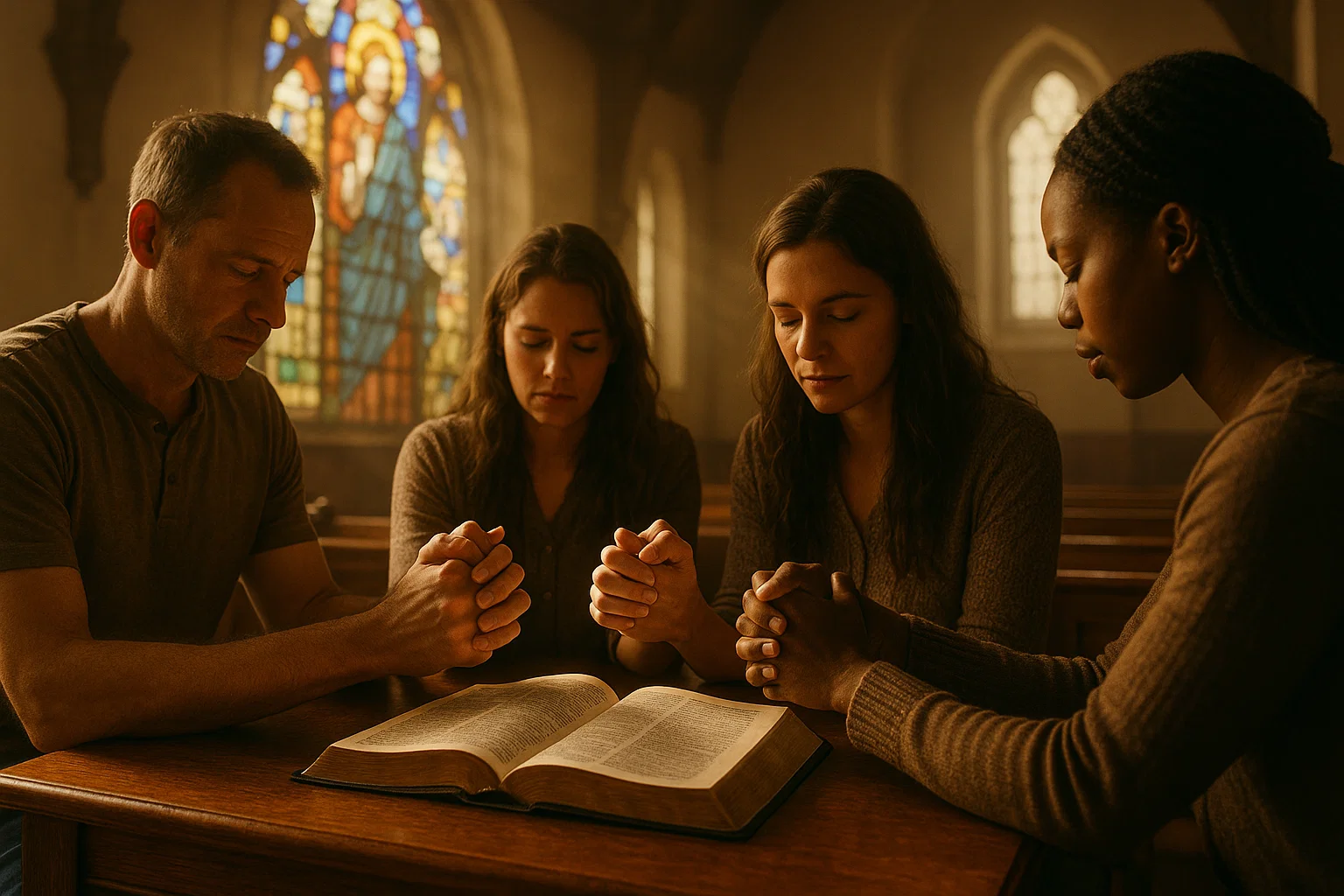
 When you walk into a church filled with laughter, love, and shared faith, you can feel something sacred in the air. It’s not just people sitting together it’s hearts joined as one in Christ. That togetherness is what the Bible calls unity, and it’s at the very core of what it means to be the Body of Christ.
But what does the Bible really say about unity in the church? Why does it matter so deeply to God? And how can we protect that unity when the world seems to pull us apart? Let’s open Scripture and listen closely to what God’s Word teaches about this beautiful bond of oneness.
God’s Desire for Unity Among Believers
From the very beginning, unity has been part of God’s plan for His people. The Bible says, “How good and pleasant it is when God’s people live together in unity!” (Psalm 133:1). Those words, written centuries ago, still echo today because God delights when His children live in peace and harmony.
Unity is not a human invention; it’s divine in origin. The Father, Son, and Holy Spirit the perfect example of unity invite us to reflect that same oneness in our relationships. God doesn’t simply want a group of believers gathering under one roof; He wants their hearts knit together in love.
The apostle Paul reminds us in Ephesians 4:3 to “make every effort to keep the unity of the Spirit through the bond of peace.” That means unity is something we don’t create by our own strength it’s a gift from God that we’re called to guard and cherish.
Unity isn’t about everyone agreeing on every small matter. It’s about being joined together by something far greater our shared faith in Christ Jesus.
What Jesus Taught About Unity in the Church
No one spoke about unity more tenderly than Jesus Himself. On the night before His crucifixion, He prayed for His followers:
“That they all may be one, as You, Father, are in Me, and I in You, that they also may be one in Us, so that the world may believe that You sent Me.”
John 17:21
In that sacred prayer, Jesus reveals His heart’s desire that His people would be united just as He and the Father are united.
When you think about it, that’s astonishing. The Son of God could have prayed for many things before going to the cross power, growth, or success for His church. But instead, He prayed for oneness.
Why? Because unity among believers is living proof of the Gospel. When the world sees Christians loving one another across differences, forgiving quickly, and serving humbly, it sees a glimpse of Jesus Himself.
Christ’s unity isn’t shallow agreement it’s spiritual harmony. It’s the kind of unity that allows people from every nation, language, and background to call each other brother and sister because they belong to one family in Christ.
Why Unity Is Essential for the Body of Christ
The Bible often compares the church to a body. Each believer is like a part of that body different in function but equally important in purpose. Paul wrote:
“For just as each of us has one body with many members, and these members do not all have the same function, so in Christ we, though many, form one body, and each member belongs to all the others.”
Romans 12:4–5
When one part of the body suffers, the rest feels it. When one part rejoices, the whole body shares the joy. That’s how God designed the church to live in mutual care and interdependence.
Without unity, the body cannot function properly. Imagine trying to walk if your legs decided to move in different directions! The same is true for the church without unity, we lose direction, strength, and purpose.
Unity is also vital for our witness. Jesus said that our love for one another would show the world that we are His disciples (John 13:35). When the church is united in love, it shines like a light in the darkness. But when it’s divided, that light grows dim.
What Hinders Unity in the Church Today
While unity is God’s desire, it’s also one of the enemy’s favorite targets. Satan knows that a divided church is a weakened church. Throughout Scripture and history, division has often crept in through subtle attitudes that poison relationships.
Pride
Pride says, “My way is best.” It makes us focus on being right rather than being loving. But James 4:6 reminds us, “God opposes the proud but shows favor to the humble.” Humility opens the door for understanding; pride slams it shut.
Gossip
Words have power. Gossip can destroy trust faster than almost anything else. Proverbs 16:28 warns, “A perverse person stirs up conflict, and a gossip separates close friends.” In the church, gossip can quietly fracture fellowship.
Unforgiveness
When we hold grudges, we build walls instead of bridges. Jesus taught us to forgive as we’ve been forgiven (Matthew 6:14–15). Forgiveness doesn’t mean ignoring wrongs it means choosing love over resentment.
Misunderstanding and Cultural Differences
The early church struggled with this too. Jewish and Gentile believers had to learn to accept one another despite their differences (Romans 14). Today, cultural diversity is a strength when guided by Christ’s love but without that love, it can become a source of division.
Neglecting Prayer and the Word
Unity cannot survive without a spiritual foundation. When we drift away from prayer and Scripture, our hearts grow cold, and fellowship weakens. Staying connected to Christ keeps us connected to one another.
Learning From Paul’s Teachings on Church Unity
The apostle Paul’s letters overflow with lessons about unity. He saw firsthand how fragile it could be and how vital it was for spiritual growth.
In 1 Corinthians 1:10, Paul pleads with the church:
“I appeal to you, brothers and sisters, in the name of our Lord Jesus Christ, that all of you agree with one another… and that there be no divisions among you.”
The Corinthian believers were arguing over leadership some followed Paul, others Apollos or Peter. But Paul reminded them that Christ alone is the foundation. Division distracts from the Gospel.
In Philippians 2:2, he writes,
“Then make my joy complete by being like-minded, having the same love, being one in spirit and of one mind.”
And in Ephesians 4:3–6, Paul outlines the blueprint for unity:
“There is one body and one Spirit… one Lord, one faith, one baptism; one God and Father of all.”
Paul’s message is clear: unity isn’t optional it’s essential. And it begins with love, humility, and a shared purpose in Christ.
The Spiritual Sources of Church Unity
So, what keeps a church truly united? The Bible points to three main sources of spiritual unity each like a cord that ties believers together.
1. The Holy Spirit
The Spirit is the very presence of God living within believers. He creates and sustains unity. Paul says, “For by one Spirit we were all baptized into one body.” (1 Corinthians 12:13). When the Spirit leads, division fades.
2. The Word of God
Truth unites. Jesus prayed, “Sanctify them by the truth; Your word is truth.” (John 17:17). A church grounded in Scripture stands firm together, while one swayed by opinions quickly falters.
3. A Shared Faith and Purpose
Unity grows when believers focus on what they share, not what they differ on. We are all saved by the same grace, loved by the same Savior, and called to the same mission to make disciples of all nations.
Building True Unity Through Love and Service
Unity doesn’t happen automatically it’s something we choose daily. The Bible calls us to be “completely humble and gentle; be patient, bearing with one another in love.” (Ephesians 4:2).
Here are a few ways believers can help build lasting unity:
Serve One Another
When we serve instead of compete, unity flourishes. Jesus washed His disciples’ feet, showing that true leadership comes through humility.
Pray Together
Prayer draws hearts closer. When a church prays as one body, barriers fall, and love grows.
Practice Forgiveness
Disagreements will happen, but forgiveness keeps them from turning into lasting wounds. Colossians 3:13 urges, “Forgive as the Lord forgave you.”
Focus on the Mission
When our eyes are on Christ and His Kingdom, we stop majoring in minor things. A church focused on reaching others has little time for division.
Walk in the Fruit of the Spirit
Love, joy, peace, patience, kindness, goodness, faithfulness, gentleness, and self-control these qualities make unity possible. (Galatians 5:22–23)
When a church lives this way, it becomes a testimony of heaven’s harmony here on earth.
What This Teaches Us About God’s Family
Unity in the church isn’t just about getting along it’s about revealing God’s nature to the world. When believers of all backgrounds come together under Christ’s banner of love, it shows that God’s grace is bigger than human differences.
The Bible doesn’t call us to uniformity where everyone looks, talks, and thinks the same. It calls us to harmony, where each voice plays a different note but together forms a beautiful song of praise.
Jesus died not only to save us individually but to gather us into one family. Ephesians 2:14 says, “For He Himself is our peace, who has made the two groups one and has destroyed the barrier, the dividing wall of hostility.”
In a divided world, the church is meant to be a picture of reconciliation a living example of what love can do when it flows from the heart of God.
So the next time you gather for worship, remember this: unity begins with you. It starts in your heart, your words, and your willingness to love like Christ.
When we choose unity, we honor the prayer Jesus prayed long ago: “That they may be one.” And when we live that prayer out, the world will see His light shining through us.
🕊️ Final Reflection
Unity isn’t built by force but by faith. It’s not about control but compassion. And it’s not about sameness but surrender to the Spirit, to the Word, and to Christ’s call to love one another deeply.
As Paul beautifully said in Colossians 3:14, “And over all these virtues put on love, which binds them all together in perfect unity.”
May our churches become places where that love shines so brightly that everyone who enters can say, “Truly, God is here.”

Reverend James has spent years studying and teaching the Bible. With warmth and wisdom, he shares deep truths in a way that’s clear, simple, and easy to understand.