
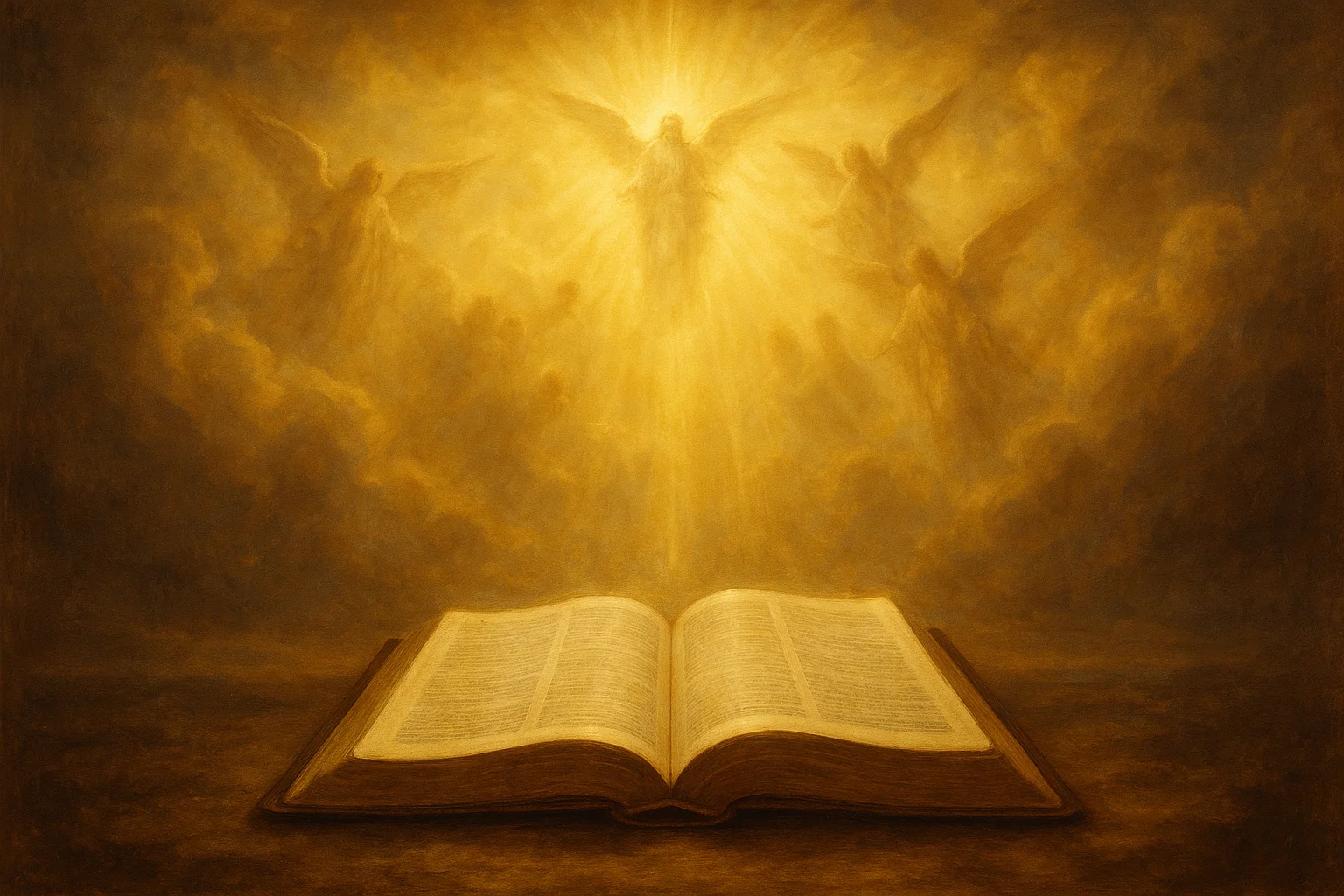
 The Book of Revelation is one of the most fascinating and mysterious parts of the Bible. It closes the story of Scripture not just with warning, but with a promise of victory, renewal, and eternal hope. When we open this book, we are not just reading about the end of the world; we are reading about the beginning of eternity.
Many people wonder, “What really happens in Revelation?” Is it a book of fear, or is it a letter of love from God to His people?
Let’s walk through the story together from John’s vision on the island of Patmos to the final promise of a new heaven and new earth.
The Apostle John and the Vision on Patmos
Revelation begins with a man named John, a faithful servant of Jesus Christ. He is believed to be John the Apostle, the same disciple who walked with Jesus, wrote the Gospel of John, and three short letters near the end of the New Testament.
At the time of his vision, John was living in exile on a small rocky island called Patmos. The Roman authorities had sent him there because of his faith in Jesus. He was far from home, away from the church he loved, but God met him in that lonely place.
One Sunday, while John was praying, he heard a voice behind him a voice as loud and powerful as a trumpet. When he turned, he saw something glorious. He saw Jesus Christ, clothed in radiant light, holding seven stars in His right hand and standing among seven golden lampstands (Revelation 1:12–16).
This was not the humble carpenter John once followed through Galilee. This was the risen Lord, majestic and eternal the King of kings and Lord of lords.
Jesus told John to write everything he saw and send it to seven churches in Asia Minor (modern-day Turkey). This was the beginning of the Book of Revelation a message to God’s people across generations.
The Central Message of Revelation
Some people think Revelation is all about destruction and doom, but at its heart, it’s a book of hope. The main message of the Book of Revelation is that God is in control, Christ will return, and evil will not win.
The book shows us a world in conflict light against darkness, truth against lies, faith against fear but every vision points toward the triumph of Jesus Christ.
Even when the events seem chaotic, the message is clear: God’s plan is perfect, and every tear will be wiped away in His time.
Revelation encourages believers to remain faithful, even when times are hard. It reminds us that persecution, pain, and confusion are temporary. The Lamb who was slain has already overcome.
“These will make war with the Lamb, and the Lamb will overcome them, for He is Lord of lords and King of kings.” Revelation 17:14
That single verse captures the entire heart of Revelation.
It’s not just about what happens at the end of the world it’s about how God’s love and justice bring a new beginning.
The Seven Churches and Their Meaning
Before showing John the grand visions of heaven and judgment, Jesus began by addressing seven churches in Asia Minor. Each church received a personal letter filled with encouragement and correction.
Here’s a brief look at each one:
| Church | City | Message Summary |
|---|---|---|
| Ephesus | The busy church that forgot its first love Jesus calls them to remember and return. | |
| Smyrna | The persecuted church encouraged to remain faithful even unto death. | |
| Pergamum | A church faithful in hard places but tempted by compromise. | |
| Thyatira | Known for love and service but warned against false teaching. | |
| Sardis | Spiritually asleep and called to wake up and strengthen their faith. | |
| Philadelphia | The faithful church promised an open door no one can shut. | |
| Laodicea | Lukewarm in faith, called to repent and find true riches in Christ. |
These seven churches represent real communities, but they also symbolize the spiritual condition of churches throughout time including today.
Some believers are strong under pressure, others are growing cold or distracted, but Christ still walks among His lampstands, guiding and correcting His people with love.
When we read these letters, we can ask: Which letter speaks to me today?
Do I need to return to my first love, to wake up, or to remain faithful in trials? Revelation reminds us that Jesus still speaks to His Church.
The Seven Seals, Trumpets, and Plagues
After the letters, John’s vision moves from earth to heaven. He sees a throne surrounded by light and thunder, where angels worship day and night. Then he sees a scroll sealed with seven seals a divine document that holds the plan of God for the end of the age.
No one in heaven or on earth is worthy to open it except the Lamb, Jesus Christ. When He begins to open the seals, one by one, powerful events unfold. These represent both judgments and spiritual awakenings.
- The First Seal: The rider on a white horse often seen as conquest or the spreading of the Gospel.
- The Second Seal: The red horse war and conflict on the earth.
- The Third Seal: The black horse famine and economic hardship.
- The Fourth Seal: The pale horse death and pestilence.
- The Fifth Seal: The cry of the martyrs those who died for their faith.
- The Sixth Seal: Cosmic disturbances earthquakes and signs in the sky.
- The Seventh Seal: Silence in heaven, followed by seven angels with trumpets.
Then come the seven trumpets, each bringing new warnings and judgments:
hail and fire, a burning mountain, a darkened sky, and terrible spiritual battles. These visions remind us of how fragile life on earth is, and how God calls humanity to repentance before the final day.
Later, John sees seven angels holding seven bowls or plagues the 7 plagues of Revelation representing the fullness of divine justice.
They echo the plagues of Egypt in Exodus, showing that God’s power over evil is complete.
Though the imagery is intense, remember: God’s purpose is not destruction, but redemption.
Revelation shows the seriousness of sin, but also the beauty of God’s mercy toward all who turn to Him.
The Rise and Fall of Evil Powers
As John continues to watch, he sees terrifying visions a dragon, a beast, and a false prophet. These figures represent the powers of evil, both spiritual and political, that rise up against God.
The dragon is identified as Satan, the ancient serpent from Genesis, who deceives the nations. The beast represents human empires and systems that oppose God’s rule. The false prophet symbolizes deception in religion and power.
Revelation also speaks of Babylon the Great, a symbol of human pride and corruption. It stands for societies built on greed, idolatry, and injustice things that promise pleasure but end in destruction.
Yet in every chapter, the message remains clear:
Evil may rise for a time, but it will always fall before the power of Christ.
When Babylon collapses, heaven rejoices.
When the beast is defeated, the saints sing.
When Satan is bound, the world is finally free.
Revelation paints the struggle vividly not to frighten us, but to show us that God’s justice will prevail. No ruler, no system, no deception can last forever. Only the Kingdom of God endures.
The Final Battle and Christ’s Return
Toward the end of Revelation, we read of the final battle Armageddon. It’s not a random place, but a symbol of the ultimate confrontation between good and evil.
The armies of the world gather, thinking they can fight against the Lord. But then heaven opens, and a white horse appears. The one who rides it is called Faithful and True. His eyes are like fire, and on His robe is written: King of kings and Lord of lords.
This is Jesus Christ returning in glory.
He defeats the forces of darkness with the word of His mouth, not with human weapons. Satan is cast down, the beast is destroyed, and the false prophet is silenced forever.
It’s the moment the whole Bible has been pointing toward the return of the King.
Afterward comes a thousand-year reign of peace, often called the Millennium, where Christ rules with His saints. Then Satan is released for a short time, deceives nations once more, but is finally defeated and thrown into the lake of fire forever.
This is not just the end of evil. It is the beginning of restoration.
The New Heaven and the New Earth
Then comes one of the most beautiful scenes in all of Scripture.
John sees a new heaven and a new earth, for the old had passed away. He sees the Holy City, the New Jerusalem, coming down out of heaven, shining like a bride prepared for her husband (Revelation 21:1–2).
A voice from the throne declares:
“Behold, the dwelling of God is with men, and He will dwell with them. They will be His people, and God Himself will be with them.” Revelation 21:3
In this place, there is no more death, no mourning, no pain, and no tears. The curse of sin is gone. Everything is made new.
The streets are of pure gold, the gates of pearl, and the river of life flows from the throne of God. The tree of life lost in Genesis is now restored, and nations are healed by its leaves.
This vision is the final promise of God’s story.
From Genesis to Revelation, the Bible begins in a garden and ends in a city both places where God and His people dwell together in peace.
That’s what truly happens in Revelation:
not the end of everything, but the beginning of eternal communion with God.
What the Book of Revelation Teaches Us About Faith
Reading Revelation can feel overwhelming, but its purpose is not to confuse. It’s to comfort and strengthen believers. It reminds us that no matter what happens in this world wars, injustice, persecution God’s plan never fails.
Revelation teaches us to look beyond what we see. When the world seems dark, remember that Jesus is already victorious.
When life feels uncertain, remember that God holds the scroll in His hands.
When you feel small, remember that you are part of His eternal story.
Here are a few lessons of faith from this final book:
- Faith stands firm in trials. The early Christians who received Revelation were suffering. Yet the message encouraged them: stand strong, for the Lamb has overcome.
- God’s timing is perfect. Every seal, trumpet, and vision unfolds exactly as God intends showing that nothing is random in His plan.
- Christ reigns forever. Kings rise and fall, but His throne is eternal.
- Heaven is real. The promise of the new heaven and earth isn’t symbolic it’s our true home.
- Love wins. Despite the battles, the book ends with light, peace, and joy. God’s love outlasts every darkness.
Living With Hope Until He Comes
Revelation ends with a simple, beautiful prayer:
“He who testifies to these things says, ‘Surely I am coming soon.’ Amen. Come, Lord Jesus.” Revelation 22:20
That’s how every believer can live with hope, not fear.
We don’t know every detail of how or when the events of Revelation will unfold, but we know Who holds the future.
When you feel weary, remember John’s vision of heaven. When you feel lost, remember the Lamb who walks among the lampstands. When you see evil rise, remember that it cannot last.
The story of Revelation is not meant to frighten the faithful it’s meant to fill us with courage. Because in the end, God wins.
And when He wins, His people rejoice.
Final Reflection
So what happens in Revelation?
A world is judged, evil is defeated, heaven opens, and love reigns forever.
The same Jesus who came as a servant will return as King.
The same God who created the world will restore it in beauty.
And the same Spirit who comforts you now will one day lead you home to a place where there are no more tears.
Revelation is not just the last book of the Bible it is the final heartbeat of God’s promise:
“Behold, I am making all things new.”
Until that day, may our hearts stay faithful, our hope remain strong, and our eyes look toward the sky waiting for the glorious appearing of our Lord and Savior, Jesus Christ.

Reverend James has spent years studying and teaching the Bible. With warmth and wisdom, he shares deep truths in a way that’s clear, simple, and easy to understand.