
 Rings have always carried meaning. A small circle of metal can hold a story, a promise, or a family’s history. When we open the Bible, we find that rings were more than decoration. They were symbols of identity, covenant, and authority. People wore them not to show wealth, but to mark who they belonged to, what role they carried, or what promise they lived under.
Many readers wonder if Scripture says anything about wearing rings, whether Jesus mentioned wedding rings, or if Christians today should or should not wear them. The Bible gives us a picture that is rich, simple, and full of wisdom. Rings in Scripture are never condemned, nor treated as sinful. Instead, they show up in moments of blessing, honor, and restoration.
Here’s what stands out when we look closely at what the Bible says about rings and what these symbols still mean for us today.
Rings in the Old Testament and Their Cultural Meaning
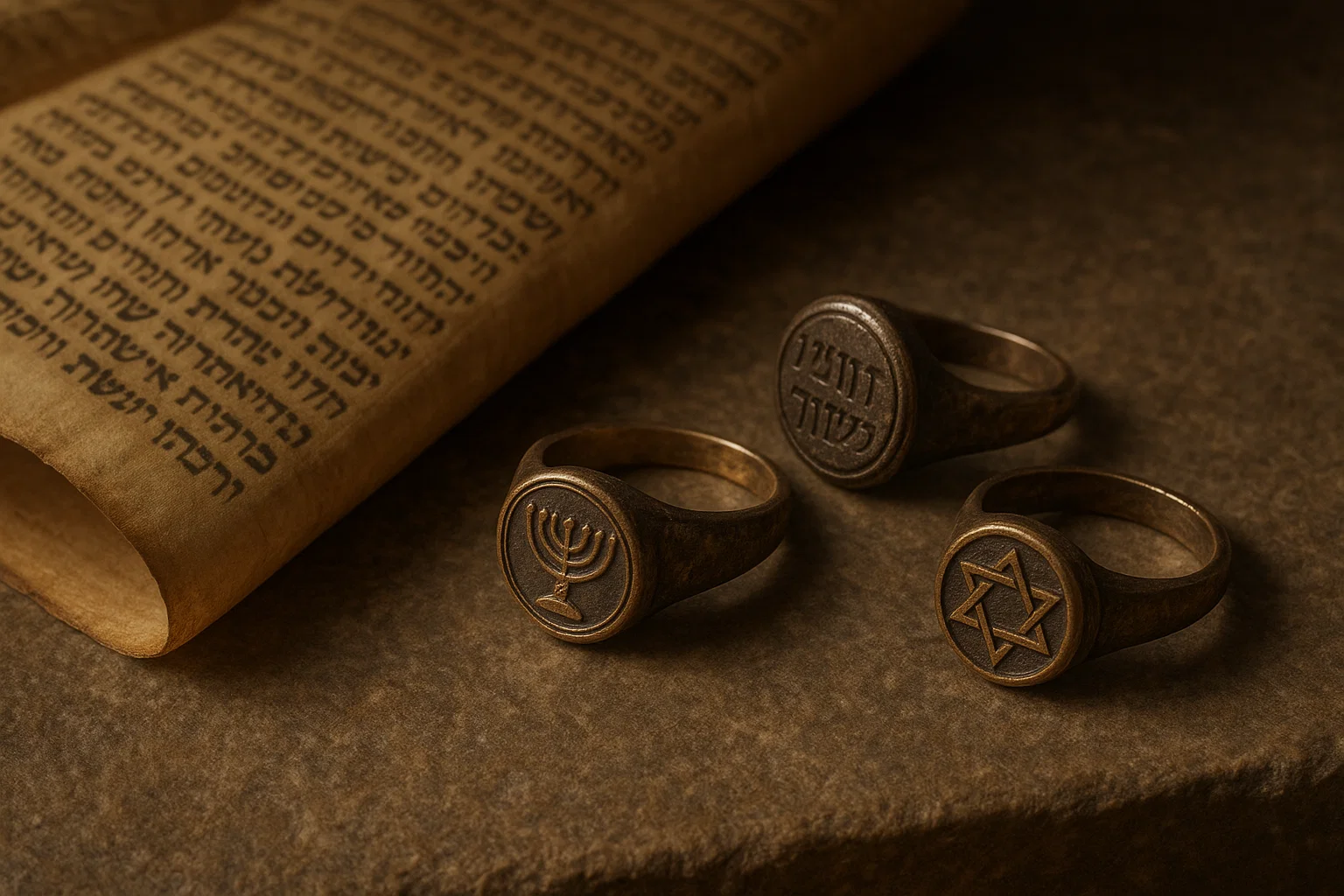
When the Bible mentions a ring, it often refers to a signet ring. This was not a modern wedding ring or a decorative gold band. A signet ring carried the authority of a person’s name and family. It held a carved seal used to mark documents, close letters, and approve decisions. It was a tool, a symbol, and a declaration of identity.
Joseph and the Pharaoh’s Ring
One of the clearest examples comes from the story of Joseph. After Joseph interpreted the Pharaoh’s dreams, the king elevated him to a position of power. To show that Joseph now acted with royal authority, the Pharaoh placed his own signet ring on Joseph’s hand (Genesis 41:42). This moment wasn’t about jewelry; it was about trust and responsibility. Joseph received the power to carry out the king’s commands.
The King’s Ring in the Book of Esther
Another example appears in Esther. When Haman’s wicked plan was overturned, the king gave his signet ring to Mordecai (Esther 8:2). This ring allowed Mordecai to write new laws on behalf of the king. Again, the ring represented permission and identity not fashion.
Rings in Family and Lineage
The Old Testament also shows families using rings to represent lineage and covenant. Rings could pass from one generation to another, reminding the family who they were and what promises they carried. In ancient Israel and many surrounding cultures, a ring could seal a marriage agreement or mark someone as part of a household, long before modern wedding rings became common.
Rings as Honor and Restoration
In Daniel 5:29, King Belshazzar honored Daniel by placing a gold chain around his neck and making him third ruler in the kingdom. Though a ring is not mentioned in this specific verse, similar acts of honor in ancient courts often included rings. A ring on the hand meant “you are trusted,” or “you belong among the honored.”
In every example, rings were connected to identity, authority, and covenant themes that appear again and again throughout Scripture.
What Rings Symbolized in the Bible
Across the Old Testament, rings held deep meaning. They weren’t valued only for gold or craftsmanship. They told a story. Here are the most common spiritual meanings tied to rings in Scripture.
1. Identity
The signet ring represented the identity of a person or a family. It was the ancient equivalent of a signature. The impression of the ring carried legal power. When Pharaoh gave Joseph his ring, Joseph carried Pharaoh’s identity as he served the nation.
2. Authority
Rings were a symbol of authority. When the king gave someone his ring, that person was able to make decisions in the king’s name. This connects to the broader biblical idea of authority in Scripture, where God entrusts His people with responsibilities and roles.
3. Covenant
Rings symbolized covenant relationships. A covenant was a deep, binding promise between two parties. The circle shape a symbol with no beginning or end made the ring a natural sign of lasting commitment. While the Bible does not command rings for marriage, the symbolism of a ring fits closely with biblical ideas about covenant.
4. Blessing and Honor
A ring often marked someone as honored. Whether in royal courts or family life, receiving a ring could signal blessing. It was given to those who were restored, raised up, or recognized for their faithfulness.
5. Belonging
In many cultures surrounding ancient Israel, a ring showed that someone belonged to a household or a covenant group. This ties naturally to the internal linking theme of identity in Christ the idea that believers belong to God and carry His name.
Put simply, the Bible treats rings with respect. They point to deeper realities and represent truths that still matter today.
What Jesus and the New Testament Teach About Rings
Jesus never spoke directly about wedding rings or jewelry. But the New Testament does show how rings were understood in His world, and how early Christians viewed symbols of belonging and blessing.
The Prodigal Son’s Ring (Luke 15:22)
One of the most meaningful uses of a ring in the New Testament appears in the parable of the Prodigal Son. When the lost son returned home, the father ran to him, embraced him, and called out:
“Put a ring on his hand.”
This moment is full of grace. The ring meant restoration. The son was welcomed back not as a servant, but as a full member of the family. A ring on his hand meant he was still his father’s child. His identity was restored. His place in the family was secure.
Did Jesus Mention Wedding Rings?
Jesus did not mention wedding rings specifically. Wedding rings as we use them today developed later in history. But Jesus spoke deeply about the meaning of marriage faithfulness, covenant, and unity (Matthew 19:4–6). A wedding ring, though not commanded, fits naturally as a symbol of that promise.
Early Christians and Rings
In the early church, believers did wear rings. Archaeology and early Christian writings show that rings were used for sealing documents, marking family identity, and even as quiet symbols of faith. Christians didn’t avoid rings. Instead, they focused on the heart behind a symbol, not the object itself.
Paul on Jewelry
Paul wrote that believers should focus more on inner beauty than outward appearance (1 Timothy 2:9). He didn’t forbid jewelry, but warned against using wealth or decoration to seek glory. The message is simple: a ring is fine, but the heart matters more.
This New Testament picture gives us balance. Rings are not required, but they are not condemned. They can carry personal meaning without becoming the center of one’s faith.
Spiritual Meaning of Rings for Believers Today
Many Christians today wonder about the spiritual meaning of a ring. While the Bible does not assign one single meaning for all rings, it does tie rings to values that still apply to our lives.
A Ring as a Symbol of Identity
Just as the Prodigal Son received a ring to show he was part of the family, believers today can see a ring as a reminder that they belong to God. While a physical ring doesn’t make someone a Christian, it can remind someone of their place in God’s story.
A Ring as a Symbol of Covenant
Marriage rings fit naturally into the biblical theme of covenant. The circle shows a bond that is meant to last. The simplicity of the design reflects the purity and commitment of the promise.
A Ring as a Reminder of Faith
Some believers wear rings engraved with verses, crosses, or symbols. These serve as reminders of God’s faithfulness. They are not required by the Bible, yet they can encourage a person throughout the day.
A Ring as a Marker of Blessing
In the Old Testament, receiving a ring often meant honor. In life today, a ring can remind someone of a special milestone, a moment of blessing, or a time when God showed faithfulness.
None of these uses replace Scripture or prayer. They simply help connect physical life to spiritual truth.
Is It Okay for Christians to Wear Rings Today
This is one of the most common questions people ask. Some wonder if rings might be connected to vanity. Others worry that jewelry could distract from spiritual life. Yet Scripture consistently points us to a balanced and healthy view.
The Bible Never Forbids Rings
Nowhere in Scripture does God forbid wearing rings. Rings appear in positive moments, not sinful ones. They show up in stories of blessing, leadership, marriage, and restoration.
The Heart Matters More Than the Object
The New Testament teaches that a believer’s heart, humility, and faith matter far more than any object they wear. Rings become a problem only if they are used to show pride or gain attention.
Rings Are a Personal Choice
Some believers choose not to wear rings. Others wear them daily. Both choices are acceptable. What matters is wisdom, modesty, and a heart focused on God.
Wedding Rings Are Not Against Scripture
Some people ask what Jesus said about wedding rings. While He did not mention them directly, nothing in the Bible opposes them. In fact, a wedding ring fits beautifully with the biblical message of covenant and faithfulness.
Cultural Sensitivity Is Important
In some cultures, wearing rings is normal. In others, it may carry different meanings. Christians can make thoughtful choices based on their culture, community, and personal convictions.
At the end of the day, a ring is simply a symbol. How we use it reflects what we believe.
What This Teaches Us About Faith and Commitment
When we follow the ring through Scripture from Joseph, to Mordecai, to the Prodigal Son we see a pattern. Rings point to belonging, identity, promise, and love. These themes run through the whole Bible. God invites us into a relationship where we are known, held, and cherished.
A ring is not required to live out faith. But it can remind us of deeper spiritual truths:
- We belong to God.
- We are part of His family.
- We are trusted with His work.
- We walk in a covenant of grace.
- We carry an identity in Christ that does not fade.
Whether someone wears a ring or not, the message remains the same: God calls us His own. His covenant with us is steady. His love has no end, just like the circle of a ring.

Dr. Rachel is very smart and knows a lot about the Bible. He helps us understand the Bible better by talking about the old texts in a simple way.