
The Temple More Than Just a Building
For many believers, the word Temple stirs deep emotion. It’s more than an ancient structure made of stone and gold; it represents something eternal the meeting place between God and His people. From the glory that filled Solomon’s Temple to the prophecies about its rebuilding, the Bible’s story of the Temple is one of presence, loss, and hope restored.
Even today, the idea of the Temple being rebuilt raises questions among Christians and Jews alike. Some see it as a literal event yet to come; others believe it has already found new meaning in the hearts of believers. So, what does Scripture actually say about the Temple being rebuilt and what does it mean for us today?
The Temple in Biblical History From Solomon to Destruction
To understand any prophecy about the Temple’s rebuilding, we must begin with its history.
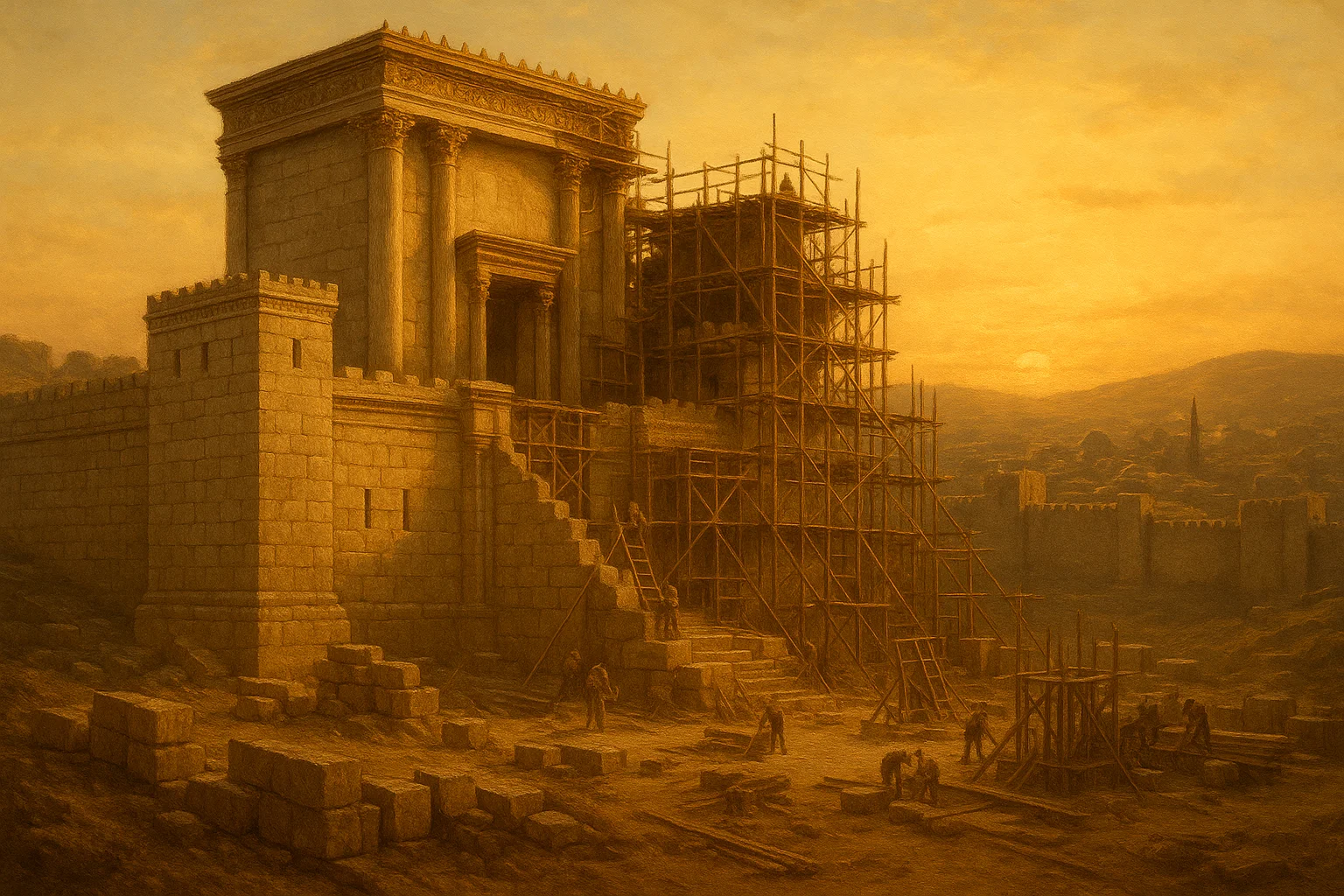
The First Temple, built by King Solomon around 957 BC, was a masterpiece of faith and craftsmanship. God’s presence filled it in a cloud so glorious that the priests could not stand to minister (1 Kings 8:10–11). It was the physical dwelling of God among His people the heart of worship in Jerusalem.
But Israel’s disobedience led to its downfall. Around 586 BC, King Nebuchadnezzar of Babylon invaded Jerusalem, destroyed the Temple, and carried many Israelites into exile. To the people of Judah, it felt as if God Himself had departed. The Prophet Ezekiel’s vision of God’s glory leaving the Temple (Ezekiel 10) captured the deep sorrow of that moment.
Yet even in judgment, God promised hope.
The Second Temple Rebuilding After Exile
After seventy years in Babylon, a remnant returned to Jerusalem. Under the leadership of Zerubbabel and the prophets Haggai and Zechariah, the people began to rebuild the Temple around 516 BC. It wasn’t as grand as Solomon’s, and some elders wept at the sight (Ezra 3:12), but the prophets reminded them that God was still with them.
Haggai 2:9 records God’s encouragement:
“The glory of this latter house shall be greater than that of the former, says the Lord of hosts; and in this place I will give peace.”
Centuries later, King Herod the Great expanded and beautified this Second Temple, making it one of the wonders of the ancient world. This was the Temple where Jesus Himself taught, healed, and prayed. Yet He also spoke words that shocked His listeners:
“Do you see all these things? Truly I tell you, not one stone here will be left on another; every one will be thrown down.” (Matthew 24:2)
In 70 AD, this prophecy was fulfilled when the Romans destroyed the Temple again reducing God’s house to rubble.
Prophecies About the Temple’s Rebuilding
Many Old Testament prophecies speak of the Temple’s destruction and rebuilding. These aren’t just about architecture they point to God’s unfolding plan.
Ezekiel 40–48 describes a magnificent future Temple with dimensions and features far beyond any built before. Some interpret this as a literal structure yet to come in Jerusalem; others see it as a vision of God’s ultimate restoration a symbol of His eternal kingdom.
Haggai and Zechariah also encouraged the people to rebuild in their time, reminding them that God’s Spirit, not human strength, would make it possible (Zechariah 4:6). These prophecies served both immediate and future meanings: physical rebuilding then, and spiritual restoration later.
When we read prophecy, we must remember: the Bible often layers time. One event may foreshadow another greater one. The rebuilding of the Temple becomes not only about stones, but about hearts, nations, and God’s redemptive plan through Christ.
What 1 Corinthians 6:19 Says About the Temple
In the New Testament, the Apostle Paul gives a radical new understanding of the Temple. He writes:
“Do you not know that your body is the temple of the Holy Spirit, who is in you, whom you have from God?” (1 Corinthians 6:19)
This verse marks a turning point. After Jesus’ resurrection, the dwelling of God moved from buildings made by hands into the lives of believers. The Holy Spirit now resides within those who follow Christ.
This doesn’t erase the importance of the Temple in history it fulfills its purpose. The presence of God once restricted to the Holy of Holies now lives in the hearts of His people.
When Jesus died, the veil of the Temple tore in two (Matthew 27:51), symbolizing open access to God for all. In that moment, the need for a physical Temple was transformed into something far greater a spiritual dwelling that could never be destroyed.
The Spiritual Meaning Behind Rebuilding the Temple
So, what does the rebuilding truly signify? On one level, it represents renewal God restoring what was lost. But it also speaks of relationship God’s unending desire to dwell among His people.
The Temple was never just about walls; it was about worship. When it stood, it reminded Israel that God was near. When it fell, it reminded them how far they had strayed. When it was rebuilt, it declared that mercy still triumphed over judgment.
Today, rebuilding the Temple can be seen as God rebuilding our lives. Each of us carries areas of ruin habits, fears, or wounds that only His presence can restore. Just as Haggai told the returning exiles to “be strong and work, for I am with you,” (Haggai 2:4), God still calls us to rebuild what sin and sorrow have torn down.
The Future Temple in Biblical Prophecy
One of the most debated questions in Christian eschatology (study of end times) is whether a future physical Temple will be built in Jerusalem before Christ’s return.
Some interpret Daniel 9:27, 2 Thessalonians 2:4, and Revelation 11:1–2 as references to a literal Temple that will exist during the final tribulation period. These passages mention sacrifices being stopped and a “man of lawlessness” setting himself up in God’s temple events some believe point to the end times.
Others interpret these Scriptures symbolically, viewing them as depictions of spiritual truth rather than physical events the idea that humanity will once again challenge God’s authority, and the true “temple” (the Church) will face testing.
Whichever view one holds, the consistent message is this: God’s presence cannot be contained or destroyed. Whether through prophecy, persecution, or rebuilding, His plan for redemption continues until He dwells fully among His people forever.
The Return to Jerusalem and the Role of the Prophets
After exile, leaders like Nehemiah, Ezra, and Zerubbabel led the people back to Jerusalem to rebuild. Each played a unique role in restoring worship.
Nehemiah rebuilt the walls for protection. Ezra restored the Law and spiritual devotion. Zerubbabel laid the Temple’s foundation. Their combined efforts show that rebuilding God’s dwelling was not just construction it was repentance in action.
God used these men to remind His people: renewal begins when faith moves from words to work. Even when opposition arose, the prophets urged them to press on, declaring, “Who despises the day of small things?” (Zechariah 4:10). What looked small was part of something eternal.
Their obedience laid a pattern for every believer when God calls us to rebuild what is broken, He also provides the strength to finish it.
The Temple and Jesus’ Prophecy
When Jesus spoke of the Temple’s destruction, many thought He meant Herod’s stones. But He was speaking of His own body.
“Destroy this temple, and in three days I will raise it up.” (John 2:19)
His death and resurrection became the ultimate rebuilding the true meeting place between heaven and earth. In Christ, the entire purpose of the Temple was fulfilled. Through Him, we find direct access to God.
Thus, when people speak of a “third Temple,” believers understand it differently. Some expect a literal structure; others see it as the Church the body of Christ being built up into a spiritual house (1 Peter 2:5). Either way, the message remains: God’s plan leads toward restoration, not ruin.
What This Teaches Us About God’s Presence Today
When the Bible speaks about rebuilding the Temple, it’s not only telling Israel’s story it’s telling ours. Each generation faces seasons of loss, exile, and rebuilding. But God’s promise remains: “I will dwell among them and walk among them; I will be their God, and they shall be My people” (2 Corinthians 6:16).
In Christ, that promise is alive. Every time faith is restored, every time forgiveness replaces bitterness, every time worship rises again the Temple is being rebuilt in the hearts of God’s people.
We no longer need to travel to Jerusalem to find His presence. Through Jesus, that holy place has come to dwell within us. The rebuilding of the Temple, whether ancient or prophetic, always points back to this truth: God longs to live with His people.
A Living Temple of Hope
The final vision of Scripture in Revelation shows not another destroyed Temple, but an eternal city where no Temple is needed:
“I saw no temple in the city, for its temple is the Lord God the Almighty and the Lamb.” (Revelation 21:22)
From Solomon’s Temple to the heavenly Jerusalem, the story comes full circle. What began as stone ends in Spirit. What was once a building now becomes a Bride the people of God joined forever with Him.
So, when we ask What does the Bible say about the Temple being rebuilt? the answer reaches deeper than prophecy charts or timelines. It’s about God restoring His presence among us, both now and forever.
Faith Reflection
Maybe you’re in your own season of rebuilding trying to piece together faith after loss or rekindle hope after hardship. Remember this: the same God who stirred the hearts of His people to rebuild the Temple also stirs yours.
He hasn’t left the ruins. He’s working in them.
Because every time He rebuilds a heart, the Temple of His presence grows stronger.
Dr. Rachel is very smart and knows a lot about the Bible. He helps us understand the Bible better by talking about the old texts in a simple way.