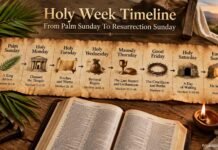

 Palm Sunday is one of the most meaningful days in the Christian faith. It marks the moment Jesus entered Jerusalem just days before His crucifixion and resurrection. Churches around the world remember this day with palm branches, songs, prayer, and worship. Yet many people still ask an important question: what does Palm Sunday mean in the Bible?
The answer reaches far beyond a single event. Palm Sunday is about hope, prophecy, humility, and the true identity of Jesus Christ. It reminds us that Jesus did not come as a proud earthly ruler riding a war horse. He came as a peaceful King riding a donkey. The crowds shouted with joy, but Jesus already knew the suffering that waited ahead. That contrast gives Palm Sunday its deep emotional power.
For many believers, Palm Sunday begins the journey toward Easter. It opens Holy Week and prepares hearts to remember the cross and celebrate the resurrection. The story teaches us how quickly human emotions can change, but it also reveals how steady and faithful the love of Christ remains.
The Story Behind Palm Sunday
The story of Palm Sunday appears in all four Gospels:
- Matthew 21:1–11
- Mark 11:1–10
- Luke 19:28–44
- John 12:12–19
Jesus and His disciples were traveling toward Jerusalem during Passover week. Crowds filled the city because people had come from many places to celebrate the Jewish feast. Excitement spread quickly when people heard Jesus was arriving.
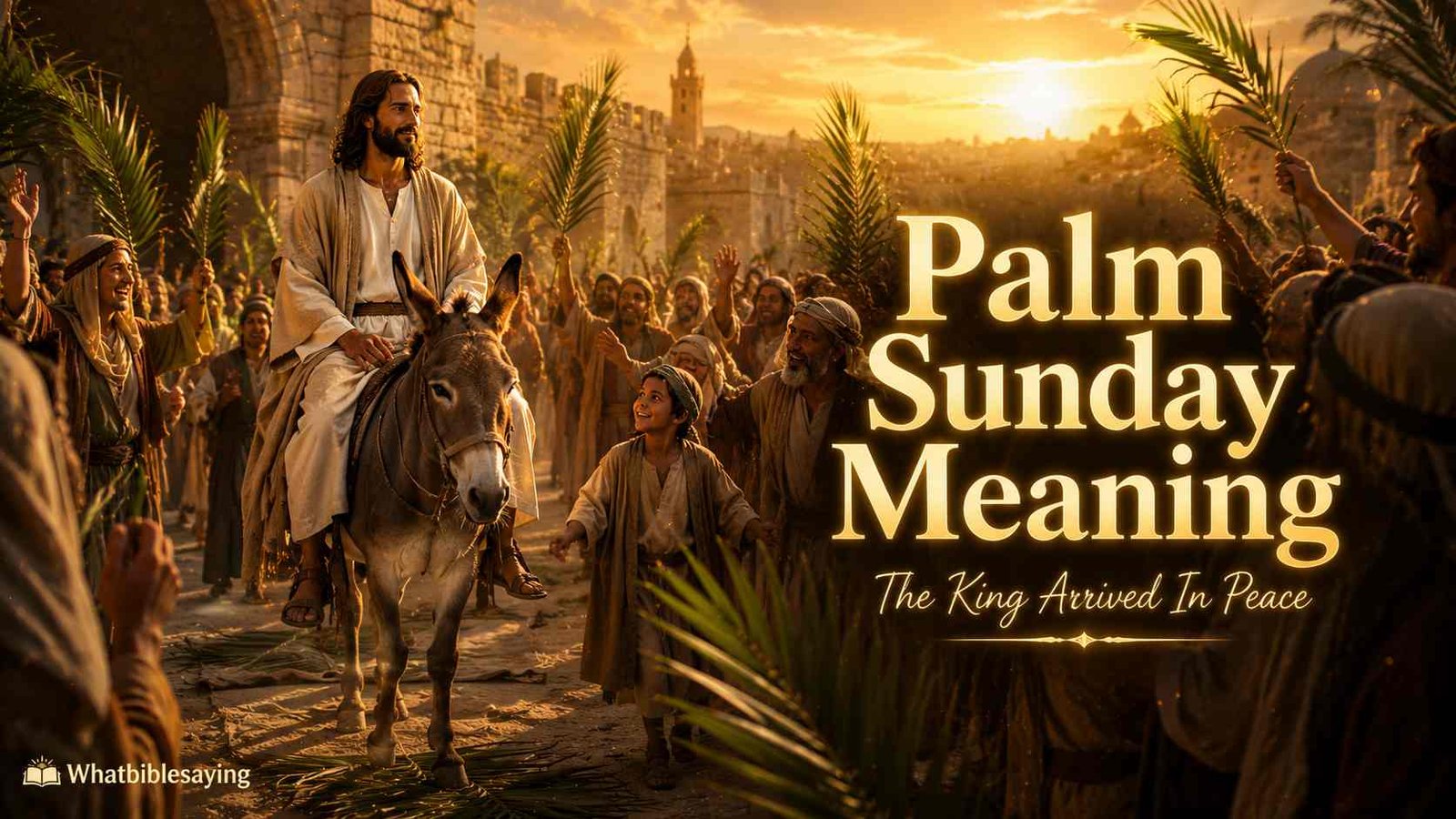
Before entering the city, Jesus instructed two disciples to bring Him a donkey and its colt. This was not random. Jesus was intentionally fulfilling prophecy from Zechariah 9:9:
“See, your king comes to you, righteous and victorious, lowly and riding on a donkey.”
As Jesus rode into Jerusalem, people laid their cloaks on the road. Others cut palm branches and waved them in celebration. The crowd shouted:
“Hosanna to the Son of David!”
“Blessed is he who comes in the name of the Lord!”
The people believed something special was happening. Many hoped Jesus would become the long-awaited Messiah who would rescue Israel. Some expected political freedom from Roman rule. Others simply saw Him as a miracle worker and teacher sent from God.
But Jesus came to bring something greater than earthly power. He came to save hearts.
Why Did People Wave Palm Branches?
Palm branches carried deep meaning in Jewish culture. They symbolized joy, victory, triumph, and peace. People used them during celebrations and important religious events.
When the crowd waved palm branches before Jesus, they were honoring Him like a king. In many ways, it was similar to rolling out a royal carpet. The people were publicly declaring respect and praise.
This is one reason Palm Sunday matters so much in the Bible. The crowd recognized Jesus as someone sent by God, even if many did not yet fully understand His mission.
Today, churches still use palm branches on Palm Sunday to remember that moment. Children wave them during worship services. Some churches fold the palms into crosses. Others place them near altars as reminders of Christ’s entrance into Jerusalem.
The image is beautiful: ordinary people lifting branches and shouting praise as the Savior rides peacefully into the city.
Why Did Jesus Ride A Donkey?
This detail is easy to overlook, but it carries enormous meaning.
Kings in ancient times often rode horses into cities after military victories. Horses represented power, war, and conquest. Jesus chose something different.
He rode a donkey.
In the Bible, a donkey symbolized humility, peace, and servant leadership. Jesus was showing the world what kind of King He truly was. He did not come to rule through fear. He came to serve and save.
This fulfilled Old Testament prophecy and revealed the heart of God.
Palm Sunday teaches us that greatness in God’s kingdom looks different from greatness in the world. Jesus showed strength through gentleness. He showed authority through sacrifice.
That message still speaks clearly today.
What Is The Main Purpose Of Palm Sunday?
The main purpose of Palm Sunday is to remember Jesus as the promised King and Savior.
But Palm Sunday also invites believers to examine their own hearts. The same crowd that shouted “Hosanna” later cried “Crucify Him” within the same week. Human emotions changed quickly. Fear and disappointment spread through the city.
Jesus remained faithful anyway.
Palm Sunday reminds Christians that true faith is more than excitement during happy moments. It is trusting Jesus even during suffering, confusion, and waiting.
The day also begins Holy Week, which leads believers through:
- The Last Supper
- Jesus praying in Gethsemane
- His arrest and trial
- The crucifixion
- The resurrection on Easter Sunday
Without Palm Sunday, the emotional journey of Easter would feel incomplete. It is the doorway into the final days of Jesus’ earthly ministry.
What Palm Sunday Teaches About Humility
One of the strongest lessons of Palm Sunday is humility.
Jesus had every reason to demand honor and glory. Christians believe He is the Son of God. Yet He entered Jerusalem quietly and peacefully. He washed the feet of His disciples. He spent time with ordinary people. He welcomed children, sinners, and the brokenhearted.
Palm Sunday challenges modern ideas about success and power.
Many people today chase attention, status, and control. Jesus showed another way. He showed that humility is not weakness. Humility is strength under control.
When believers celebrate Palm Sunday, they are not just remembering a historical event. They are also remembering the character of Christ.
A humble heart honors God.
What Does “Hosanna” Mean In The Bible?
The word “Hosanna” is one of the most famous parts of Palm Sunday.
People often think it simply means praise, but the word originally meant “save us now” or “please save us.”
Over time, it became both a prayer and a shout of worship.
So when the crowds cried “Hosanna,” they were asking Jesus for salvation while also honoring Him as King.
That makes Palm Sunday deeply personal.
Every believer comes to Jesus needing rescue in some way. Some need peace. Others need forgiveness, hope, healing, or direction. Palm Sunday reminds Christians that Jesus still welcomes people who cry out to Him.
Where Is Palm Sunday Found In The Bible?
Palm Sunday appears in all four Gospels, which shows how important the event was to the early Church.
Here is a simple overview:
| Gospel | Passage | Main Focus |
|---|---|---|
| Matthew | Matthew 21:1–11 | Fulfilled prophecy and public praise |
| Mark | Mark 11:1–10 | Jesus entering Jerusalem as King |
| Luke | Luke 19:28–44 | Jesus weeping over Jerusalem |
| John | John 12:12–19 | Palm branches and growing crowds |
Luke’s account includes a powerful detail many people remember deeply. Jesus wept over Jerusalem because He knew the city did not fully recognize God’s peace.
Even during celebration, Jesus saw the suffering ahead.
That mixture of joy and sorrow gives Palm Sunday its emotional depth.
What Happened After Palm Sunday?
After entering Jerusalem, Jesus spent several days teaching in the temple and speaking with crowds.
But tension grew quickly.
Religious leaders felt threatened by Him. Political leaders feared unrest during Passover. Judas eventually betrayed Jesus. The disciples became afraid and confused.
Within days:
- Jesus shared the Last Supper
- He prayed in the Garden of Gethsemane
- He was arrested during the night
- Pontius Pilate approved His crucifixion
- Jesus died on the cross
- He rose again on Easter Sunday
This is why many Christians connect Palm Sunday closely with the Easter story. The celebration of Palm Sunday cannot be separated from the sacrifice of Good Friday and the victory of Easter morning.
If you have ever wondered where in the Bible is Easter story, Holy Week begins here.
What Color Will We Wear In Heaven?
This question appears often around Christian holidays and worship discussions.
The Bible does not clearly describe exactly what people will wear in heaven every moment, but Revelation gives symbolic images of white robes.
Revelation 7:9 describes a great multitude standing before God wearing white robes and holding palm branches.
White often represents purity, righteousness, victory, and holiness in Scripture.
That connection is beautiful because Palm Sunday itself also includes palm branches. The image of worship continues from Jerusalem all the way into the heavenly visions of Revelation.
Rather than focusing mainly on clothing, the Bible emphasizes being made clean through Christ. Heaven is described as a place of peace, worship, joy, and the presence of God.
Which Sin Can God Never Forgive?
This is a serious question that worries many people.
Jesus spoke about blasphemy against the Holy Spirit in Matthew 12:31–32. Christians have discussed this passage for centuries. Most Bible scholars understand it as the complete and ongoing rejection of God’s truth and the work of the Holy Spirit.
Many pastors gently remind worried believers of this truth: people who sincerely fear offending God are usually showing hearts that still desire Him.
The Bible repeatedly speaks about God’s mercy and forgiveness. Throughout Scripture, we see people who failed deeply yet found grace after repentance.
Palm Sunday itself points toward forgiveness. Jesus entered Jerusalem knowing the cross was coming. He willingly moved toward sacrifice because of His love for humanity.
That message still gives hope today.
What Palm Sunday Teaches Families Today
Palm Sunday is not only about ancient history. Its lessons still shape daily life.
Families can learn several powerful truths from this day.
Worship Matters
The crowds openly praised Jesus. Worship was public, joyful, and heartfelt.
Modern believers sometimes become distracted or spiritually tired. Palm Sunday reminds Christians to honor God openly and sincerely.
Jesus Brings Peace
Jesus rode a donkey, not a war horse.
In stressful times filled with fear, arguments, and uncertainty, Palm Sunday reminds believers that Christ brings peace into troubled hearts.
Faith Can Grow Stronger
Some people in the crowd only followed Jesus for miracles or excitement. Real faith must go deeper.
Palm Sunday encourages believers to stay faithful during both celebration and suffering.
God Keeps His Promises
The Old Testament prophecy about the coming King was fulfilled through Jesus.
Palm Sunday reminds Christians that God’s promises can be trusted.
Palm Sunday And The Meaning Of Hope
Many people connect Palm Sunday with the word hope.
The people of Jerusalem hoped for rescue. Some hoped for political freedom. Others hoped for healing or change.
Jesus offered eternal hope instead.
That does not mean life suddenly becomes easy. Even the disciples experienced fear and heartbreak after Palm Sunday. Yet the resurrection showed that darkness never gets the final word.
This is why many Christians find comfort during difficult seasons by reading passages connected to Holy Week. The story reminds believers that suffering can lead to redemption.
The Bible speaks often about hope because human hearts need it constantly.
What Palm Sunday Reveals About Jesus
Palm Sunday reveals several important truths about Jesus:
| Truth About Jesus | Meaning |
|---|---|
| He fulfilled prophecy | God’s promises were trustworthy |
| He came peacefully | His kingdom was spiritual, not violent |
| He accepted worship | He openly revealed His identity |
| He moved toward sacrifice | Love guided His mission |
| He remained humble | True greatness serves others |
These truths help explain why Palm Sunday continues to matter across generations.
Children hear the story and learn about kindness. Adults see the depth of sacrifice. Elderly believers find reassurance in God’s faithfulness.
The message reaches every stage of life.
Why Palm Sunday Still Matters Today
Some people wonder why Christians continue remembering events from thousands of years ago.
Palm Sunday matters because human hearts have not changed much.
People still search for peace. They still struggle with fear, pride, disappointment, and uncertainty. They still long for hope and forgiveness.
The story of Jesus entering Jerusalem speaks into all of those struggles.
Palm Sunday reminds believers that God came near. Jesus walked among ordinary people. He understood suffering. He saw human weakness and still chose love.
That message never grows old.
What This Day Still Means For Our Hearts
Palm Sunday is more than waving branches or remembering a parade through Jerusalem.
It is an invitation.
The same Jesus who entered the city in humility still invites people to trust Him today. He still brings peace to anxious hearts. He still welcomes those who cry out for mercy. He still calls people toward faith, forgiveness, and hope.
The crowd once shouted “Hosanna,” asking for salvation. In many ways, people still whisper the same prayer today.
Palm Sunday reminds Christians that God keeps His promises. The King came peacefully. The Savior moved willingly toward the cross. And the story did not end in darkness.
Easter was coming.

Reverend James has spent years studying and teaching the Bible. With warmth and wisdom, he shares deep truths in a way that’s clear, simple, and easy to understand.