
 There are moments in the Bible that feel difficult for modern readers to understand. Burnt offerings are one of those subjects. When people read about animals being sacrificed on altars, they often wonder why God commanded it and what it truly meant.
Yet behind the smoke, fire, and ancient rituals was a deeper message about worship, surrender, forgiveness, and faith.
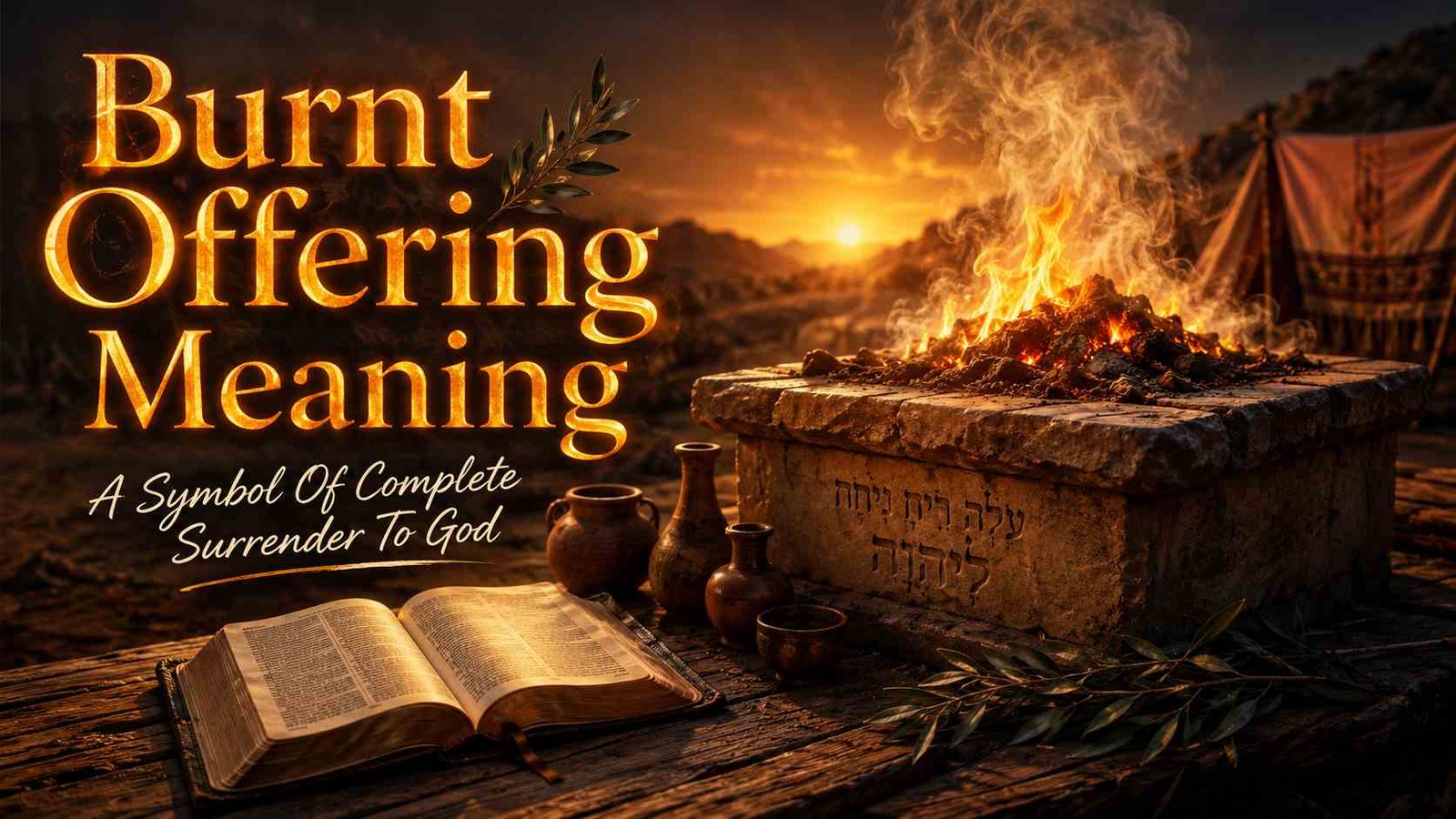
A burnt offering in the Bible was not simply about burning an animal. It represented giving something completely to God. The offering was placed on the altar and consumed by fire as an act of devotion. It symbolized a heart that trusted God fully.
Many people today ask questions like:
- Why is it called a burnt offering?
- Why does God want a burnt offering?
- What’s the difference between a sin offering and a burnt offering?
- What are burnt offerings today?
The Bible answers these questions with surprising depth and compassion. Once we understand the purpose behind these sacrifices, we begin to see how they point toward worship, repentance, grace, and ultimately Jesus Christ Himself.
Why Is It Called A Burnt Offering?
The phrase “burnt offering” comes from the Hebrew word olah, which means “that which goes up.” The name points to the smoke rising from the altar toward heaven.
Unlike some other sacrifices in the Old Testament, the burnt offering was completely consumed by fire. Nothing was kept back. The entire offering belonged to God.
Leviticus 1 gives detailed instructions about this sacrifice. The person bringing the offering would present an animal without defect. The priest would place it on the altar, and it would be burned as “a pleasing aroma to the Lord” (Leviticus 1:9).
To modern ears, that wording may sound strange. But the Bible is not teaching that God enjoyed suffering or destruction. The pleasing aroma symbolized obedience, faith, and sincere worship coming from the heart of the worshiper.
The fire represented complete surrender.
In many ways, the burnt offering was saying:
“God, everything I have belongs to You.”
That idea still matters today.
People often want partial devotion. We may give God our Sunday mornings while keeping control of our hearts, choices, or priorities. But the burnt offering reminded Israel that true worship involves the whole person.
The Meaning Behind The Smoke Rising
Ancient Israel lived in a world full of symbols and visible reminders. The smoke rising into the sky carried spiritual meaning.
It represented:
- Prayer rising to God
- Worship ascending to heaven
- Fellowship with God
- Dedication and surrender
Psalm 141:2 reflects a similar picture:
“May my prayer be set before you like incense.”
The Israelites did not believe the smoke magically removed sin. Rather, the offering pointed toward faith, repentance, and dependence on God’s mercy.
This helps explain why the prophets later warned people not to trust rituals alone.
God repeatedly reminded His people that sacrifices without obedience meant nothing.
Isaiah 1:11 says:
“I have more than enough of burnt offerings.”
The problem was not the sacrifice itself. The problem was empty religion without a faithful heart.
That truth still speaks loudly today.
A person can attend church, sing worship songs, and speak religious words while remaining distant from God inwardly. The Bible consistently teaches that God desires sincere hearts more than outward performance.
What Were Burnt Offerings Used For In The Bible?
Burnt offerings served several purposes throughout Scripture. They expressed worship, repentance, thanksgiving, and commitment to God.
They were among the oldest sacrifices mentioned in the Bible.
Burnt Offerings Before The Law Of Moses
Burnt offerings existed long before the temple and priesthood were established.
After the flood, Noah built an altar and offered burnt offerings to God.
Genesis 8:20 says:
“Then Noah built an altar to the Lord.”
This act expressed gratitude and worship after God preserved Noah’s family.
Abraham also offered sacrifices as part of his relationship with God. When God tested Abraham with Isaac in Genesis 22, the story involved the language of burnt offerings.
That event became deeply important because it later pointed toward God providing a sacrifice Himself.
Job regularly offered sacrifices for his children as an act of intercession and concern for their spiritual lives.
These examples show that burnt offerings represented devotion and dependence on God even before Israel became a nation.
Burnt Offerings In The Temple
Once God established the Law through Moses, burnt offerings became part of Israel’s regular worship system.
The priests offered sacrifices:
- Daily
- During festivals
- For repentance
- During covenant ceremonies
- In acts of thanksgiving
Leviticus explains how different animals could be used depending on a person’s ability to give.
This showed that worship was not reserved only for the wealthy. God made room for everyone.
The sacrificial system also taught Israel an important truth about sin.
Sin damages fellowship with God.
The sacrifices reminded people that holiness matters and that forgiveness is costly.
When readers study topics like what is a sin in the Bible or what does the Bible say about forgiveness, the sacrificial system helps explain why redemption was treated so seriously throughout Scripture.
Why Does God Want A Burnt Offering?
This is one of the biggest questions people ask.
Some wonder whether God actually desired animal sacrifices. Others struggle emotionally with the idea altogether.
The Bible gives a careful answer.
God was never hungry for sacrifices. He was teaching spiritual truths through them.
Psalm 50:12 says:
“If I were hungry I would not tell you.”
The sacrifices taught people about:
- The seriousness of sin
- The need for repentance
- The importance of obedience
- The cost of forgiveness
- The holiness of God
- Total surrender
The offering itself was never the final goal.
God wanted hearts that loved Him.
God Desired The Heart More Than The Animal
This theme appears throughout Scripture.
1 Samuel 15:22 says:
“To obey is better than sacrifice.”
King David later wrote in Psalm 51:
“You do not delight in sacrifice, or I would bring it.”
David understood that God desired humility and repentance more than empty rituals.
The prophets repeatedly warned Israel not to trust sacrifices while ignoring justice, mercy, and faithfulness.
Micah 6:8 summarizes God’s desire beautifully:
“To act justly and to love mercy and to walk humbly with your God.”
The burnt offering was meant to reflect inward surrender.
Without that surrender, the ritual lost its meaning.
This connects closely with themes found in what is worship in the Bible and what is grace in the Bible. Worship is not merely ceremony. It is a life turned toward God.
What’s The Difference Between A Sin Offering And A Burnt Offering?
Many readers confuse these two offerings because both involved sacrifice. But they had different purposes.
Here is a simple comparison:
| Burnt Offering | Sin Offering |
|---|---|
| Symbolized total surrender to God | Focused on cleansing from sin |
| Entire offering burned | Some portions handled differently |
| Expressed devotion and worship | Emphasized atonement and purification |
| Could be voluntary | Often required for specific sins |
| Represented dedication | Represented forgiveness |
The burnt offering emphasized giving oneself fully to God.
The sin offering focused more directly on dealing with guilt and uncleanness.
Still, both sacrifices pointed toward the same deeper reality: people needed God’s mercy.
How Both Offerings Point Toward Forgiveness
The Old Testament sacrifices prepared the way for a greater understanding later revealed through Jesus Christ.
Hebrews explains that animal sacrifices were temporary symbols.
They pointed toward the ultimate sacrifice Jesus would make on the cross.
This is why Christians no longer practice animal sacrifice today.
The sacrificial system reached its fulfillment in Christ.
His death accomplished what repeated sacrifices could never permanently complete.
That is one reason the New Testament speaks so often about grace, redemption, and forgiveness through Jesus.
What Are Burnt Offerings Today?
Modern Christians do not bring animals to altars.
Jesus fulfilled the sacrificial system once and for all.
But the spiritual meaning behind burnt offerings still matters deeply.
Today, believers are called to offer themselves to God spiritually.
Romans 12:1 says:
“Offer your bodies as a living sacrifice.”
That verse captures the modern meaning of burnt offerings beautifully.
Instead of offering animals, Christians offer:
- Their worship
- Their obedience
- Their prayers
- Their hearts
- Their daily lives
- Their service to others
A modern burnt offering is not about fire on an altar. It is about surrender.
It is choosing to trust God with every area of life.
Becoming A Living Sacrifice
This idea changes how we view faith.
Worship is no longer limited to ceremonies or church buildings.
A believer honors God through:
- Kindness
- Forgiveness
- Generosity
- Prayer
- Integrity
- Faithfulness
- Serving others
When someone chooses truth instead of dishonesty, that is worship.
When someone forgives after deep pain, that reflects surrender to God.
When a person spends time in prayer or learns how to fast according to the Bible, they are offering devotion and dependence upon God.
The heart behind the burnt offering still lives on through faithful living.
How Jesus Fulfilled The Meaning Of Burnt Offerings
The New Testament connects Old Testament sacrifices directly to Jesus.
He became the perfect and final sacrifice.
Unlike animal offerings repeated again and again, Jesus offered Himself willingly once for all.
Ephesians 5:2 says:
“Christ loved us and gave himself up for us as a fragrant offering and sacrifice to God.”
Notice the familiar language.
The phrase “fragrant offering” echoes the burnt offerings from Leviticus.
Jesus fulfilled the symbolism completely.
He surrendered Himself fully in obedience to the Father.
The Cross And Complete Surrender
The cross represents more than suffering.
It reveals complete love and surrender.
Jesus held nothing back.
That is why the burnt offering ultimately points toward Him.
The Old Testament sacrifices prepared people to understand:
- Sin is serious
- Forgiveness is costly
- God is holy
- Mercy comes from God
- Redemption requires sacrifice
Through Jesus, believers now approach God with confidence instead of fear.
Hebrews teaches that Christ opened the way for direct relationship with God.
This changes how Christians understand worship today.
We no longer live trying to earn forgiveness through repeated sacrifices. Instead, we respond to God’s grace with grateful devotion.
Burnt Offerings And The Bigger Story Of The Bible
Burnt offerings may seem like a small Old Testament topic at first. But they connect to the larger message of Scripture in powerful ways.
They help explain:
- God’s holiness
- Human brokenness
- The need for forgiveness
- The meaning of surrender
- The beauty of redemption
Many people today want spirituality without surrender.
They want comfort without obedience.
But the burnt offering reminds us that faith involves giving ourselves fully to God.
That does not mean perfection.
It means trust.
God never asked His people to be flawless before coming to Him. He invited them into relationship, repentance, and worship.
That invitation still exists today.
Common Misunderstandings About Burnt Offerings
Some people misunderstand these sacrifices completely.
Here are a few important clarifications.
Burnt Offerings Were Not Pagan Rituals
Israel’s sacrifices were different from surrounding nations.
Many pagan religions practiced sacrifices to manipulate gods or gain magical favor.
Biblical sacrifices focused on covenant relationship with the one true God.
God Did Not Enjoy Violence
The Bible never portrays God as cruel or bloodthirsty.
The sacrifices revealed the seriousness of sin and the value of reconciliation.
The prophets often emphasized mercy, justice, and compassion alongside worship.
Sacrifices Pointed Toward Something Greater
The Old Testament system was never meant to be permanent.
It pointed forward to Christ.
Hebrews repeatedly explains that Jesus fulfilled what the sacrifices symbolized.
Understanding this helps modern readers see continuity between the Old and New Testaments.
What This Teaches Us About Worship And Faith
Burnt offerings teach something timeless.
God desires wholehearted devotion.
Not empty religion.
Not performance.
Not rituals without love.
The smoke rising from ancient altars symbolized hearts turning toward heaven. Even today, worship is ultimately about surrendering ourselves to God with honesty and trust.
Some people surrender quickly during easy seasons but pull away during suffering.
Others trust God publicly while privately carrying bitterness, pride, or fear.
The burnt offering challenges all of us to ask:
“What part of my life am I still holding back from God?”
That question matters because faith is not only about beliefs. It is about relationship.
The Bible teaches that God is compassionate and patient. He calls people closer not through fear alone but through grace, mercy, and love.
And that is why the story of burnt offerings eventually leads to Jesus.
At the cross, we see complete surrender, complete love, and complete redemption.
The old altar fires eventually faded away. But the truth behind them still burns brightly today.

Reverend James has spent years studying and teaching the Bible. With warmth and wisdom, he shares deep truths in a way that’s clear, simple, and easy to understand.