
 Walk into almost any church, and you may hear words like bishop, pastor, priest, or elder. For many people, those titles sound important but also a little confusing. Some wonder whether a bishop is simply a pastor with a higher title. Others ask whether bishops are even mentioned in Scripture at all.
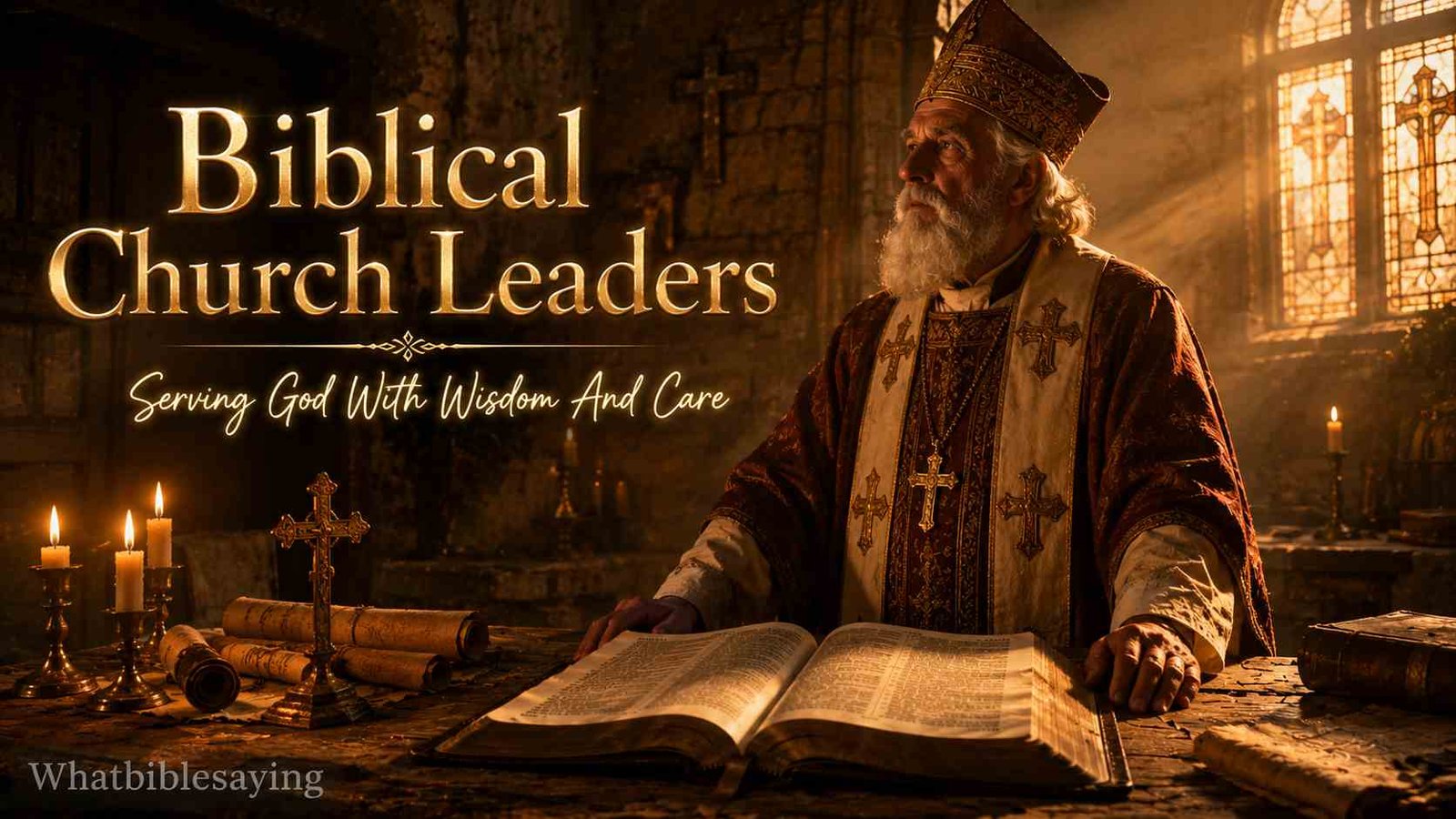
The Bible does speak about bishops. In fact, the role of a bishop was very important in the early Christian church. The word points to spiritual care, wisdom, leadership, and responsibility. A bishop was not meant to be a distant ruler or powerful celebrity. The biblical picture is much more personal. A bishop was someone trusted to guide believers, protect truth, and care for God’s people faithfully.
Understanding this role also helps us better understand church leadership today. It connects with other important biblical topics like what it means to be a pastor, why obedience matters in faith, and how spiritual leaders should serve others with humility instead of pride.
The deeper you study the meaning of bishop in Scripture, the clearer one truth becomes: God values faithful leadership that reflects His heart.
What Is the Full Meaning of a Bishop?
The word “bishop” comes from the Greek word episkopos. It means “overseer,” “guardian,” or “watchman.” In the New Testament, this word described a spiritual leader who watched over believers and protected the church.
A bishop was not mainly known for status. He was known for responsibility.
In Philippians 1:1, Paul greeted “the bishops and deacons” alongside the church believers. This shows that bishops were already recognized leaders in early Christian communities. Their role involved teaching truth, guiding people spiritually, and helping keep the church healthy.
The idea of an overseer appears clearly in Acts 20:28, where Paul told church leaders:
“Keep watch over yourselves and all the flock of which the Holy Spirit has made you overseers.”
That image matters. A bishop was compared to a shepherd caring for sheep. The goal was protection, guidance, and spiritual nourishment.
This connects closely with another biblical theme many believers study today: what does leadership mean in the Bible. Biblical leadership is never about controlling people. It is about serving them faithfully.
Why the Early Church Needed Bishops
The early church grew rapidly after Jesus’ resurrection. New believers gathered in homes, cities, and regions across the Roman Empire. As churches multiplied, they needed mature leaders who understood Scripture and could guide others wisely.
False teachings also became a serious problem. Some people twisted Christian truth for personal gain or confusion. Bishops helped protect churches from dangerous teachings and unhealthy behavior.
Paul gave detailed qualifications for bishops in 1 Timothy 3:1–7. These qualifications focused mostly on character rather than power. A bishop was expected to be:
- Faithful
- Self-controlled
- Gentle
- Respectable
- Hospitable
- Able to teach
- Spiritually mature
That list reveals something beautiful. God cared more about a leader’s heart than his title.
Even today, many Christians searching for answers about church leadership often also explore topics like what the Bible says about elders or what obedience means in the Bible because these ideas are deeply connected.
What Does Bishop Mean In The Bible Compared to a Pastor?
This is one of the most common questions people ask.
In many churches today, bishops and pastors are viewed as different positions. But in the New Testament, the roles often overlapped closely.
A pastor is usually seen as a shepherd of a local church. The word pastor itself means shepherd. Pastors teach, encourage, pray for people, and guide congregations spiritually.
A bishop, meanwhile, emphasized oversight and responsibility.
In some New Testament passages, the same leaders were described using different terms:
- Elder
- Pastor
- Overseer (bishop)
These words highlighted different parts of the same ministry role.
The Shepherding Role of a Pastor
Pastors care deeply for people’s spiritual lives. They preach Scripture, visit hurting members, encourage families, and help believers grow closer to God.
Jesus Himself described spiritual leadership through the image of a shepherd. In John 10, He called Himself the Good Shepherd who lays down His life for the sheep.
That image shaped Christian leadership from the beginning.
A pastor’s work often includes:
- Teaching Scripture
- Counseling believers
- Leading worship gatherings
- Caring for the weak
- Encouraging spiritual growth
Many Christians who study this topic also search for what does the Bible say about helping others because shepherding naturally involves compassion and service.
The Oversight Role of a Bishop
A bishop usually carried broader leadership responsibility.
In some church traditions, bishops supervise multiple churches or regions. Historically, bishops also helped appoint leaders, settle doctrinal disputes, and guard biblical teaching.
The New Testament focus, however, was still deeply relational. A bishop was not simply an administrator. He was expected to care for people spiritually.
Titus 1:7 says:
“Since an overseer manages God’s household, he must be blameless.”
That phrase “God’s household” matters. The church was seen as a family, not merely an organization.
What’s the Difference Between a Priest and a Bishop?
This question often causes confusion because the words come from different parts of biblical and church history.
In the Old Testament, priests served in the temple under the Law of Moses. They offered sacrifices, cared for holy places, and represented the people before God.
Aaron and his descendants were priests in ancient Israel. Their ministry involved worship rituals, sacrifices, and temple service.
After Jesus came, Christians believe He fulfilled the ultimate priestly role through His sacrifice on the cross. Hebrews describes Jesus as the perfect High Priest.
Still, many Christian traditions later continued using the title priest for church leaders.
Today:
- Priests often serve local congregations
- Bishops usually oversee groups of churches or priests
In Catholic, Orthodox, and Anglican traditions, bishops hold higher authority than priests. Bishops may ordain priests and guide church regions called dioceses.
In many Protestant churches, the title priest is not commonly used. Instead, words like pastor, elder, or minister appear more often.
Understanding these differences also helps explain why believers sometimes ask what are saints in the Bible or what is a pastor in the Bible. Church structure developed differently across Christian history.
Priests in Biblical and Church History
The Old Testament priesthood centered around sacrifices and temple worship. Priests acted as mediators between God and the people.
But the New Testament teaches that Jesus became the final and complete sacrifice for sin.
Because of this, many Christians believe all believers now have direct access to God through Christ.
1 Peter 2:9 says believers are:
“a royal priesthood.”
That verse highlights something powerful. Spiritual closeness to God is not reserved only for religious leaders.
Still, church leadership remains important for teaching, guidance, and care.
What’s the Difference Between a Bishop and an Archbishop?
An archbishop is usually a bishop with greater regional responsibility.
The prefix “arch” means chief or leading. In many church traditions, an archbishop oversees:
- Multiple dioceses
- Several bishops
- Larger church regions
The title archbishop does not appear directly in the Bible. It developed later as church organization became more structured over centuries.
The New Testament mostly focused on local church leadership rather than complex hierarchy.
Still, many churches today continue these historical leadership roles because they help organize ministry and maintain unity.
Whether someone is called bishop, pastor, elder, or archbishop, the biblical standard remains the same:
- humility
- faithfulness
- wisdom
- godly character
That standard matters far more than titles.
Bible Verses About Bishops and Church Leadership
Several important passages help explain the role of bishops in Scripture.
1 Timothy 3:1–7
This is one of the clearest descriptions of qualifications for bishops.
Paul wrote:
“Whoever aspires to be an overseer desires a noble task.”
Notice the phrase “noble task.” Leadership in the church was viewed as service, not personal glory.
Paul then listed qualities expected in a bishop:
- Faithful in family life
- Temperate
- Respectable
- Hospitable
- Gentle
- Not greedy
- Spiritually mature
Interestingly, very little is said about talent, popularity, or charisma.
Character came first.
Titus 1:7–9
Paul again emphasized integrity:
“Since an overseer manages God’s household, he must be blameless.”
The bishop was expected to encourage sound teaching while correcting harmful doctrine.
This protective role remains important today because many believers struggle with confusion, misleading ideas, or distorted interpretations of faith.
Acts 20:28
Paul warned church leaders to watch carefully over the flock.
The church was precious because Christ purchased it with His own blood.
That reminder gave leadership deep spiritual weight. Bishops were not merely managers. They were caretakers of something sacred.
Philippians 1:1
This verse shows bishops and deacons serving together in early churches.
It also reveals that organized spiritual leadership existed from Christianity’s earliest days.
How the Role of Bishops Changed Through Church History
As Christianity spread across the world, church leadership structures became more organized.
In the first century, churches were usually smaller and local. Leaders worked closely with believers personally.
Over time:
- Churches expanded into cities and nations
- More formal leadership systems developed
- Bishops gained broader oversight responsibilities
By the second and third centuries, bishops often became central figures in defending Christian teaching against false doctrines.
Some bishops became widely respected because of their wisdom and courage. Others sadly became involved in political struggles or power conflicts.
History shows both faithful examples and human failures.
That reality reminds us of an important biblical truth: leadership titles alone do not guarantee spiritual maturity.
Jesus repeatedly taught that greatness in God’s kingdom comes through humility and service.
Matthew 20:26 says:
“Whoever wants to become great among you must be your servant.”
That teaching still shapes healthy Christian leadership today.
Why Biblical Leadership Still Matters Today
Many people today feel disappointed or confused by religious leadership. News stories about scandals or abuse can make some lose trust entirely.
But Scripture still presents a beautiful vision of godly leadership.
A faithful bishop or pastor should:
- Protect truth
- Encourage people
- Lead with humility
- Care for the hurting
- Teach God’s Word faithfully
- Reflect Christ’s character
Good spiritual leaders help churches remain healthy emotionally and spiritually.
This also connects naturally with topics like what does the Bible say about truthfulness and what does the Bible say about helping people in need because leadership is deeply connected to daily Christian living.
Healthy churches are built on servant-hearted leadership, not pride or control.
Leadership Is About Service
Jesus completely changed how leadership should look.
In many cultures, leaders seek power, praise, and status. Jesus taught the opposite.
He washed His disciples’ feet.
He welcomed children.
He cared for the weak.
He served rather than demanded to be served.
That example still defines Christian leadership today.
A bishop in the biblical sense is not meant to stand above people proudly. He is called to guide people lovingly.
Common Misunderstandings About Bishops
Some people assume bishops are only part of Catholic or Orthodox churches. But the biblical idea of overseers exists across many Christian traditions.
Others think bishops are mainly political or ceremonial figures. Yet Scripture describes deeply personal spiritual care.
Another misunderstanding is that bishops are spiritually “better” than ordinary believers.
The Bible teaches that all Christians are valuable before God. Leadership roles carry responsibility, not superiority.
Even Paul described himself as a servant of Christ.
That humility remains essential.
How Different Churches View Bishops Today
Christian traditions understand bishops differently.
Catholic Churches
Bishops oversee dioceses and help preserve apostolic tradition. They also ordain priests.
Orthodox Churches
Bishops hold major spiritual authority and are seen as guardians of church teaching.
Anglican Churches
Bishops lead dioceses and maintain church order and doctrine.
Methodist Churches
Many Methodist groups use bishops as regional leaders overseeing pastors and churches.
Baptist and Non-Denominational Churches
These churches often prefer titles like pastor or elder rather than bishop, though the biblical functions may still overlap.
Despite differences, most Christian traditions agree that spiritual leadership should reflect Christ-like character.
What This Teaches Us About Faith
The meaning of bishop in the Bible ultimately points us toward something bigger than church titles.
It teaches us about responsibility.
It teaches us about servant leadership.
It teaches us that God cares deeply about how people guide and influence others.
Whether someone leads a church, teaches a Bible study, raises children, or encourages friends, leadership matters.
The strongest leaders in Scripture were rarely the proudest people. Moses struggled with insecurity. Peter made mistakes. Paul endured suffering. Yet God still used them powerfully.
That should encourage all of us.
Faithful leadership begins with humility before God.
Serving Others With Wisdom And Faith
The biblical meaning of bishop reminds us that spiritual leadership is not about fame or control. It is about caring for people faithfully.
The early church needed leaders who could protect truth, encourage believers, and guide communities with wisdom. That need still exists today.
A good bishop, pastor, elder, or spiritual leader reflects the heart of Christ through service, humility, and love.
And even beyond church leadership, every believer is called to influence others with grace and truth.
When leadership reflects God’s character, people are strengthened, churches grow healthier, and faith becomes more visible in everyday life.
Dr. Rachel is very smart and knows a lot about the Bible. He helps us understand the Bible better by talking about the old texts in a simple way.