
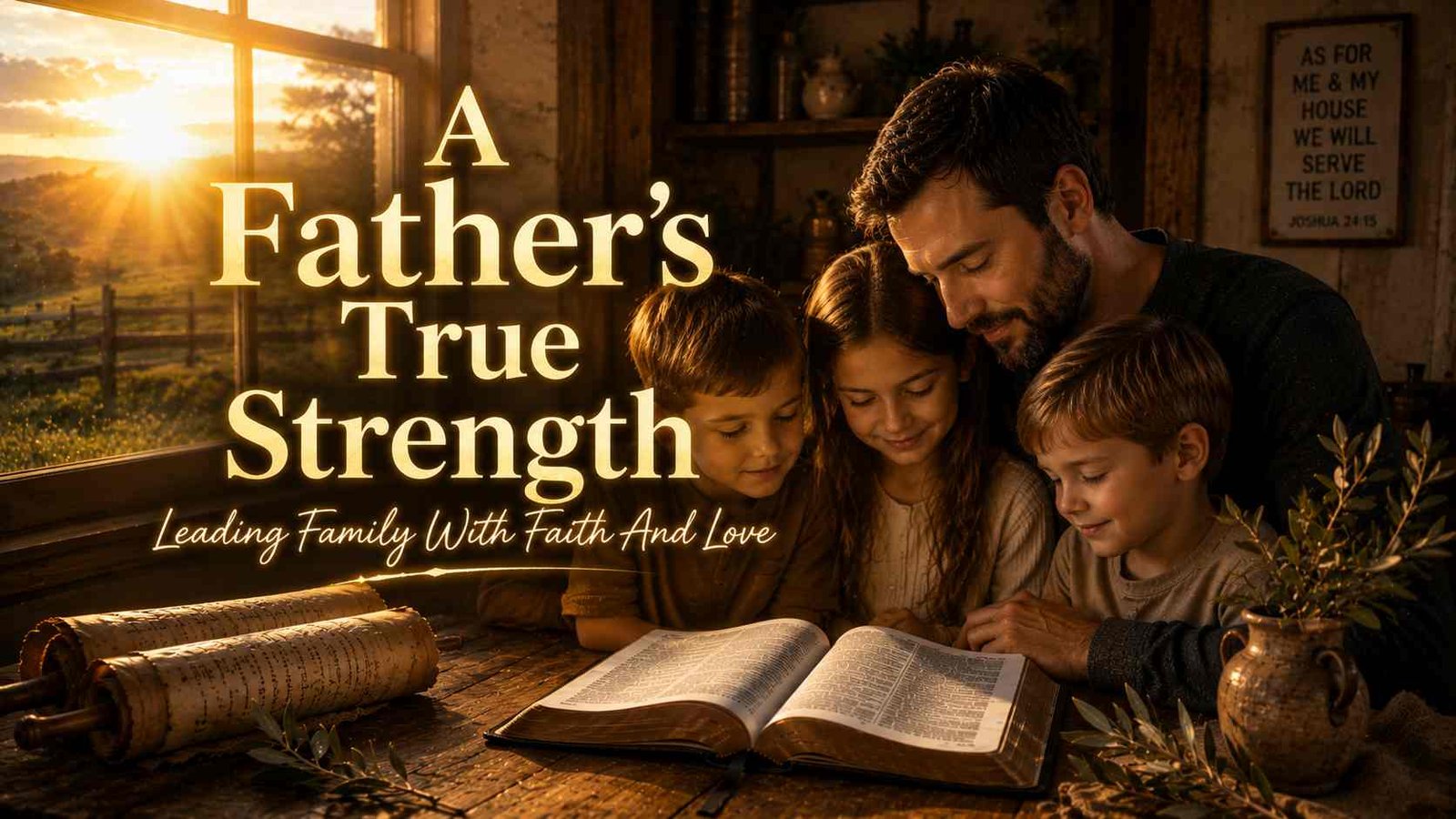
 A child may not remember every gift a father bought or every word he said during a busy week. But children often remember how safe they felt around him. They remember whether he listened. They remember whether he prayed for them, corrected them with love, or showed kindness inside the home.
The Bible speaks deeply about fatherhood because God understands the powerful role a father has in a family. Scripture does not describe a good father as a perfect man with no weakness. Instead, the Bible shows a good father as a faithful man who loves, teaches, protects, and walks humbly before God.
Many fathers today carry silent pressure. Some feel they are failing because they work long hours. Others grew up without strong fathers themselves and now wonder how to lead their own children. Some fathers are trying hard but feel unnoticed. The encouraging truth is this: God sees every effort made in love.
When people ask, “What does the Bible say about a good father?” they are often searching for more than parenting advice. They are searching for wisdom, direction, and hope. The Bible gives all three.
A godly father is not measured only by income or authority. He is measured by character. He leads with patience. He protects without controlling. He disciplines without cruelty. He reflects the heart of God inside the home.
Ephesians 6:4 gives one of the clearest instructions to fathers:
“Fathers, do not provoke your children to anger, but bring them up in the discipline and instruction of the Lord.”
That single verse carries both strength and gentleness. A father is called to guide, but also to care deeply about the emotional and spiritual life of his children.
How Does the Bible Define a Good Father?
The Bible defines a good father as someone who leads his family with love, wisdom, truth, and faithfulness. He is not simply the head of the household. He is also a servant inside it.
A father in Scripture is often shown as:
- A teacher of truth
- A protector of the family
- A provider with integrity
- A spiritual example
- A source of encouragement and discipline
One beautiful picture of fatherhood appears in Psalm 103:13:
“As a father has compassion on his children, so the Lord has compassion on those who fear him.”
Notice the word compassion. The Bible does not describe fatherhood as cold leadership. A good father has a soft heart. He understands weakness. He forgives. He comforts.
This is important because many people grew up thinking fathers should never show emotion. Yet Scripture repeatedly connects fatherhood with mercy, patience, and tenderness.
The book of Proverbs also speaks often about fathers teaching wisdom to their children. Proverbs 22:6 says:
“Train up a child in the way he should go; even when he is old he will not depart from it.”
A father’s daily example shapes a child more than many realize. Children watch how fathers speak, react under pressure, treat their wives, and respond to failure. Even quiet actions become lessons.
That is why the Bible places such importance on character. A godly father does not only tell his children about faith. He lives it in front of them.
This connects closely with broader teachings about what the Bible says about parenting and raising children with patience and wisdom.
The Love and Presence of a Father Matter
One of the greatest gifts a father can give is his presence.
Children do not only need instruction. They need connection. They need someone who listens to their fears, celebrates their growth, and stays emotionally available during difficult seasons.
Modern research often talks about the effect fathers have on emotional development. The Bible already understood this long ago through its emphasis on faithful family relationships.
An absent father can leave deep emotional wounds, especially when children feel forgotten, rejected, or unloved. Many people asking, “Does an absent father affect daughters?” are carrying real pain behind that question.
The answer is yes. Absence can affect confidence, trust, emotional security, and future relationships. But Scripture also reminds us that healing is possible through God’s love and healthy relationships.
Psalm 68:5 describes God as:
“A father to the fatherless.”
That verse brings comfort to many hearts. God cares deeply for those who grew up without protection or guidance.
For fathers who are present today, this truth carries responsibility. Time matters. Listening matters. Small conversations matter.
A child sitting beside a father during dinner may remember that moment for years. A bedtime prayer may stay in a child’s heart long after adulthood.
Sometimes fathers think providing money is enough. Provision is important. The Bible honors hard work. But emotional presence is also part of biblical fatherhood.
This connects beautifully with what the Bible says about emotions and caring for the hearts of others inside the family.
What Are the Responsibilities of a Father in the Bible?
Many people ask about the “10 responsibilities of a father in the Bible.” Scripture may not list them in one single passage, but biblical teaching clearly shows the major duties of a godly father.
Here are some of the most important responsibilities.
| Responsibility | Biblical Focus |
|---|---|
| Love his family | Colossians 3:19 |
| Teach God’s truth | Deuteronomy 6:6–7 |
| Provide honestly | 1 Timothy 5:8 |
| Discipline with wisdom | Proverbs 13:24 |
| Pray for his children | Job 1:5 |
| Lead by example | Titus 2:7 |
| Encourage rather than crush | Ephesians 6:4 |
| Protect the home | Proverbs 14:26 |
| Show patience | Galatians 5:22 |
| Walk faithfully with God | Joshua 24:15 |
These responsibilities are not about perfection. They are about direction.
Spiritual Leadership in the Home
A good father helps point his family toward God.
This does not mean he must become a preacher. It means he values prayer, truth, worship, and spiritual growth inside the home.
Deuteronomy 6 encouraged parents to teach God’s commands during everyday life:
- While sitting at home
- While walking
- While lying down
- While rising up
Faith was meant to become part of daily living.
Sometimes spiritual leadership looks very simple. Reading a Bible verse together. Praying before sleep. Speaking honestly about forgiveness after a hard day.
Small faithful actions shape families over time.
Providing With Integrity
The Bible respects fathers who work honestly to care for their families.
1 Timothy 5:8 says:
“Anyone who does not provide for their relatives… has denied the faith.”
Providing is not only financial. Fathers also provide safety, stability, guidance, and encouragement.
A wealthy father who never shows love may still leave his children emotionally starving. Meanwhile, a humble father with little money but great kindness may leave a lifelong legacy.
Discipline With Love
Biblical discipline is often misunderstood.
The Bible never supports cruelty, rage, or abusive behavior. Instead, biblical discipline aims to guide children toward wisdom and maturity.
Hebrews 12 explains that loving correction is part of healthy growth. Children need boundaries because boundaries teach responsibility.
But Ephesians 6:4 also warns fathers not to provoke their children to anger. Discipline without love creates fear. Discipline with love creates growth.
A good father corrects behavior without destroying dignity.
What Makes a Godly Father Different?
A godly father stands out because his character reflects God’s heart.
He may not be loud or famous. He may not even feel successful every day. But his consistency becomes a blessing to those around him.
Here are qualities often seen in godly fathers.
Humility
A good father admits mistakes.
Children respect honesty more than pride. Saying “I was wrong” teaches humility in a powerful way.
Faithfulness
Godly fathers stay committed even during difficult seasons.
Marriage struggles, financial stress, exhaustion, and disappointment can test a family deeply. A faithful father keeps showing up.
Gentleness
Strength and gentleness belong together in Scripture.
Jesus Himself showed compassion, patience, and tenderness while still standing firmly for truth.
Prayerfulness
Many biblical fathers prayed regularly for their families.
Job prayed for his children often. Joshua publicly declared:
“As for me and my house, we will serve the Lord.”
A praying father changes the atmosphere of a home.
This connects naturally with what the Bible says about godly men and spiritual leadership.
Common Challenges Fathers Face Today
Fatherhood can feel overwhelming.
Many fathers quietly battle fear, stress, guilt, and exhaustion. Some worry they are not good enough. Others carry pressure from work while trying to remain emotionally available at home.
Modern life moves quickly. Families often feel distracted and disconnected. Phones, schedules, and financial stress can steal attention from meaningful relationships.
The Bible never pretends family life is always easy.
Even strong biblical fathers faced struggles.
- David made painful parenting mistakes
- Abraham sometimes acted from fear
- Jacob showed favoritism among his children
- Joseph faced enormous pressure while protecting his family in Egypt
Yet God still worked through imperfect people.
That truth matters deeply today.
Some fathers feel discouraged because they compare themselves to others. Social media often creates unrealistic images of perfect families. But real fatherhood happens in ordinary moments.
Changing diapers. Driving to school. Listening after a hard day. Staying patient during conflict. Praying quietly when nobody sees.
These moments matter to God.
Galatians 6:9 encourages weary hearts:
“Let us not grow weary in doing good.”
A faithful father may not always hear praise, but his influence shapes future generations.
Understanding Popular Parenting Ideas Through a Biblical Lens
Many parenting systems today use phrases like the “3 P’s,” “5 P’s,” or “4 C’s” of parenting. While these phrases are modern, some ideas reflect biblical wisdom surprisingly well.
What Are the 3 P’s of Fatherhood?
Different people define them differently, but they often include:
- Presence
- Provision
- Protection
All three connect strongly with Scripture.
A father should be emotionally present, provide responsibly, and protect his family physically and spiritually.
What Are the 5 P’s of a Father?
A common version includes:
- Provider
- Protector
- Priest
- Partner
- Present parent
The idea of a father acting like a spiritual leader or “priest” in the home reflects biblical teachings about leading families toward God.
What Are the Four Duties of a Father?
Many Christian family teachers summarize them as:
- Lead
- Love
- Teach
- Protect
Again, these themes are strongly supported throughout Scripture.
What Are the 4 C’s of Positive Parenting?
These are often:
- Care
- Consistency
- Communication
- Consequences
Healthy communication and consistent guidance are deeply biblical ideas.
What Is the 7 7 7 Rule for Parenting?
Some parenting experts use this phrase to describe stages of child development:
- First 7 years: teaching and protection
- Next 7 years: training and guidance
- Final 7 years: friendship and mentoring
While this rule is not directly found in the Bible, the principle of gradually guiding children into maturity aligns with biblical wisdom.
The Bible consistently shows parenting as a long journey requiring patience and intentional care.
Does the Bible Talk About Favoritism Between Children?
Yes, and often as a warning.
One painful example appears in the story of Jacob and Joseph. Jacob openly favored Joseph above his brothers, even giving him a special coat.
The result was jealousy, anger, division, and deep family conflict.
Favoritism damages relationships because children naturally compare affection and attention.
Many people quietly wonder, “Which sibling is usually the favorite?” The truth is that children often sense unequal treatment even when parents do not intend harm.
The Bible encourages fairness, love, and wisdom inside families.
A good father works hard to love each child individually without creating competition for affection.
Some children may require different kinds of attention because personalities differ. But every child should feel valued.
This connects naturally with what the Bible says about helping others and treating people with compassion and dignity.
Why Prayer Matters for Fathers
A father who prays regularly leaves a spiritual legacy stronger than money.
Children may eventually forget many conversations, but they rarely forget hearing a father pray sincerely.
Prayer teaches dependence on God. It reminds families that strength does not come only from human effort.
Some people ask, “Why is praying at 3am important?”
The Bible does not command Christians to pray specifically at 3am. However, many believers pray during late-night or early-morning hours because the world feels quieter and more focused.
Jesus Himself often prayed early in the morning or during the night.
Mark 1:35 says:
“Very early in the morning… Jesus got up, left the house and went off to a solitary place, where he prayed.”
The power is not in the clock itself. The power is in seeking God sincerely.
A praying father helps create peace inside the home. Even simple prayers can shape children deeply:
- “Lord, protect my family.”
- “Give us wisdom today.”
- “Help me become a better father.”
These honest prayers matter.
This also connects beautifully with where in the Bible is the Lord’s Prayer and Jesus’ teaching about prayer and humility.
What This Teaches Us About Faith and Fatherhood
A good father is not a man who never struggles.
He is a man who keeps turning back toward God while loving his family faithfully.
Some fathers reading this may feel regret. Maybe there were years lost to anger, distance, addiction, work pressure, or emotional absence. The Bible is full of imperfect people whom God restored and used again.
Grace matters in fatherhood.
Children do not need flawless fathers. They need loving, honest, faithful fathers who keep growing.
If you are trying to lead your family with kindness, patience, prayer, and truth, you are walking in the direction Scripture encourages.
And if you grew up without a strong father, remember this: God’s love can heal what people failed to give. The Bible repeatedly shows God caring for the brokenhearted and the forgotten.
Fatherhood is one of the clearest earthly pictures of God’s care. A godly father reflects safety, wisdom, correction, mercy, and love.
Even small moments of faithfulness can shape generations.
A bedtime prayer. A calm conversation. A father choosing patience instead of anger. These quiet acts often become lifelong memories.
You may also enjoy reading about what the Bible says about parenting and what the Bible says about mothers as you continue studying God’s design for family life.

Reverend James has spent years studying and teaching the Bible. With warmth and wisdom, he shares deep truths in a way that’s clear, simple, and easy to understand.