
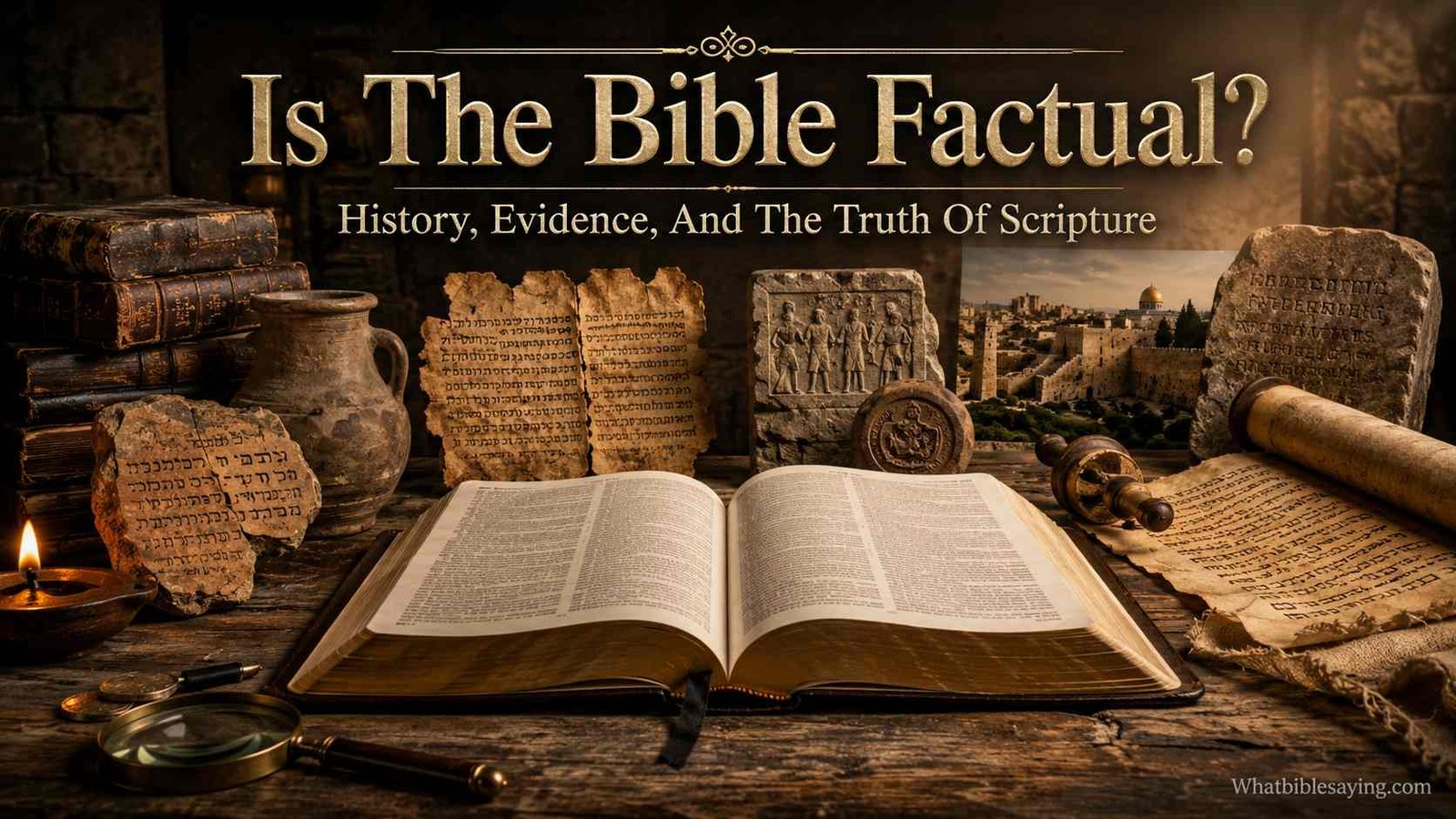
 Many people ask, “Is the Bible factual?” because the Bible makes claims about real people, places, kingdoms, events, and God’s actions in history. Some readers approach the Bible as a sacred book of faith, while others examine it as an ancient collection of writings that can be studied historically.
The answer requires looking carefully at different kinds of evidence. Historical records, archaeology, ancient manuscripts, and biblical studies can help us understand whether the Bible accurately reflects the world in which it was written.
The Bible is not a single book written at one time. It is a collection of 66 books written by many authors over many centuries. It includes history, poetry, wisdom literature, prophecy, and letters. Because of this, evaluating its factual nature requires understanding its purpose, context, and claims.
For Christians, the Bible is more than a historical document. It is considered God’s Word and a guide for faith and life. At the same time, many scholars study its historical background and find that numerous details about ancient cultures, locations, and people align with what is known from history and archaeology.
What Is The Bible And Why Does Its Accuracy Matter?
The Bible is the central sacred text of Christianity. It is divided into two major sections: the Old Testament and the New Testament.
The Old Testament records the history, laws, poetry, wisdom, and prophetic writings of the people of Israel. It describes events such as creation, the lives of Abraham, Moses, David, and the history of Israel’s kingdoms.
The New Testament focuses on Jesus Christ, His teachings, His death and resurrection, and the growth of the early Christian church.
When people ask “what is the Bible?”, they are often asking more than just what kind of book it is. They are asking whether its stories describe real events or whether they are only religious traditions.
Understanding biblical accuracy matters because the Bible makes historical claims. It speaks about:
- Ancient nations and kingdoms
- Historical rulers
- Geographic locations
- Cultural practices
- Events connected with the life of Jesus
A book that makes historical claims can be examined through historical methods. Scholars look at manuscripts, archaeology, language, and comparison with other ancient sources.
The Bible contains different literary styles, so each section must be understood according to its purpose. Poetry is read differently from historical narrative, and symbolic prophecy is interpreted differently from a letter written to an early church.
Is The Bible Factual According To Historical Evidence?
The Bible contains many references to places and people that are confirmed by historical evidence.
For example, the Bible mentions cities such as Jerusalem, Babylon, Nineveh, and Rome. These were real places known from ancient history. Archaeological discoveries have confirmed the existence of many locations and cultures described in biblical accounts.
The Bible also names historical figures outside the biblical tradition. Examples include:
- King David, whose dynasty is referenced in the Tel Dan inscription
- King Hezekiah of Judah, connected with archaeological discoveries in Jerusalem
- Pontius Pilate, the Roman governor involved in Jesus’ crucifixion
- The Assyrian Empire, Babylonian Empire, and Persian Empire
These discoveries do not prove every theological claim in the Bible, but they show that the biblical writers were describing real historical settings.
History works by examining available evidence. Ancient writings are rarely confirmed in every detail, but historians evaluate whether documents fit their historical environment.
The Bible’s descriptions of ancient customs, political structures, and geography often match what scholars know about the ancient Near East and the Roman world.
What Do Ancient Manuscripts Reveal About The Bible?
One of the strongest areas of study regarding the Bible is manuscript evidence.
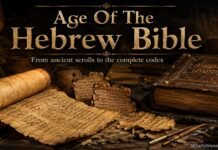
Before modern printing, biblical texts were copied by hand. Scholars compare ancient manuscripts to understand how texts were preserved and transmitted over time.
The discovery of the Dead Sea Scrolls in the 20th century provided important evidence about the Old Testament. These scrolls, discovered near the Dead Sea, include copies of many biblical books and date from centuries before the time of Jesus.
The Dead Sea Scrolls showed that many Old Testament passages were transmitted with remarkable consistency across generations.
The New Testament also has a large number of ancient manuscripts compared with many other writings from the ancient world. Scholars study these manuscripts using textual criticism, a process that compares copies to determine the earliest recoverable wording.
This does not mean every manuscript is identical. Ancient copying naturally produced small differences, such as spelling variations or word order changes. However, scholars generally agree that these differences do not change the central message of the New Testament.
The study of manuscripts helps answer questions such as:
- How was the Bible put together?
- How were biblical writings preserved?
- How reliable are ancient copies?
The evidence shows a long history of careful preservation and transmission.
Are The Events In The Bible Historically Supported?
The Bible describes many events that take place within known historical periods.
The New Testament, especially, is connected to the first-century Roman world. The life of Jesus occurred during the time of Roman rule in Judea. The Gospels mention historical figures such as:
- Herod the Great
- Pontius Pilate
- Caiaphas the high priest
- Roman governors and officials
The existence of Jesus is also discussed by several ancient sources outside the New Testament. Roman historian Tacitus mentioned Christians and referred to Christ being executed during the rule of Pontius Pilate.
Jewish historian Josephus also wrote about Jesus and early Christians, although scholars discuss the exact wording and later transmission of some passages.
Archaeology has also helped illuminate the biblical world. Discoveries have provided information about:
- Ancient cities
- Trade routes
- Religious practices
- Political systems
- Languages spoken during biblical times
However, archaeology has limits. It can provide evidence about places, cultures, and historical settings, but it cannot directly prove spiritual realities such as miracles or divine revelation.
Faith and historical investigation answer different types of questions.
Archaeology And The Biblical World
Archaeology has played an important role in understanding the background of Scripture.
Some examples include:
Hezekiah’s Tunnel
The Bible describes King Hezekiah preparing Jerusalem’s water supply during a time of conflict with Assyria. The tunnel known today as Hezekiah’s Tunnel is an ancient engineering project in Jerusalem that matches this historical period.
The Dead Sea Scrolls
These ancient manuscripts provide valuable information about Jewish Scripture before and around the time of Jesus.
The Tel Dan Inscription
This ancient inscription contains a reference understood by many scholars as mentioning the “House of David,” supporting the existence of a royal Davidic dynasty.
These discoveries help place biblical writings within real historical environments.
Interesting Facts About The Bible
There are many facts about the Bible that surprise readers.
The Bible Was Written Over Many Centuries
The Bible was written across a long period of history by many different authors. Despite different backgrounds and writing styles, Christians see a connected message throughout Scripture.
The Bible Was Written In Three Main Languages
The original biblical texts were mainly written in:
- Hebrew
- Aramaic
- Greek
The Old Testament was primarily written in Hebrew, with some sections in Aramaic. The New Testament was written in Koine Greek, the common Greek language of the first century.
The Bible Is One Of The Most Translated Books In History
The Bible has been translated into thousands of languages, allowing people around the world to read it.
The Bible Contains Different Types Of Writing
The Bible includes:
- Historical narratives
- Poetry
- Songs
- Wisdom sayings
- Prophecy
- Letters
Recognizing these different forms helps readers understand the message more accurately.
Does Being Factual Mean Every Question Has A Scientific Answer?
A common misunderstanding is that asking whether the Bible is factual means every statement must be tested like a modern scientific textbook.
The Bible was not written as a science manual. Its primary purpose is to reveal God, explain humanity’s relationship with Him, and communicate spiritual truth.
However, the Bible does contain statements about the natural world, history, and human life. These statements can be studied from different perspectives.
For example:
- History examines people, places, and events.
- Archaeology examines physical evidence.
- Theology examines spiritual meaning.
- Science studies the physical universe through observation and testing.
These fields can overlap, but they do not always answer the same questions.
A careful study of Scripture considers both its historical context and its spiritual message.
Why Do Millions Of People Trust The Bible?
Millions of people trust the Bible because they believe it has both historical reliability and spiritual authority.
For Christians, the Bible is not only an ancient text. It is a source of:
- Faith
- Hope
- Wisdom
- Guidance
- Understanding of God’s character
Many believers point to the Bible’s preservation, historical connections, fulfilled prophecies, and message about Jesus Christ as reasons for their confidence.
Others study the Bible because of its influence on history, literature, ethics, and culture.
The Bible has shaped civilizations, inspired works of art and literature, and influenced laws and moral discussions across centuries.
What This Teaches Us About Faith And Truth
So, is the Bible factual?
The Bible contains many historical details that can be examined through archaeology, manuscripts, and ancient records. Many people find that the evidence supports the Bible’s connection to real historical places, cultures, and people.
At the same time, the Bible also deals with questions that go beyond historical investigation, including faith, salvation, and humanity’s relationship with God.
A thoughtful approach is to study Scripture carefully, understand its context, and consider both the evidence and the message it presents.
For Christians, the Bible remains more than a record of the past. It is a living source of faith that continues to guide people toward truth, hope, and a deeper understanding of God.

Dr. Michael is a well-known author who shares why trusting the Bible matters. He speaks in a way that’s easy to follow, helping people see its truth clearly.