
 Many Christians ask an important question as Easter approaches: Is Lent in the Bible? Some observe Lent every year through fasting, prayer, and giving. Others wonder whether this practice comes directly from Scripture or from later Christian tradition.
The simple answer is this: The Bible does not command Christians to celebrate Lent by name, but many ideas behind Lent come from biblical practices, especially fasting, repentance, prayer, and preparing the heart before God.
Lent is a season observed by many Christians before Easter. It traditionally lasts 40 days, not counting Sundays, and focuses on spiritual preparation as believers remember the suffering, death, and resurrection of Jesus Christ.
To understand Lent properly, we need to look at both Scripture and Christian history. The Bible gives us the foundation, while the yearly season of Lent developed later as a way for Christians to practice those biblical principles.
Is Lent In The Bible As A Direct Command From God
The word Lent does not appear anywhere in the Bible. Scripture does not give believers a command saying they must observe a specific 40-day period before Easter.
Unlike practices such as prayer, worship, loving others, and seeking God, Lent is not presented as a direct biblical requirement.
However, the Bible does teach many of the spiritual actions connected with Lent:
- Fasting
- Repentance
- Prayer
- Humility before God
- Turning away from sin
- Seeking spiritual renewal
For example, the prophet Joel called God’s people to return to Him with fasting and sincere hearts:
“Return to me with all your heart, with fasting and weeping and mourning.”
Joel 2:12
This verse captures one of the central ideas behind Lent. The purpose is not simply giving up food or an activity. The deeper purpose is drawing closer to God.
Lent is therefore best understood as a Christian tradition built around biblical principles rather than a command directly found in Scripture.
The Biblical Foundation Behind Lent And The 40 Days
Although Lent itself is not named in the Bible, the number forty has significant meaning throughout Scripture.
One of the strongest connections is the fasting of Jesus before beginning His public ministry.
Matthew 4:1–2 says that Jesus was led into the wilderness by the Spirit, where He fasted for forty days and forty nights. During this time, He faced temptation from Satan and remained faithful to God.
Jesus’ forty-day fast became one of the most important biblical examples of spiritual preparation.
Other important examples of forty in Scripture include:
| Biblical Event | Reference | Meaning |
|---|---|---|
| Noah’s flood rain lasted 40 days and nights | Genesis 7:12 | A time of judgment and renewal |
| Moses stayed on Mount Sinai for 40 days | Exodus 24:18 | Receiving God’s law |
| Israel wandered in the wilderness for 40 years | Numbers 14:33 | A period of testing and preparation |
| Elijah traveled 40 days to Horeb | 1 Kings 19:8 | A journey toward encountering God |
| Jesus fasted 40 days | Matthew 4:2 | Spiritual preparation before ministry |
Because of these biblical examples, many Christians have connected a 40-day season of preparation with following Christ’s example.
The important point is that the Bible teaches the value of spiritual preparation, while Lent is a later practice that reflects those teachings.
What Does The Bible Say About Fasting And Repentance
Fasting is one of the clearest biblical foundations behind Lent.
Throughout Scripture, people fasted during important spiritual moments. They fasted when seeking God’s guidance, expressing repentance, or asking for His help.
In the Old Testament, fasting often showed humility before God.
The people of Nineveh fasted after hearing Jonah’s warning and turned away from their wrongdoing (Jonah 3:5–10). David also fasted during times of deep sorrow and prayer.
Jesus also spoke about fasting. In Matthew 6:16–18, He warned His followers not to fast simply to impress others.
Jesus taught that true fasting is something between a person and God. The heart matters more than outward appearance.
This lesson is important for Lent as well. Giving something up during Lent should not become a way to appear more religious. Instead, it should help believers focus more deeply on God.
Many Christians use Lent as a time for:
- More consistent prayer
- Reading Scripture
- Repentance
- Helping those in need
- Strengthening faith
For those looking for guidance, learning how to fast according to the Bible can help believers understand the purpose behind fasting rather than only following a tradition.
How Early Christians Developed The Tradition Of Lent
The early Christians valued fasting, especially before remembering the death and resurrection of Jesus.
In the earliest centuries of Christianity, believers practiced periods of fasting before Easter. Over time, this practice developed into the longer season known today as Lent.
The exact form of Lent changed throughout Christian history. Different churches developed their own traditions regarding:
- Length of fasting
- Foods avoided
- Prayer practices
- Special services
By the fourth century, a forty-day preparation period before Easter had become widely recognized among many Christians.
The purpose was connected to spiritual renewal and remembering the sacrifice of Christ.
This historical development explains why Lent is meaningful to millions of Christians today even though the specific practice is not found as a command in the Bible.
How Different Christians Understand Lent Today
Christians around the world view Lent in different ways.
Catholic Christians
In the Catholic tradition, Lent is a major season of prayer, fasting, and preparation before Easter. Many Catholics observe practices such as fasting on certain days, giving up certain foods, and participating in special worship services.
Orthodox Christians
Eastern Orthodox Christians also observe a significant fasting period before Easter. Their traditions often include longer fasting practices and strong emphasis on prayer and spiritual discipline.
Protestant Christians
Many Protestant churches recognize Lent as a helpful spiritual practice. Some believers participate in fasting, Bible reading, and prayer, while others do not observe Lent formally.
Christians Who Do Not Observe Lent
Some Christians choose not to practice Lent because they believe Scripture does not require a specific season. They may still practice fasting, repentance, and spiritual growth throughout the year.
These differences show that Christians may approach traditions differently while still sharing faith in Jesus Christ.
What Should Christians Do During Lent According To Biblical Principles
The most important question is not simply, “What should I give up for Lent?”
A better question is:
“How can I use this season to grow closer to God?”
Biblical principles that fit with Lent include:
Spend More Time In Prayer
Jesus regularly withdrew to pray. Prayer helps believers develop a deeper relationship with God.
Study Scripture
Reading the Bible helps Christians understand God’s character and Christ’s mission.
Many believers follow Bible studies for Lent because they want their daily reading to focus on repentance, grace, and the journey toward Easter.
Practice Self-Control
Fasting teaches believers that spiritual needs are greater than temporary desires.
Serve Others
Jesus taught that love for others is central to faithful living.
Giving time, resources, and kindness to others reflects the heart of Christ.
Examine Your Heart
Lent can be a reminder to ask:
- Are there areas where I need forgiveness?
- Am I growing in love?
- Am I trusting God more deeply?
The purpose of spiritual disciplines is transformation, not simply following a religious routine.
Lent, Easter, And The Story Of Jesus
Lent leads toward the most important event in Christianity: the death and resurrection of Jesus.
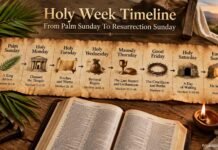
The final week of Lent is often connected with events known as Holy Week:
- Palm Sunday remembers Jesus entering Jerusalem.
- Holy Thursday remembers the Last Supper.
- Good Friday remembers His crucifixion.
- Easter Sunday celebrates His resurrection.
The Bible records these events in the Gospels of Matthew, Mark, Luke, and John.
The message of Easter is not only about suffering. It is about hope, forgiveness, and new life through Christ.
Lent helps many Christians slow down and reflect on the sacrifice Jesus made.
Those wanting to understand the biblical story behind Easter can explore where the Easter story is in the Bible and how the Gospel accounts describe Jesus’ final days.
Is Giving Something Up For Lent Biblical
Many people associate Lent with giving up something such as sweets, entertainment, or certain habits.
The Bible does not command Christians to give up a specific thing during a specific season.
However, Scripture does teach self-denial.
Jesus said:
“Whoever wants to be my disciple must deny themselves and take up their cross and follow me.”
Matthew 16:24
Self-denial can help believers remove distractions and focus more on God.
The important thing is the reason behind the sacrifice. Giving something up should not be viewed as a way to earn God’s favor. Christians believe God’s grace comes through Christ, not through personal effort.
A healthy spiritual practice points the heart toward God.
Common Questions About Lent And The Bible
Did Jesus Celebrate Lent?
No. Jesus lived before the Christian season of Lent was developed. However, Jesus did fast for forty days in the wilderness, which became a major biblical inspiration for Lent.
Does The Bible Say Christians Must Fast For 40 Days?
No. The Bible contains examples of fasting, including Jesus’ forty-day fast, but it does not command all Christians to complete a forty-day fast.
Is Ash Wednesday In The Bible?
No. Ash Wednesday is a later Christian tradition. However, ashes symbolize repentance in several biblical passages, including examples where people used ashes as a sign of humility before God.
Can Christians Grow Spiritually Without Celebrating Lent?
Yes. Spiritual growth comes through faith, prayer, Scripture, and obedience to God. Lent is one tradition that some Christians use to support spiritual growth.
What This Teaches Us About Faith
So, is Lent in the Bible?
The answer is both simple and meaningful: The Bible does not describe Lent as a required Christian celebration, but many practices connected with Lent are deeply rooted in Scripture.
The Bible teaches believers to seek God through prayer, fasting, repentance, and faith. Lent is one way many Christians throughout history have chosen to practice these biblical principles.
Whether someone observes Lent or not, the deeper message remains the same: God calls His people to humble hearts, sincere faith, and a closer walk with Him.
A season of reflection can be valuable, but true spiritual change comes from knowing and following Christ every day.

Dr. Rachel is very smart and knows a lot about the Bible. He helps us understand the Bible better by talking about the old texts in a simple way.